Arboricrop: Next generation agriculture using real-time information from tree crops

Conventional fruit production relies upon growers employing costly interventions of water, nutrients and crop protection products to optimise plant health, yields and fruit quality.

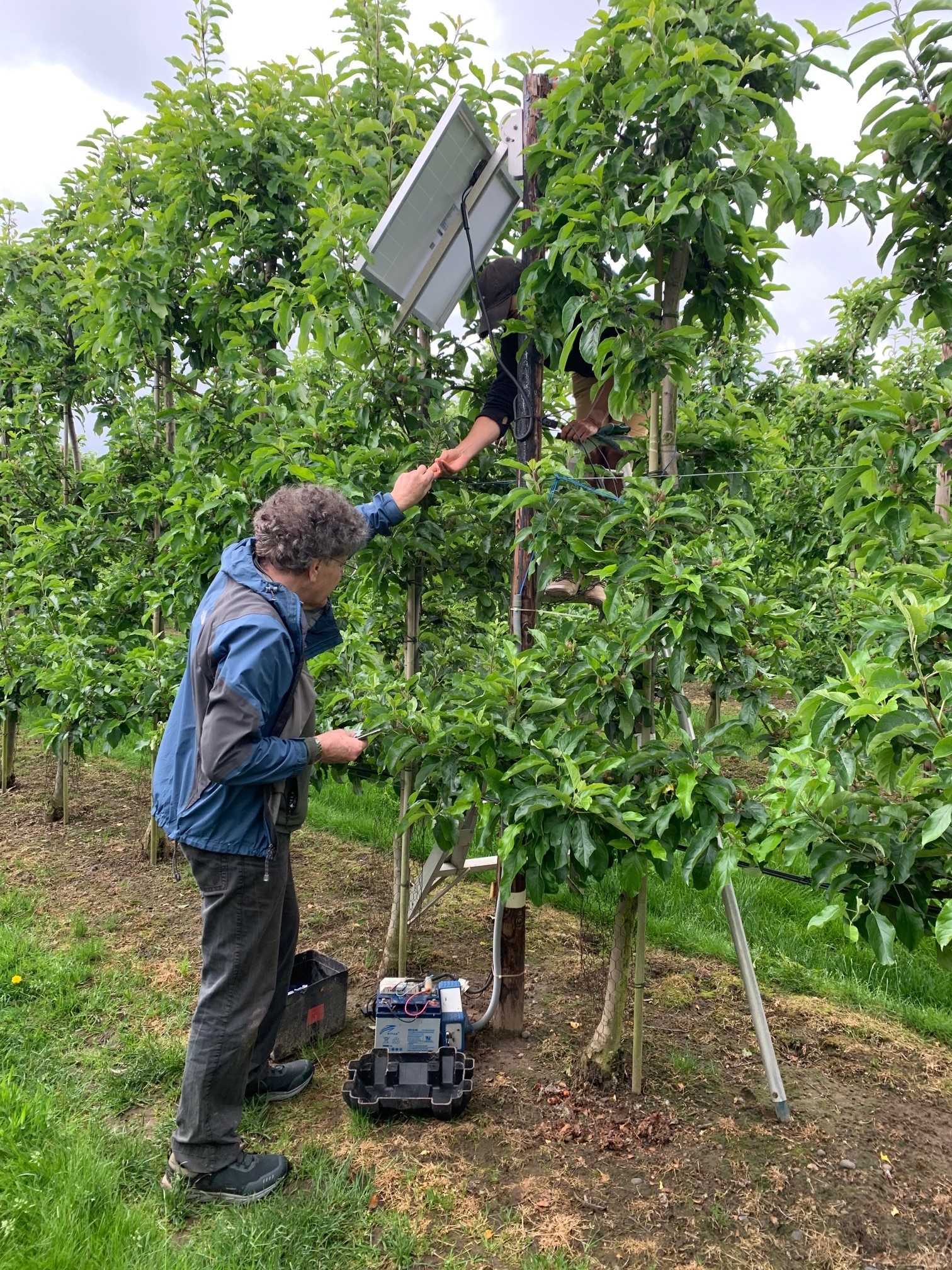
This project will design, test and produce a Next Generation Electrophysiological Sensor (NGES) that can detect plant stress before visual symptoms appear, allowing growers and agronomists to apply interventions earlier, thereby minimising yield losses and maximising efficiency. Such technology has demonstrated promise in protected crops, but this project will focus on woody crops such as apple and vines.


Funder: Innovate UK

Industry partners: Benchmark Control Ltd (Lead), Adrian Scripps Ltd and H.L.Hutchinson Ltd

Term: February 2024 to July 2026

Research project tags
Image
Next generation electrophysiological sensor being set up in an orchard
Status

Sensor-based precision fertigation of stone fruit to improve nutrient use efficiency, yields, and quality whilst lowering emissions

Niab has embarked on a project that will help plum and cherry growers to match supply of water, nitrogen, phosphorus and potassium to tree demand.

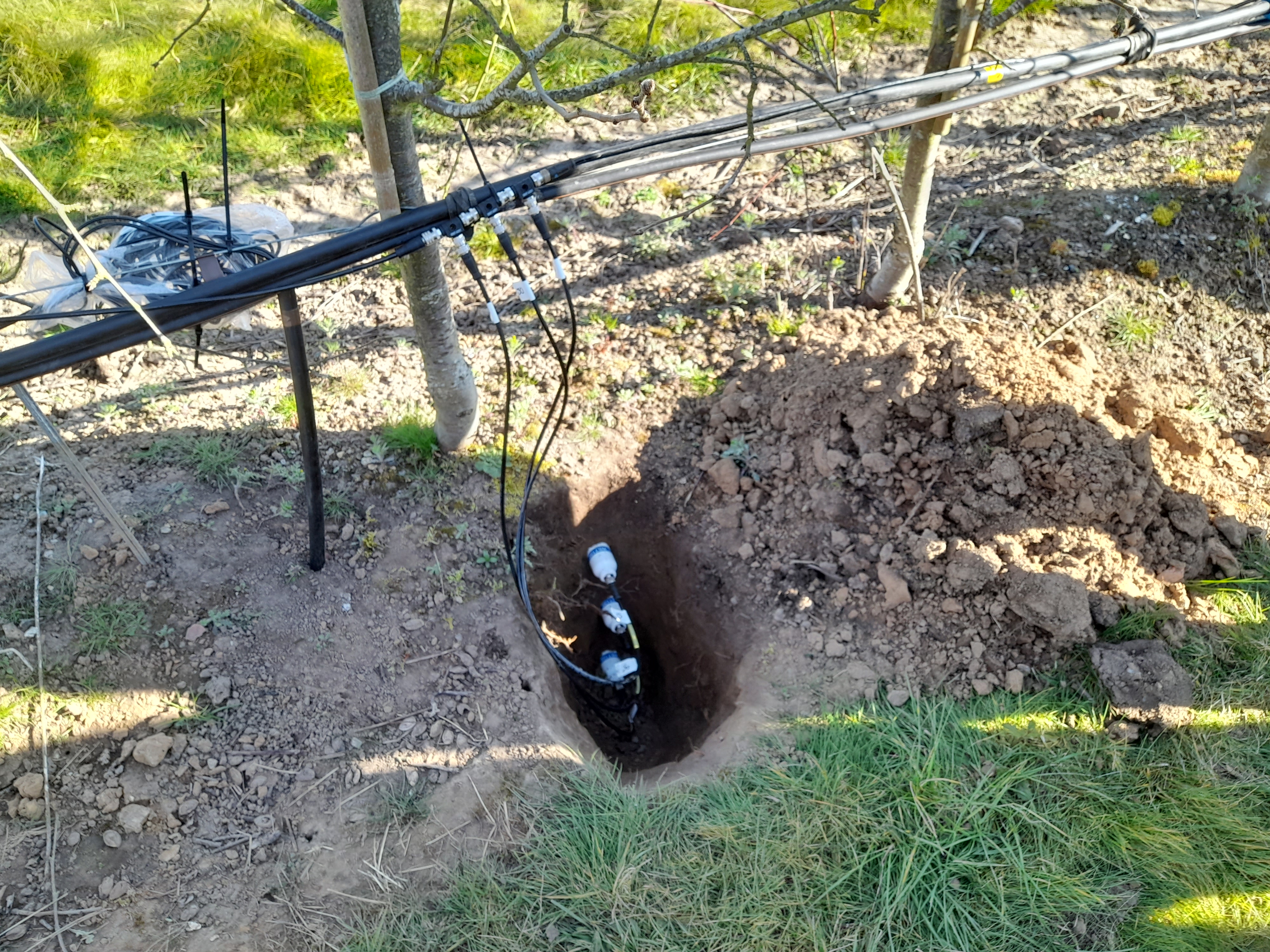
The project aims to develop novel technology for measuring nitrogen, phosphorus and potassium concentrations in soil solutions at different rooting depths in real-time. The work will also make use of a vast array of new technology including soil moisture sensors that will inform low-input water and fertiliser strategies that reduce the loss of water and nutrients from the rooting zone.

The impacts of these treatments on greenhouse gas emissions from orchard soils will also be measured. If successful, the work could develop precision irrigation and fertigation systems that can be adopted by commercial growers and lead to a reduction in water and fertiliser use in plum and cherry crops.


Funder: Defra Farming Innovation Programme

Industry partners: The Orchard Fruit Company (Lead), A.C. Hulme, Domum Agrum, Delta-T Devices, Driemtech, EDT directION, Fotenix, Soil Moisture Sense and Torry Hill Farm,

Term: January 2025 to December 2027 

Research project tags
Image
Soil moisture sensors being installed in the plum orchard
People
Status

UK Cereal Pathogen Virulence Survey

The UK Cereal Pathogen Virulence Survey (UKCPVS) monitors cereal rusts in the UK, detecting and warning industry and growers of new races of disease emerging on resistant varieties. It is funded by Defra and AHDB and has been managed by Niab since its inception over 50 years ago.

Contact UKCPVS

The role of UKCPVS includes:

  • Monitoring changes in virulence of UK cereal pathogen populations
  • Maintaining and improving variety disease resistance allowing growers to prioritise other characteristics such as yield and quality when choosing a variety
  • Enabling breeders and variety testing authorities to screen out potential new varieties and breeding lines that are too susceptible to new races of disease before they get to the AHDB Recommended List stage or onto farm
  • Providing information to assist disease risk management on farm; underpinning AHDB RL disease resistance ratings and assessing the threat that each new race poses to the full range of commercial varieties.

Disease sampling

UKCPVS sampling instructions

UKCPVS is always checking for new races of cereal rusts across the UK. We rely on samples sent in by growers, agronomists, plant breeders and official trials operators, so we can check for new variations of these key wheat diseases.

For the 2026 season, UKCPVS is focusing on wheat yellow and wheat brown rust and requests samples of leaves showing symptoms of either of the two diseases. These infected leaves will give the team at Niab the isolates needed to conduct the survey to identify any possible changes in the race of the diseases as soon as possible.

We welcome samples at any time of year. The majority are sent through in May, June and July - the peak of the rust season - but we receive some in the autumn when conditions have been mild enough for the disease to carry on from the season before. Samples can be from any variety, but we are especially interested in varieties which are noted as resistant to the different diseases at that time.

*Putting a geographical delivery address on the envelope will invalidate the Freepost service, incur a charge and delivery will be severely delayed. Please only use the words 'FREEPOST UKCPVS' on the front of the envelope to ensure your sample reaches us quickly.

Stakeholders

UKCPVS holds an annual stakeholder meeting. Targeted at breeders, crop scientists and technical agronomists, the event in early spring each year, reports on recent seedling test results and adult plant nursery tests. It features a number of related technical papers based on pathogen virulence experience from across the globe.

UKCPVS AGM 2025

Research project tags
Image
UKCPVS logo
Status

Biomass Connect

Biomass crops are non-food plants cultivated for the purposes of energy production. Sometimes referred to as energy crops, they have a high potential energy content or calorific value. This project compares how well different crops and varieties grow in regions across the UK and demonstrates innovations which have the potential to maximise their economic and environmental benefits.

Project website

The Biomass Innovation and Information Platform is a demonstration and knowledge sharing initiative to showcase best practice and innovations in land-based biomass feedstock production.

The project has four primary aims:

  1. Independent information - to provide robust, independent information on biomass feedstock performance, agronomy, economics and environmental benefits to landowners and land managers.
  2. Variations and efficacy - to de-risk new crop adoption by ensuring that geographic variations in the efficacy of biomass feedstocks and relevant innovations are fully evaluated and demonstrated to a broad range of stakeholders across the UK.
     
  3. Knowledge - to facilitate discussion and learning regarding the biomass sector by enabling the sharing of knowledge, experiences and case studies.
     
  4. Robust evidence - to contribute to agricultural, environmental and bioenergy policy development by contributing robust evidence and facilitating interactions between policy, academia and industry.

Through the platform, the project is building a UK-wide, cohesive, regionally based community who will contribute to the development, establishment and operation of the platform. Building this focal point for the industry will support the ambitious scaling up of both the bioenergy industry itself and the scale of planting which is required to align with the Committee on Climate Change’s modelling for net zero, which anticipates expanding from 10,000 ha to 730,000 ha by 2050.

Partners

This project involves researchers and industry partners from UKCEH, Rothamsted Research, Aberystwyth University, Scotland’s Rural College (SRUC), the Agri-Food and Biosciences Institute (AFBI), Crops for Energy, Newcastle University, Niab and Bio-Global Industries.

Funders

The Biomass Feedstocks Innovation Programme is a £36 million programme, funded through the Department for Business, Energy and Industrial Strategy’s £1 billion Net Zero Innovation Portfolio, which aims to accelerate the commercialisation of innovative clean energy technologies and processes through the 2020s and 2030s.

More information

For more on Niab's role in the project contact Joe Martlew or visit the Biomass Connect website

Research project tags
Image
Biomass Connect logo
Status

Centre for High Carbon Capture Cropping

Input-efficient crops that can increase carbon capture will help farming and associated industries address climate change, but there must be confidence in achieving profitable and sustainable outcomes.

PROJECT WEBSITE

The Centre for High Carbon Capture Cropping (CHCx3) is a four-year, multi-partner project, led by Niab's Dr Lydia Smith. The research aims to help UK farmers and growers target Net Zero and build farming resilience through diversifying their arable and forage cropping. It will enable new revenue sources through a carbon marketplace and support enhanced value chains for industries such as textiles and construction.

Objectives

  • Evaluate food, forage, and industrial cropping options with potential to enhance atmospheric carbon capture, and sequestration in the soil and crop-based products
  • Optimise production of renewable biomaterials for fibre, textiles, and construction, and build value chains
  • Establish a UK Knowledge Hub providing resources to support effective uptake and utilisation of crops with high carbon capture potential
  • Quantify carbon removals, consistent with emerging standards for measurement, monitoring, reporting and verification
  • Develop carbon insetting/offsetting platforms, achieving revenue generation for farmers and supporting corporate sustainability

The project is focusing on four cropping options: cover crops; annual fibre crops (industrial hemp, flax); perennial food, feed, and forage cropping (including cereals and herbal leys); and perennial biomass crops (miscanthus, willow/poplar). Field trials and demonstrations will examine the effect of cultivation systems and agronomy on economic returns and environmental outcomes, with practical outputs including crop guides, web tools and apps.

Get involved

If you are interested in growing these crops, contact us at chcx3 [at] niab.com (chcx3[at]niab[dot]com), or sign up to receive the CHCx3 e-newsletter.

To discover more, join one of our free CHCx3 events. We will be holding field demonstrations, webinars, and workshops throughout the project. Visit the Niab Event Hub to see what’s on and book your place or contact one of our partners.

Partners

The Centre for High Carbon Capture Cropping partners are: Niab, Biorenewables Development Centre, British Hemp Alliance, Cotswold Seeds, Crops for Energy, Elsoms Seeds, Energy Crops Consultancy, English Fine Cottons, FarmED,  FC Palmer & Sons, National Farmers Union of England & Wales (NFU), Natural Building Systems, Northern Ireland Hemp Association, Rothamsted Research, Scottish Hemp Association, Terravesta, UK Hempcrete, University of York, Unyte Hemp.

Funder

This project is funded by Defra under the Farming Futures R&D Fund: Climate Smart Farming. It forms part of Defra’s Farming Innovation Programme, delivered in partnership with Innovate UK.

Research project tags
Image
Centre for High Carbon Capture Cropping logo
Status

Exploiting novel wheat genotypes for regen ag

Funded by The Morley Agricultural Foundation (TMAF) and the JC Mann Trust, Niab is conducting multi-disciplinary research encompassing agronomy, genetics and molecular plant physiology to assess novel wheat genotypes in regenerative agriculture conditions.

Following a rotation based on winter wheat, trials will rotate across well-characterised experimental sites in East Anglia, with a known history of management. Fully replicated plot trials will evaluating the performance of new wheat genetic material (including resynthesised wheat (SHW) lines), under regenerative agricultural practices and lower nitrogen inputs.

The project ultimately aims to support growers and agronomists to produce high quantity and quality grains at low cost, and with limited environmental impact.

Take our survey

Niab is looking for farmers to share their experience of growing different wheat varieties in regenerative agriculture systems. Take our survey, so we can better understand which wheat varieties are widely cultivated and favoured by growers under these principles. Thank you for your support.

RESOURCES

Poster: Novel wheat genotypes for regen-ag (2025)

VIDEO

Video: Nitrogen utilisation in winter wheat under a regen ag system

FUNDERS


The Morley Agricultural Foundation logo


The JC Mann Trust logo


PROJECT DURATION

September 2022 to August 2028 

PREVIOUS RESEARCH

New Farming Systems research
Designing Future Wheat


Image
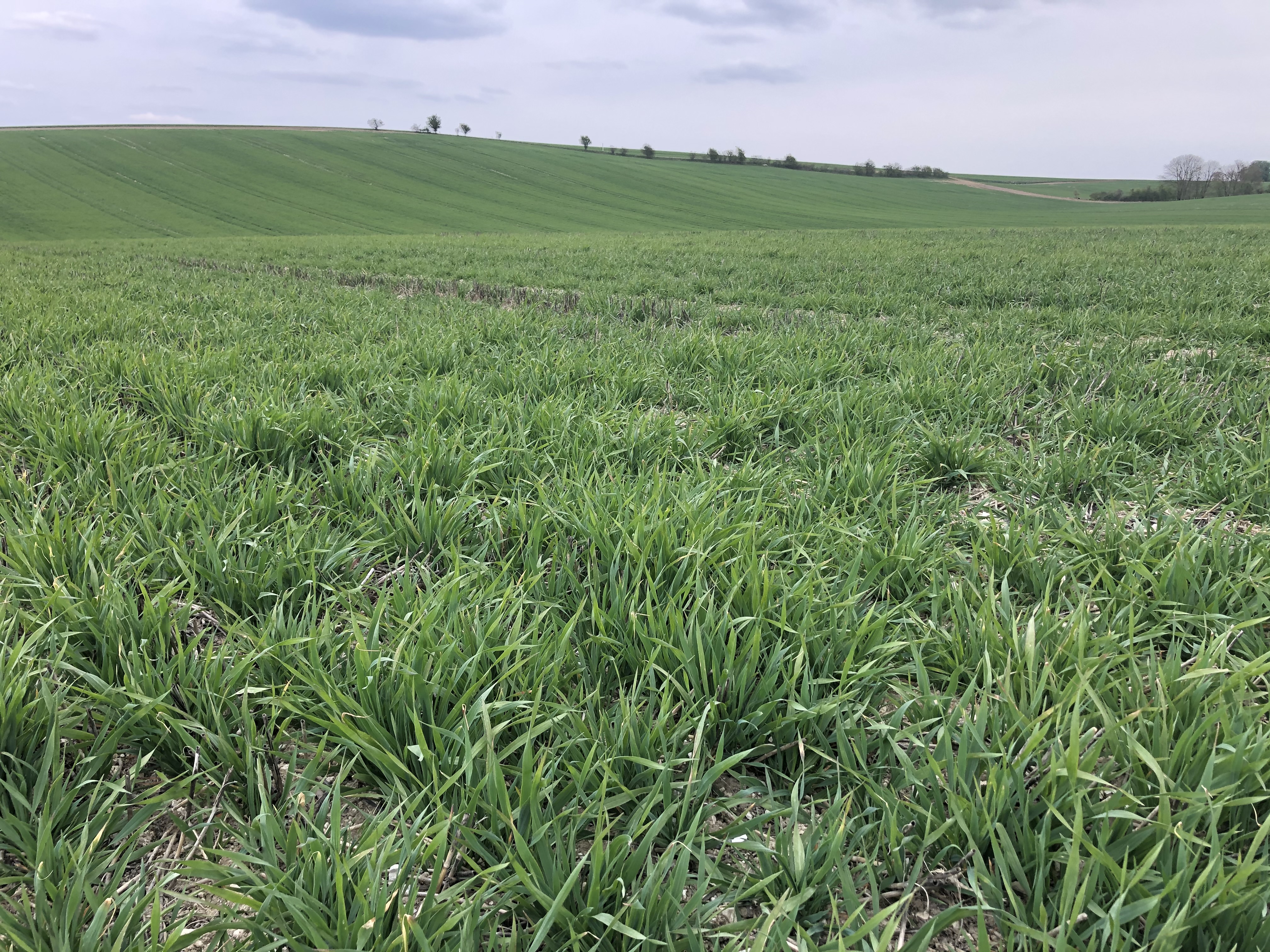
Young wheat plants growing in a field in the UK
Status

Morley Long-Term Studies (Morley-LoTS)

Long-term monitoring studies are a valuable strategic resource that are difficult to maintain through short term or commercial funding and hard to replace once lost. Within East Anglia (notably at Morley) there are several long-term studies that provide unique data and are excellent research platforms. 

Morley Long Term Studies (LoTS) is a continuation of Niab's original National Agronomy Centre and MENTOR work, covering many of the long-term strategic field trials, including STAR and the Saxmundham Experimental site (est. 1899) and long-term wheat, barley and sugar beet fungicide response trials. These trials have focused on long term strategic agronomy and monitoring.

David Clarke, Niab's soils and farming systems research technician,  introduces the 120-year-old TMAF-funded experiment site in Suffolk, studying P&K fertilisers v FYM, including what's gone before and what's happening now, in this video from 2021.

PROJECT TIMINGS

2019-2030

RESOURCES

Outputs include annual reports as well as peer-reviewed academic papers and conference presentations as well as farmer-facing materials provided for the Niab and TMAF websites.

Fungicide timing response monitoring
Studying the yield responses to each of the component spray timings within a fungicide spray programme on winter wheat at Morley

Studying the yield responses to each of the component spray timings within a fungicide spray programme on winter barley at Morley.

Sugar beet

Periodic harvest of sugar beet and fungicide interaction
Determining the growth rate and yield benefit of sugar beet treated during the late summer and autumn with and without a triazole and strobilurin fungicide programme

Periodic harvest of sugar beet and biorepellent interaction

Studies of the effectiveness of Frass as a bio-repellent
Examining the benefit of sugar beet treated with Frass as a biorepellent to reduce aphid transmission of virus yellows.

Event posters

View and download research and information posters used at open days and trade events - available on the Niab Knowledge Hub


Research project tags
Image
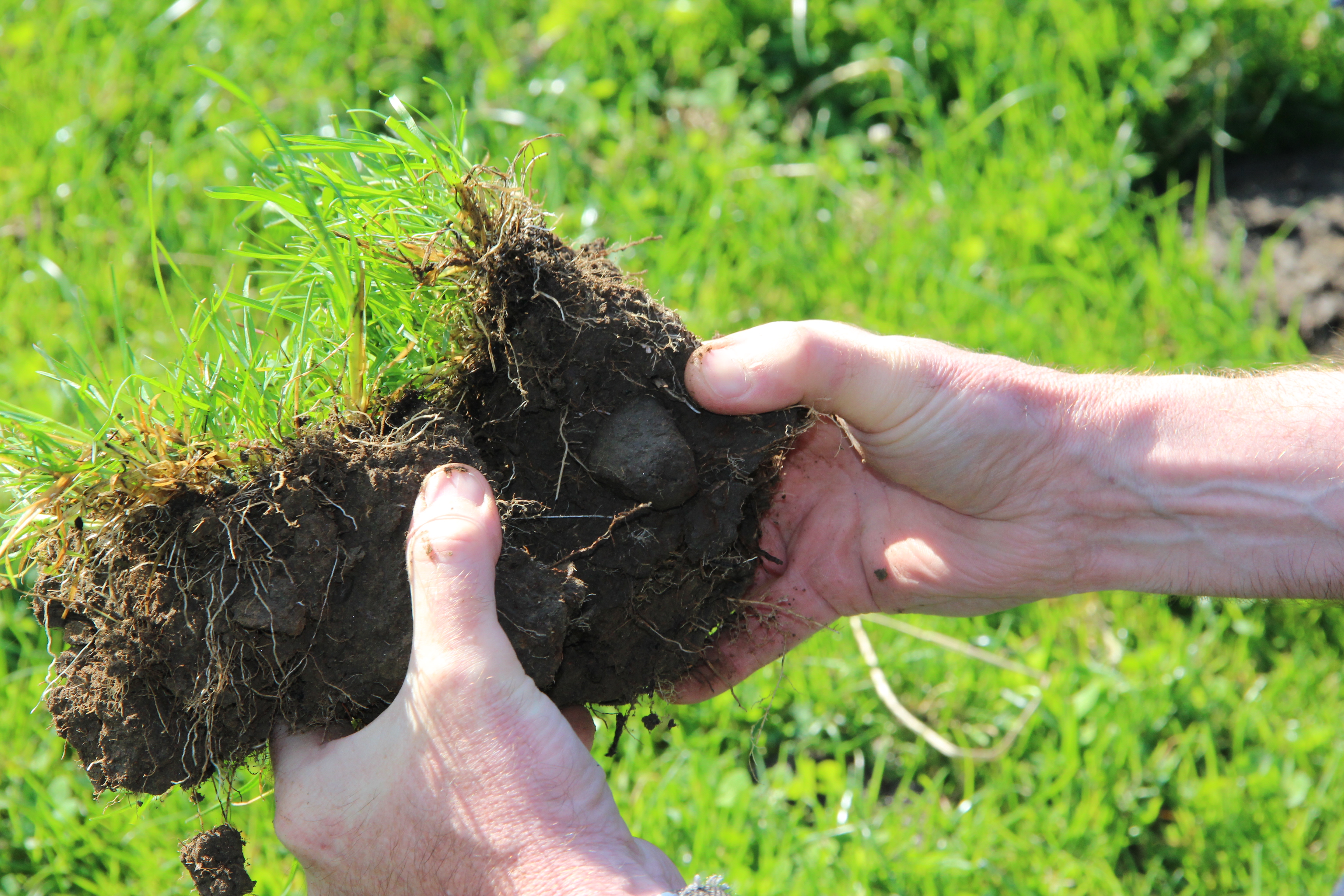
Checking soil
Status

New Farming Systems

A series of long-term studies seeking to develop bio-sustainable cropping systems for conventional arable cropping.

The New Farming Systems programme is funded by The Morley Agricultural Foundation (TMAF) and The JC Mann Trust and is being carried at Morley, in Norfolk, on a sandy clay loam soil.

Research within the NFS programme is seeking to maintain or increase system output while at the same time seeking to improve efficiency, sustainability and resilience within conventional arable cropping systems. Experiments are ostensibly examining three inter-related themes: fertility building, approaches to tillage and the use of soil amendments.

The experiments within the NFS programme are fully replicated, large plot studies that use farm scale equipment and techniques and include:

Event posters

View and download research and information posters used at open days and trade events - available on the Niab Knowledge Hub

Image
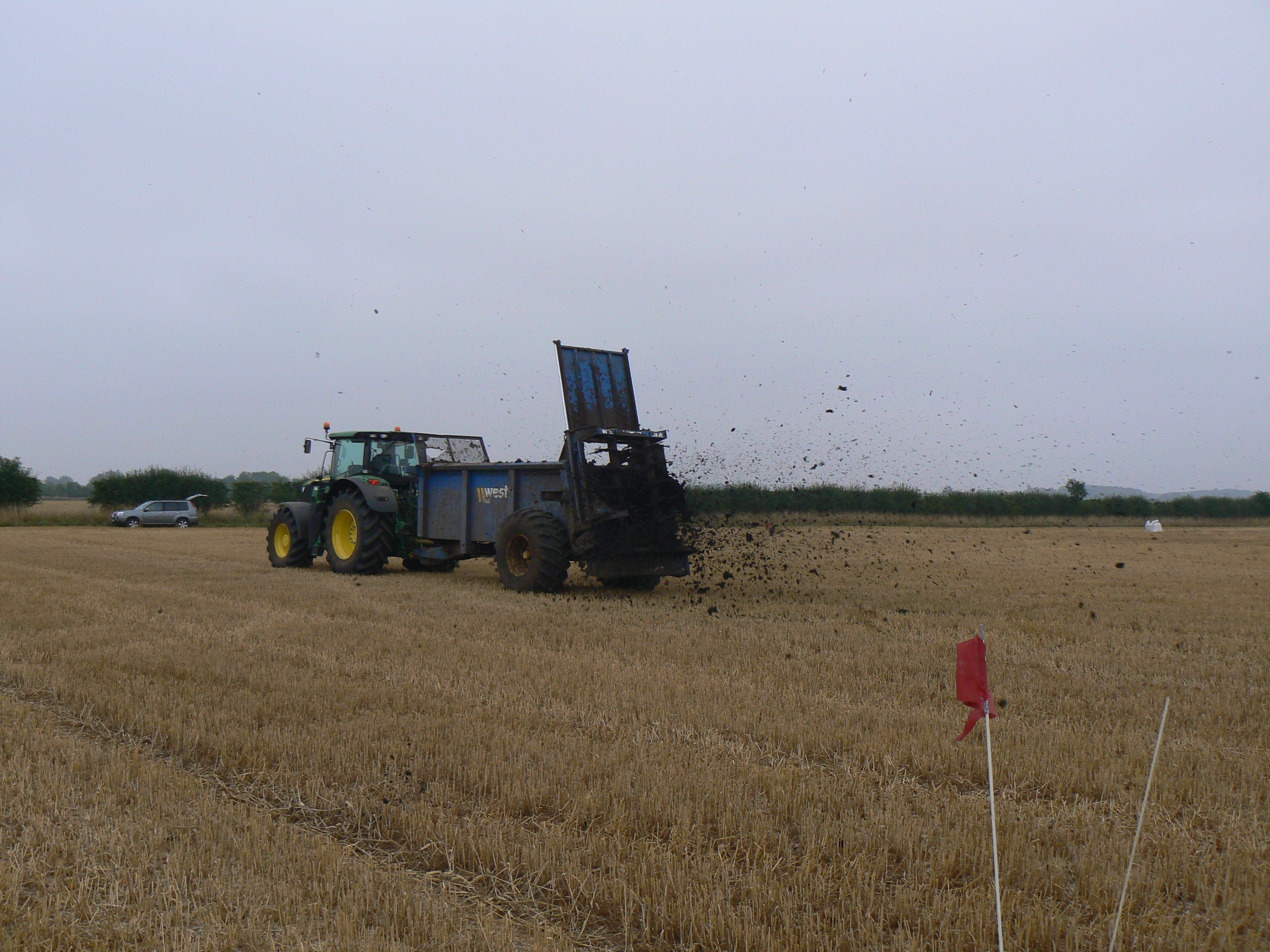
Spreading farmyard manure (FYM)
Status

Sustainability Trial for Arable Rotations (STAR)

Long-term rotation studies are rare in our industry due to short-term commercial and financial pressures, but they can provide powerful agronomic and financial information for UK farmers.

Part of Niab’s charitably funded strategic rotation research programme, the STAR (Sustainability Trial for Arable Rotations) project is a fully replicated field-scale study, based in Suffolk and supported by The Felix Thornley Cobbold Trust.

It has been examining the interaction between four cultivation methods and four rotations since 2005 with findings demonstrating clear impacts of rotation and cultivation on agronomy and production. AHDB-funded research, using a set of long-term studies including STAR, examined the impact of adopting inversion tillage or non-inversion tillage approaches in cereal production systems and concluded that there was no strong reason not to use non-inversion tillage in preference to ploughing.

Open Day

Niab runs an annual STAR Open Day, usually in either May or June depending on the rotation. Further details and booking available late spring on the Niab Event Hub

Seminars

Online seminar - 4 June 2024
Online seminar - 27 May 2021

Resources

REPORT: STAR - Year 18 (2022/23) project report - 2024
LEAFLET: STAR - summary flyer (2022)
REPORT: STAR - Year 17 (2021/22) project report - 2023
REPORT: STAR - Year 16 (2020/21) project report - 2022
REPORT: STAR - Year 15 (2019/20) project report - 2021
REPORT: STAR - Year 14 (2018/19) project report - 2020
REPORT: The STAR Project - long-term report Years 1-10 (2006–2015)
RESEARCH PAPER: Sustainability Trial in Arable Rotations (STAR project): a long term farming systems study looking at rotation and cultivation practice. Stobart, RM, Morris, N (2011). Aspects of Applied Biology 113
RESEARCH PAPER: Platforms to test and demonstrate sustainable soil management: integration of major UK field experiments. Stobart, RM, Hallett, PD, George, TS, Morris, N, Newton, AC, Valentine, TA, McKenzie, BM (2014). Aspects of Applied Biology 127

Event posters

View and download research and information posters used at open days and trade events - available on the Niab Knowledge Hub.

Image
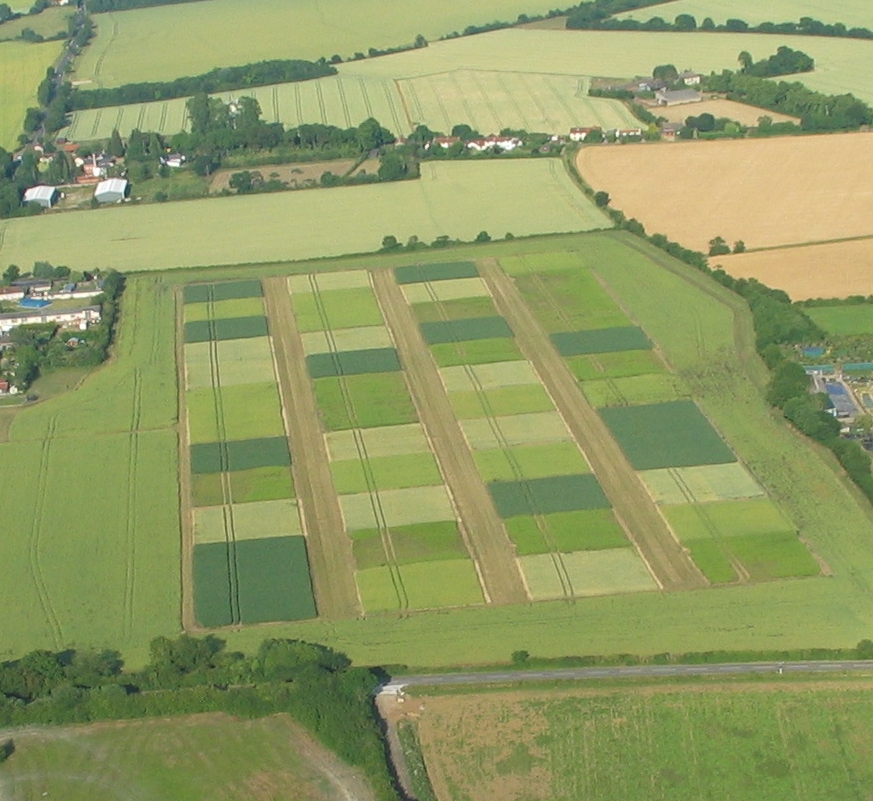
Aerial shot of the STAR site
Status

The Sentinel Crop Disease Surveillance Network

The data from each sensor provides an early warning of the presence of a pathogen which is turned into a recommended management plan for the farmer/grower. Each device comprises a biosensor that stimulates the targeted pathogen spore to germinate, a smart camera to detect that growth, a set of environmental sensors and a wireless communication module all housed in a weatherproof, robust housing.

Expected outcomes

The project aims to target three different pathogens - yellow rust, brown rust and downy mildew both in the UK and abroad.

Sony is building on its expertise in low-cost electronics and imaging to develop innovative tools for the agritech sector. Detailed global market study for Sentinel has been completed to explore the industry landscape and field trials of the product are due to begin in March 2023.

Partners

Sony, Niab, One Nine Design Ltd, Rothamsted Research, University of Manchester, G’s Fresh Ltd, Omya Ltd

Funders

Innovate UK

Duration

2022-2025


Sentinel project poster


Research project tags
Image
The Sony Sentinel project in use in a cereal crop field
Status
Subscribe to Active