The Sentinel Crop Disease Surveillance Network

The data from each sensor provides an early warning of the presence of a pathogen which is turned into a recommended management plan for the farmer/grower. Each device comprises a biosensor that stimulates the targeted pathogen spore to germinate, a smart camera to detect that growth, a set of environmental sensors and a wireless communication module all housed in a weatherproof, robust housing.

Expected outcomes

The project aims to target three different pathogens - yellow rust, brown rust and downy mildew both in the UK and abroad.

Sony is building on its expertise in low-cost electronics and imaging to develop innovative tools for the agritech sector. Detailed global market study for Sentinel has been completed to explore the industry landscape and field trials of the product are due to begin in March 2023.

Partners

Sony, Niab, One Nine Design Ltd, Rothamsted Research, University of Manchester, G’s Fresh Ltd, Omya Ltd

Funders

Innovate UK

Duration

2022-2025
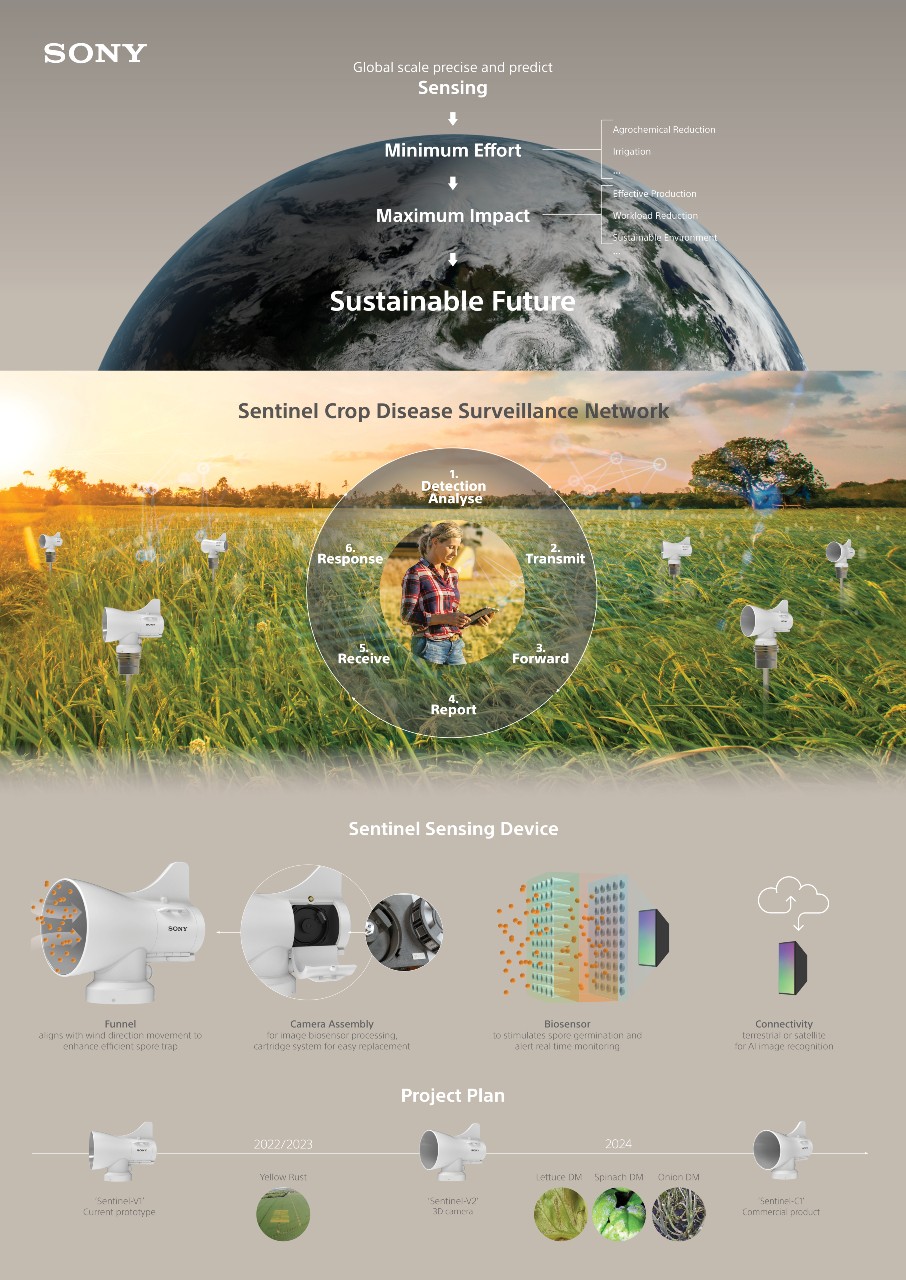
 

Sentinel project poster


Research project tags
Image
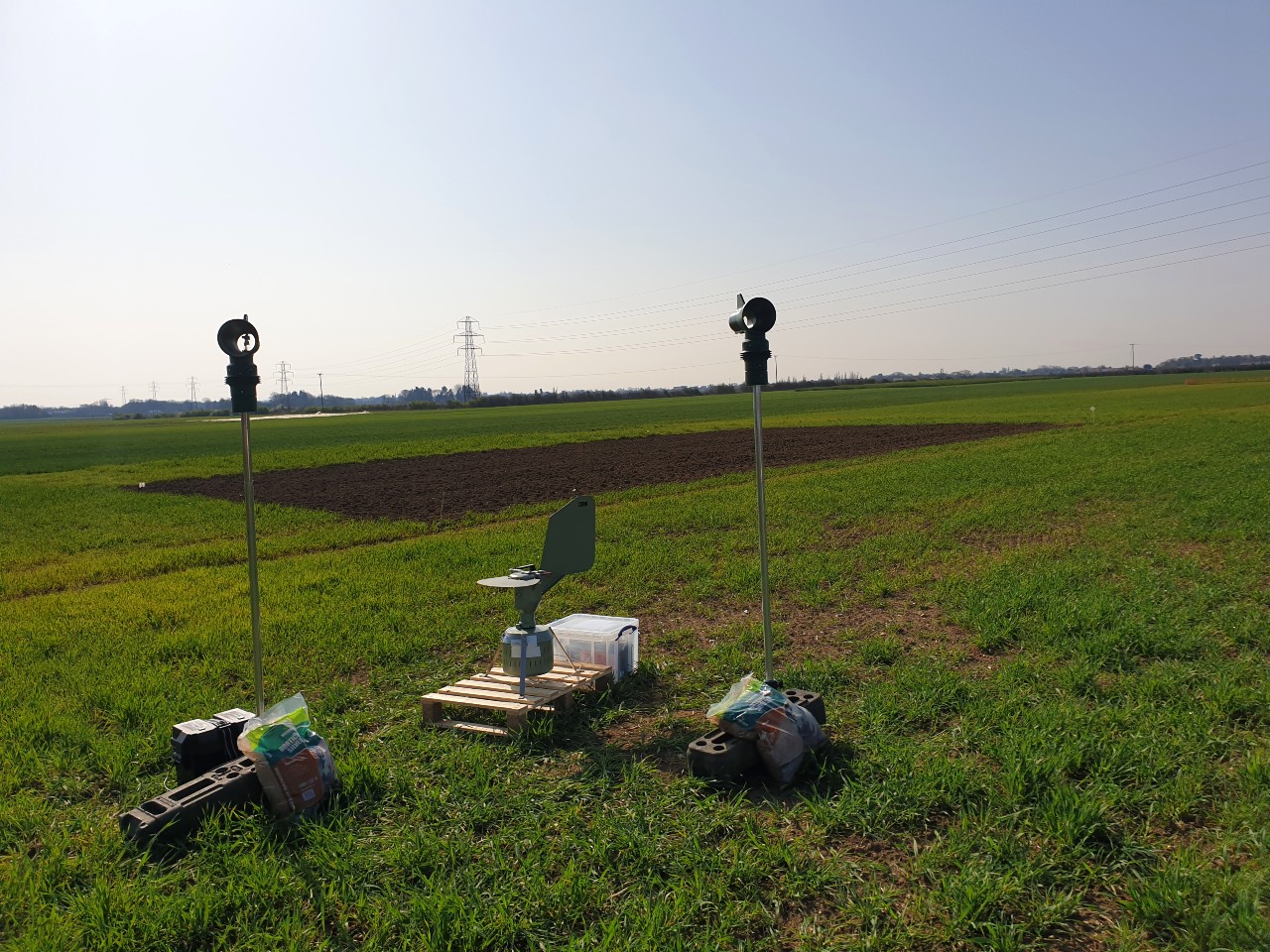
The Sony Sentinel project in use in a cereal crop field
Status

RASCAL

Resilience in Agrifood Systems: Supply Chain Configuration Analytics Lab (RASCAL)

The RASCAL project will bring together a highly collaborative, interdisciplinary team from biological sciences, engineering, and management to co-develop intervention strategies. It will create an interactive digital lab that enables exploration of multiple scenarios involving cascade risks, and potential mitigation interventions. 

Risks to the food system include shifts in consumer demand, changing patterns in retailer sourcing, biosecurity threats, competing government policies, overseas conflicts, and climate events like floods or droughts. These factors can significantly impact production costs and future investments in infrastructure and labour. From the consumer perspective the project will investigate factors impacting economic hardship, nutritional insecurity, and associated health problems.

To achieve this, the project will follow four key stages:

  1. Build interactive digital infrastructure to leverage disparate datasets to explore the balance between self-sufficiency and imports.
  2. Develop new tools for understanding cascade risks and their cumulative impacts along well documented food supply chains.
  3. Explore real-world scenarios, using examples of UK fruit and vegetable supply and alternative protein sources, to demonstrate how advanced modelling can evaluate the impact of cascading risks.
  4. Provide intervention strategies for specific agri-food supply chains to mitigate supply chain risks through a combination of visual interactive tools and field research methods.

Project timing

September 2024-August 2027

Partners

University of Cambridge, Queen’s University Belfast; University of Plymouth

Funder

UKRI

News

UK supply chains get safeguarding boost - UKRI (7 January 2025)

ifM secures grant for major project in safeguarding food supply chains - University of Cambridge (press release - 15 January 2025)


Image
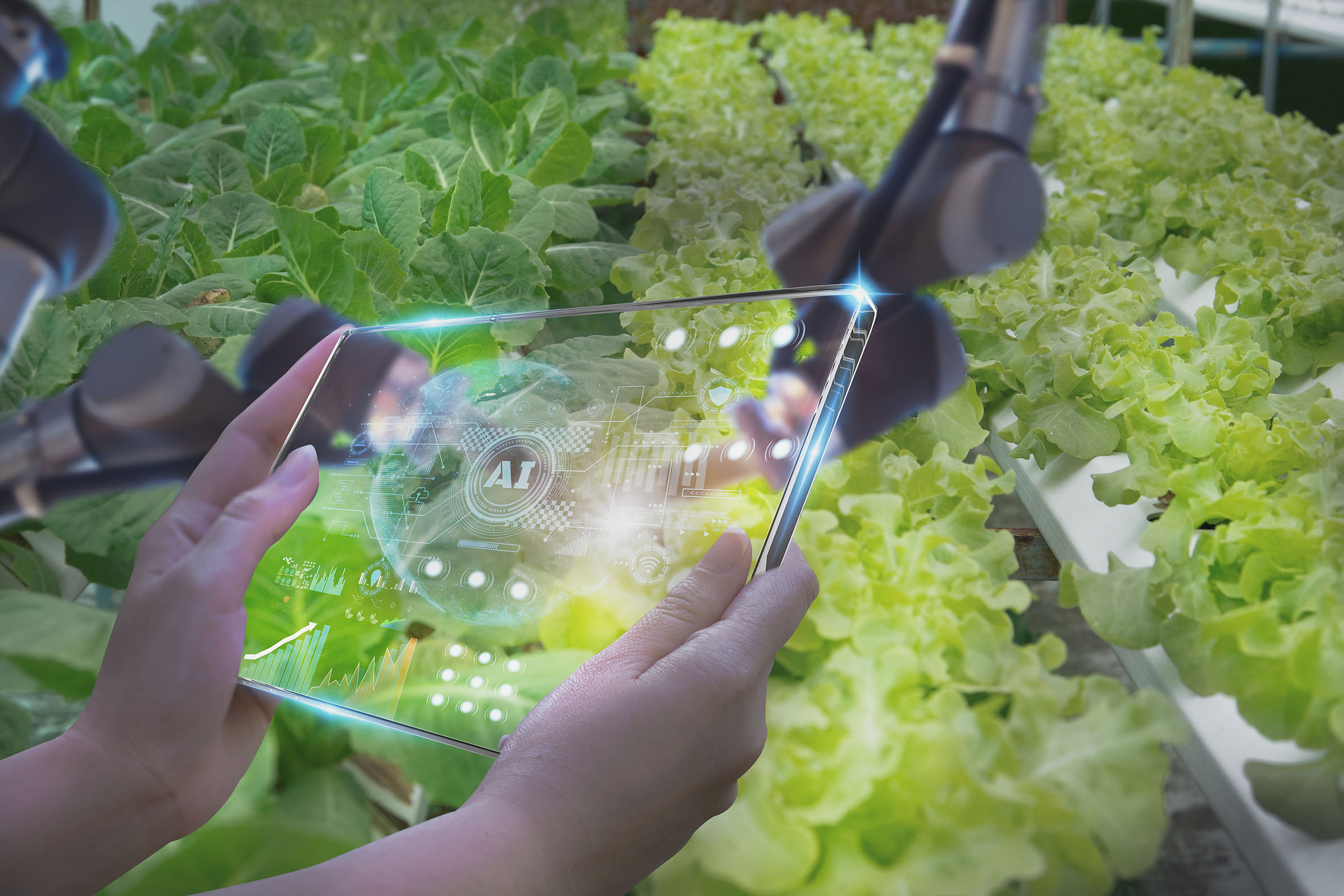
AI helping growers
Status
Subscribe to Active