Developing wildflower mixes dedicated to UK fruit crops

Title: BEESPOKE
Funder: European Regional Development Fund
Industry partners: Policy makers, research institutes and agronomists from seven different north sea region countries including UK, Belgium Netherlands, Germany, Denmark, Norway and Sweden
Term: April 2019 to March 2023
Project leader: Michelle Fountain, Niab

Niab was a partner of BEESPOKE, an EU funded project which sought to increase the number of pollinators and crop pollination on a local and landscape scale by providing expertise, tools and financial knowledge to support growers across the North Sea region. Flower rich semi-natural grassland is the main habitat that supports pollinators, but by 1984, in lowland England and Wales, the area had declined by 97% compared to the previous 50 years, with only 7,500 hectares remaining by 2010. Fruit crops benefit from wildflower rich habitats, not only in the provision of pollinators to maximise yields, but also for the provision of beneficial insects which help to regulate populations of insect pests. Fruit farms therefore will benefit from the establishment of flower rich habitats, which can help to replace at least some of the semi-natural grassland area that has been lost.

The project

One of the aims of the project was to develop a range of seed mixes for planting on farms to help reverse the decline in pollinators. These have been targeted at the types of pollinators needed by each crop type. Some were sown at demonstration centres such as Niab’s East Malling site to evaluate how effective they are by increasing not only the levels and types of pollinators visiting the strips, but also whether they increase numbers in the crops, and whether this has a subsequent impact on crop yield and quality.

Results

Impact of wildflowers on fruit crops

Niab assessed and recorded the impact of wildflower strips at East Malling over the life of the BEESPOKE project. Early data suggested that wildflowers outside tunnel-grown soft fruit crops did not compete with flowering crops for visits by commercially installed bumblebees inside the tunnels. Indeed the fluorescent tracer marked  bumblebees visited the crop flowers far more than the adjacent wildflowers. In raspberry crops, adjacent wildflowers enhanced the number of insect pollinator visits to the crop. This would dispel any concerns commercial growers might have about wildflowers competing with their crop for pollinators.

Research in apple orchards demonstrated how over three seasons, with alleyway sowings of knapweed, yarrow, oxeye daisy, bird’s foot trefoil, self-heal, red campion and red clover, tree populations of predatory spiders, hoverflies, anthocorids and lacewings increased, while numbers of codling moth decreased. Early season aphids, such as rosy apple aphid, decreased in some years but not others, while rust mite increased in one season. Niab also identified adult thrips in wildflowers and found species and numbers fluctuated between years but the majority of thrips recorded were not species damaging to strawberry. Further work is required in soft fruit crops to understand more about this relationship.

The Niab entomology team is also of the view that there will be a greater impact of natural enemies if the wildflowers are positioned within the crop rather than around the field margin. They also recorded an increased diversity of invertebrates in soils where wildflowers were sown, compared to single species mixes, potentially having a positive impact on soil health.

Niab organised a dedicated BEESPOKE event at East Malling in October 2022.

Developing wildflower mixes for UK fruit crops

When setting about developing Beespoke wildflower mixes for our different UK fruit crops, our scientists gave serious thought to the structure, size and composition of the areas to be established and how they should be managed.

It is important to include species that provide height to the mix, which provides improved habitat for insects and an increased biomass which is good for carbon capture. As a result, mowing should be kept to a minimum and if it must be carried out, it is better to mow every other crop row or in the case of large wildflower areas, only half the area. Ideally, the height should be maintained at a minimum of 20cm. If there has been little rainfall a single cut in the Autumn may be all that is needed.

Although semi-natural habitats are important habitat for pollinators and beneficials, alongside ditches, native hedgerows and woodlands (for nesting and shelter), purpose-sown flora can be tailored to specific needs, so growers can gain a lot of pollen and nectar resource from a small area. Some studies recommend a minimum of 6% natural habitat and ideally up to 10%. In addition, a total of 1km of flowering hedgerow per farm can be sufficient to support six common pollinator species. It is generally felt that several small habitat rich areas are more beneficial than one large area for supporting butterfly and parasitoid species. Should one large area fail or be damaged in any way, there are no alternatives, so several smaller areas provide a fall back in case of failure of one. Different areas can also host different seed mixes to further diversify on-farm biodiversity.

The seed mixes should ideally provide diversity of species which complement wildflower species that are already present in or around the farm. The mix should provide flowers outside of the crop flowering period, thereby extending the provision of pollen and nutrients, which can maintain insect population stability and fecundity. Late flowering species help insects to complete their lifecycle thereby helping them to survive from year to year.

When developing an optimum seed mix for each fruit crop, the scientists considered which bee and hoverfly species most commonly visit the crop, which non-crop flowers they visit most often, and which are likely to thrive in a sown area or regenerated strip. They undertook literature searches to identify the pollinators that visit each crop and ranked them according to the frequency of their visits.

Having chosen the top five or six pollinators, they considered the non-crop wildflowers most commonly visited by each pollinator and produced a final choice of seed for each fruit crop including annuals, perennials, biennials and weed species that will attract the five or six pollinators. Not all species will thrive on every site, and for each mix, there is a caveat that some flowering species may have potential to harbour crop pests or diseases, allowing growers to make informed decisions about their final choice of mix.
Some flower species were included repeatedly in a number of the crop mixes, including bird’s foot trefoil, dead nettle, clover, yarrow, hawksbeard and dandelion. Some are long flowering species and some are late flowering.

Niab has produced guides to selecting suitable seed mixes for all UK fruit crops and these can be found on the BEESPOKE website. In addition, other very helpful guides, evaluation tools and publications for growers have been produced as part of the project and are available on the website, including ‘Monitoring pollinators’, ‘Estimating pollination potential’, ‘Establishing perennial wildflower areas’ and ‘Supporting pollinators and farmland biodiversity’.
 

Research project tags
Image
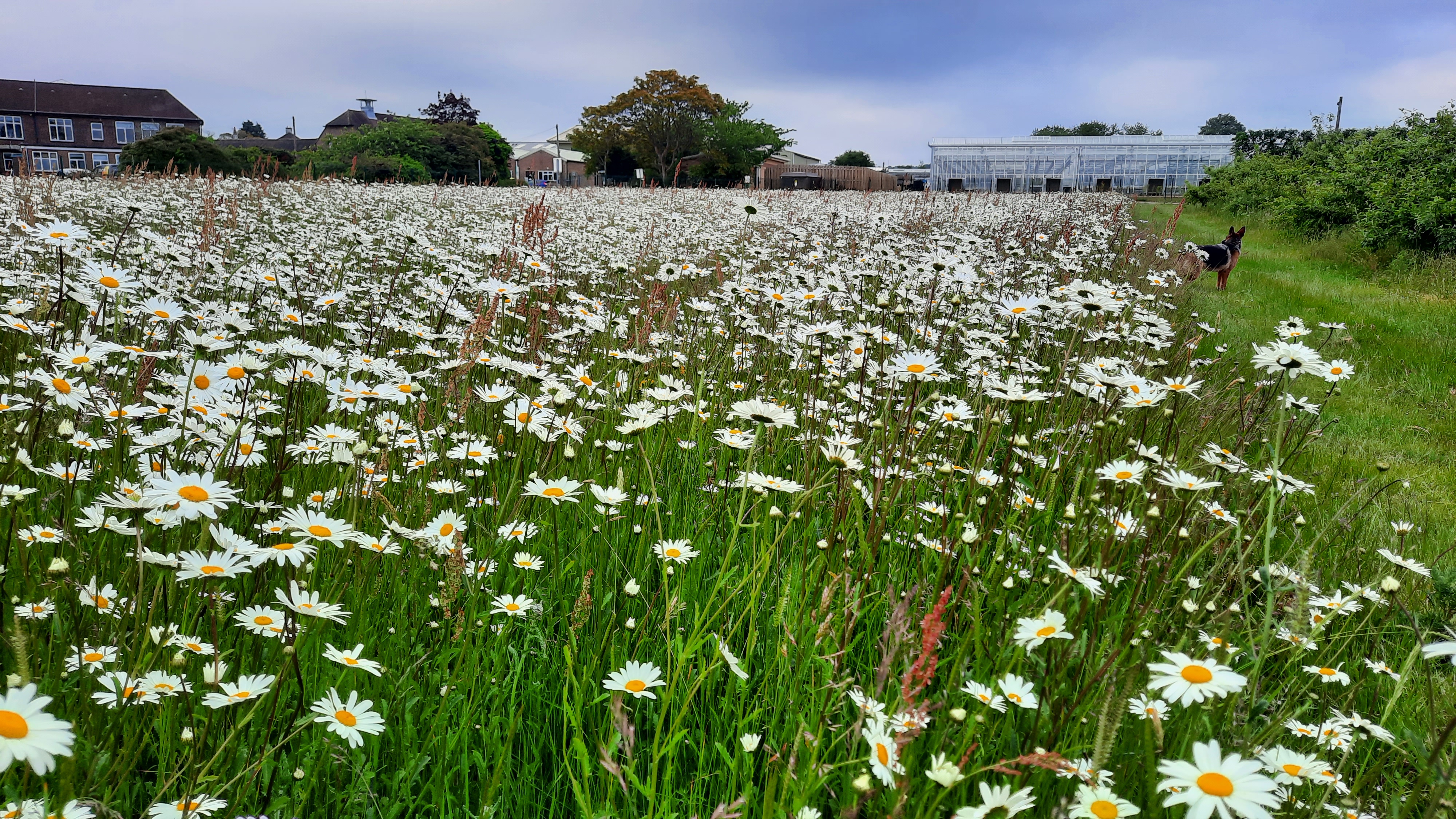
Wildflower demonstration area sown at Niab's East Malling site
Status

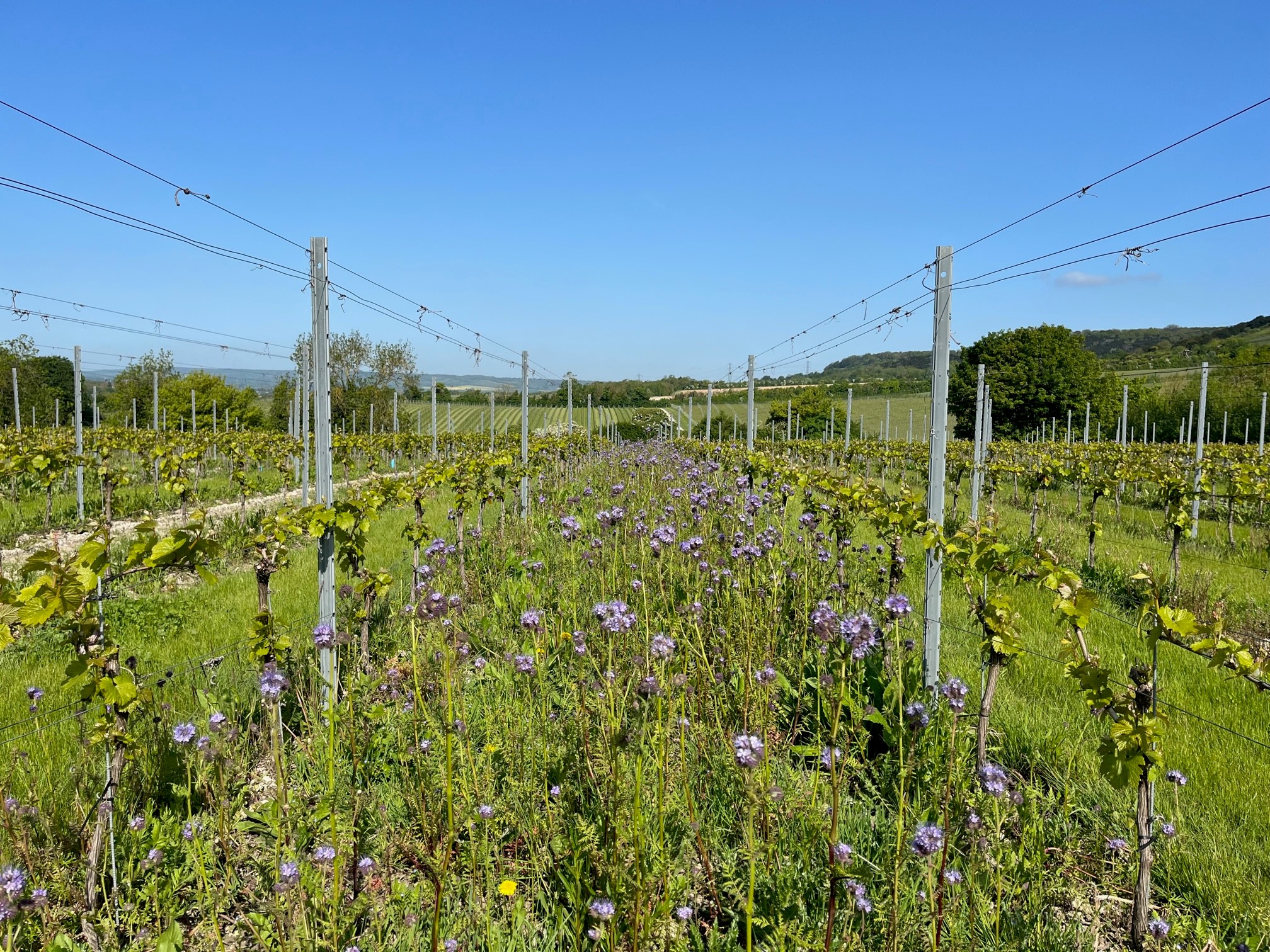
Improving vineyard soil health through groundcover management

Project title

Increasing productivity and sustainability in UK viticulture: investigating the potential of groundcover management practices on soil health, yields and juice quality, and emissions.

Partners

Gusbourne
Chapel Down (English Wines PLC)
T Denne & Sons
National Resources Institute (University of Greenwich)
Vinescapes

Funders

Defra via Innovate UK

Niab is increasingly aware that poor soil health can give rise to inconsistent grape yields and juice quality, which can lead to costly interventions in the vineyard and winery. Cover crops could play a significant role, by enhancing soil health through their effects on soil carbon content, hydraulic conductivity, biodiversity, and soil structure.

The project

Niab has investigated the potential impact of vineyard groundcover management practices by comparing soil health, vine growth and juice quality between a range of inter-row cover crop treatments, as well as different under-vine management strategies comprising herbicide applications, a mechanical method (under-vine cultivation), and a control using weed strimming alone.

The comparisons were made on three sites including the East Malling Research Vineyard and two commercial vineyard sites at Chapel Down and Gusbourne. The cover crop mixes included phacelia, faba bean, an annual mix of rye and vetch, and a perennial mix containing creeping red fescue and three clover species. The control treatment consisted of alleyways that were maintained as before, with natural/spontaneous vegetation that is regularly mown.

Hot and dry conditions in 2022 resulted in poor establishment of the cover crops, so work was done in that year to compare different methods of sowing and management. Better conditions in 2023 allowed improved establishment enabling comparisons to be made between the crop cover mixes, and the project was extended into 2024 to acquire an extra season of data.

Results

In 2023, some statistically significant results were recorded in the faba bean plots which established particularly well on all sites. There were significantly higher concentrations of soil phosphorus (P) in the faba bean treatment at both the Gusbourne and Chapel Down sites relative to the control, but no differences were found at East Malling. Potential benefits of increased soil P includes enhanced tolerance of the grapevine to copper toxicity, and, in some instances, increased number and weight of clusters and berries. However, it will need careful monitoring since excess soil P can have a negative impact on berry quality.

Other trends appeared over 2023 and 2024. In both years, although not statistically significant, soil nitrate levels in the faba bean plots were much higher than in the control plots at both Gusbourne and East Malling and the same increase was seen on all three sites in 2024 in both faba bean and phacelia plots.

On all three sites, soil moisture levels were lower in all the crop cover treatments compared to the control, suggesting that soil aeration could be improved where crop covers are planted.

In 2023, chlorophyll levels in vine leaves were significantly higher in vines adjacent to faba bean alleyways at both Gusbourne and Chapel Down, and this same trend was observed at East Malling in 2024.

The effect of cover crops on vine canopy varied between years, but there was a trend toward higher vigour in vines adjacent to faba bean and phacelia at all three sites in 2024. It is surmised that this may have resulted from the additional nitrate measured in these plots. In addition, the annual mix of rye and vetch at East Malling and Gusbourne was associated with increased vigour in 2024. This may require additional management interventions to limit the increased disease pressure and reduced grape juice quality that can result from high vigour.

In terms of grape juice quality, significantly higher levels of yeast assimilable nitrogen (YAN) was recorded in grapes from vines adjacent to the faba beans at Gusbourne compared to the control in 2023. This may be attributed to the nitrogen-fixing capacity of the beans resulting in greater nitrate availability to the vines. In 2024, there were trends showing higher YAN content in all crop cover treatments than in the control treatment, although the increase was not statistically significant.

It should be stressed that we can’t draw firm conclusions from these results as the findings were not repeated in both years of the trial and in some cases, only trends have been recorded. However, the work has demonstrated that cover crops can benefit several aspects of soil health (improved nutrient content, better water management) and the vine (e.g. chlorophyll content, YAN). Vine growers considering using cover crops are encouraged to think carefully about how best to establish them, seek guidance from others who have experience of using them and be patient in the early years. 


Research project tags
Image
Phacelia growing at Chapel Down
Status

Biomass Connect

Biomass crops are non-food plants cultivated for the purposes of energy production. Sometimes referred to as energy crops, they have a high potential energy content or calorific value. This project compares how well different crops and varieties grow in regions across the UK and demonstrates innovations which have the potential to maximise their economic and environmental benefits.

Project website

The Biomass Innovation and Information Platform is a demonstration and knowledge sharing initiative to showcase best practice and innovations in land-based biomass feedstock production.

The project has four primary aims:

  1. Independent information - to provide robust, independent information on biomass feedstock performance, agronomy, economics and environmental benefits to landowners and land managers.
  2. Variations and efficacy - to de-risk new crop adoption by ensuring that geographic variations in the efficacy of biomass feedstocks and relevant innovations are fully evaluated and demonstrated to a broad range of stakeholders across the UK.
     
  3. Knowledge - to facilitate discussion and learning regarding the biomass sector by enabling the sharing of knowledge, experiences and case studies.
     
  4. Robust evidence - to contribute to agricultural, environmental and bioenergy policy development by contributing robust evidence and facilitating interactions between policy, academia and industry.

Through the platform, the project is building a UK-wide, cohesive, regionally based community who will contribute to the development, establishment and operation of the platform. Building this focal point for the industry will support the ambitious scaling up of both the bioenergy industry itself and the scale of planting which is required to align with the Committee on Climate Change’s modelling for net zero, which anticipates expanding from 10,000 ha to 730,000 ha by 2050.

Partners

This project involves researchers and industry partners from UKCEH, Rothamsted Research, Aberystwyth University, Scotland’s Rural College (SRUC), the Agri-Food and Biosciences Institute (AFBI), Crops for Energy, Newcastle University, Niab and Bio-Global Industries.

Funders

The Biomass Feedstocks Innovation Programme is a £36 million programme, funded through the Department for Business, Energy and Industrial Strategy’s £1 billion Net Zero Innovation Portfolio, which aims to accelerate the commercialisation of innovative clean energy technologies and processes through the 2020s and 2030s.

More information

For more on Niab's role in the project contact Joe Martlew or visit the Biomass Connect website

Research project tags
Image
Biomass Connect logo
Status

Exploiting novel wheat genotypes for regen ag

Funded by The Morley Agricultural Foundation (TMAF) and the JC Mann Trust, Niab is conducting multi-disciplinary research encompassing agronomy, genetics and molecular plant physiology to assess novel wheat genotypes in regenerative agriculture conditions.

Following a rotation based on winter wheat, trials will rotate across well-characterised experimental sites in East Anglia, with a known history of management. Fully replicated plot trials will evaluating the performance of new wheat genetic material (including resynthesised wheat (SHW) lines), under regenerative agricultural practices and lower nitrogen inputs.

The project ultimately aims to support growers and agronomists to produce high quantity and quality grains at low cost, and with limited environmental impact.

Take our survey

Niab is looking for farmers to share their experience of growing different wheat varieties in regenerative agriculture systems. Take our survey, so we can better understand which wheat varieties are widely cultivated and favoured by growers under these principles. Thank you for your support.

RESOURCES

Poster: Novel wheat genotypes for regen-ag (2025)

VIDEO

Video: Nitrogen utilisation in winter wheat under a regen ag system

FUNDERS


The Morley Agricultural Foundation logo


The JC Mann Trust logo


PROJECT DURATION

September 2022 to August 2028 

PREVIOUS RESEARCH

New Farming Systems research
Designing Future Wheat


Image
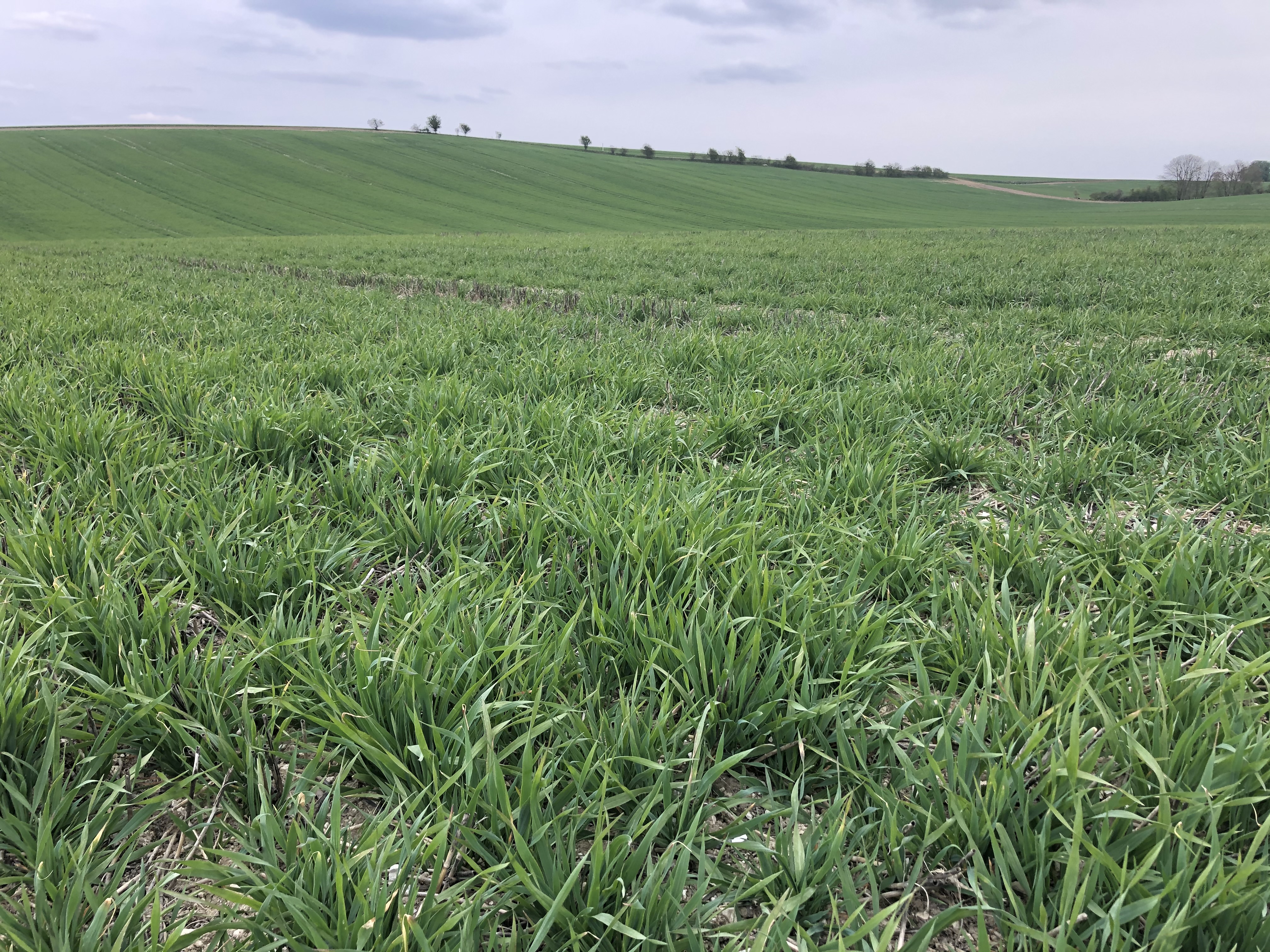
Young wheat plants growing in a field in the UK
Status

New Farming Systems

A series of long-term studies seeking to develop bio-sustainable cropping systems for conventional arable cropping.

The New Farming Systems programme is funded by The Morley Agricultural Foundation (TMAF) and The JC Mann Trust and is being carried at Morley, in Norfolk, on a sandy clay loam soil.

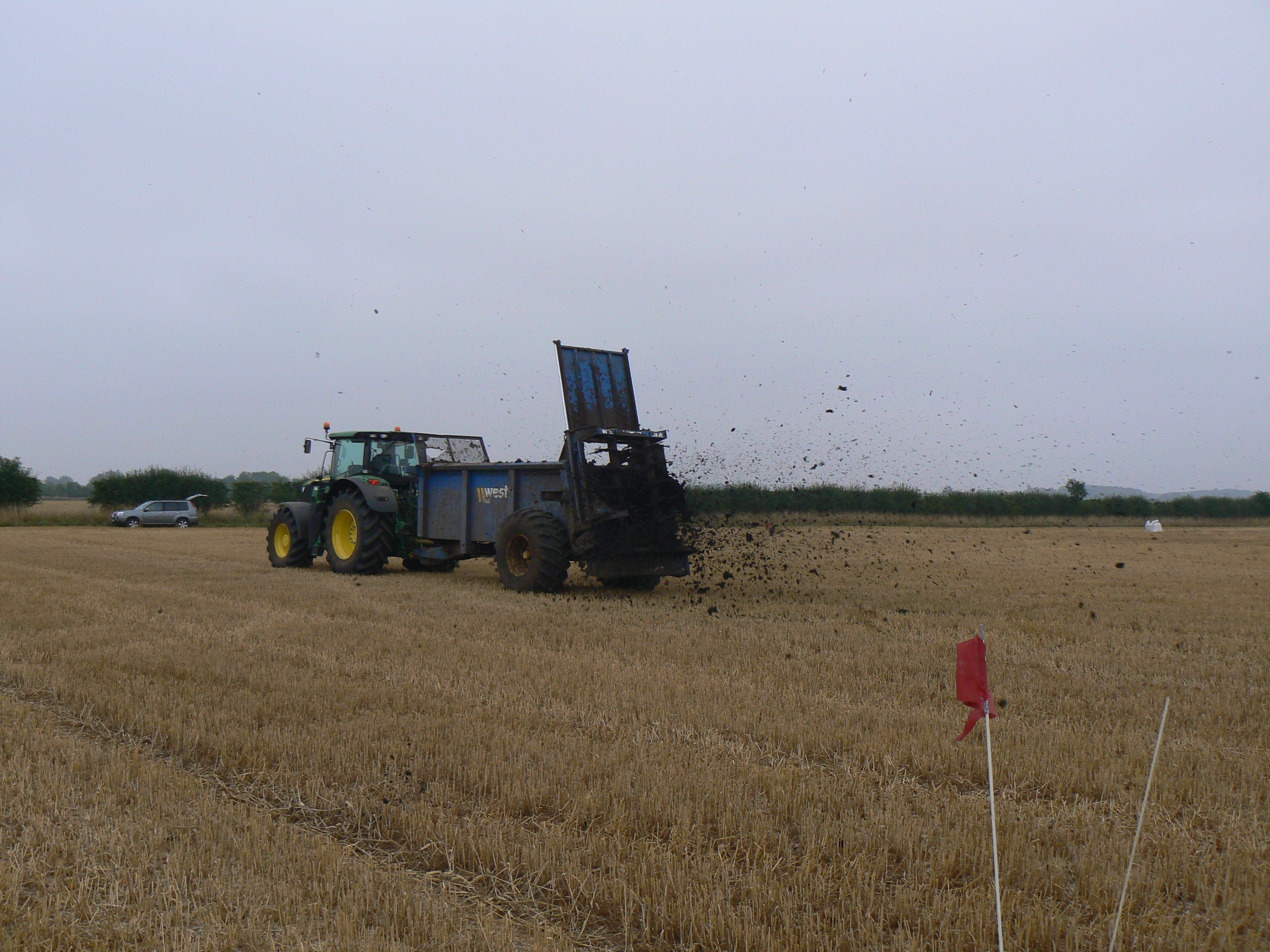
Research within the NFS programme is seeking to maintain or increase system output while at the same time seeking to improve efficiency, sustainability and resilience within conventional arable cropping systems. Experiments are ostensibly examining three inter-related themes: fertility building, approaches to tillage and the use of soil amendments.

The experiments within the NFS programme are fully replicated, large plot studies that use farm scale equipment and techniques and include:

Event posters

View and download research and information posters used at open days and trade events - available on the Niab Knowledge Hub

Image
Spreading farmyard manure (FYM)
Status
Subscribe to Regen ag