POME: Precision Orchard Management for Environment

POME is a multidisciplinary, four-year project that will enable a step-change in the way orchards are managed.

By utilising and developing a suite of cutting-edge technologies each tree in an orchard will be analysed in fine detail, allowing crop management inputs to be targeted in a way that has never been seen before in UK orchards.

Production efficiency and yield will increase whilst minimising inputs, benefiting growers, consumers, and the wider environment.

Led by the crop advisory company Hutchinsons and involving many other commercial and academic partners, including Niab, the POME project is co-funded by Innovate UK, DEFRA and the commercial partners involved in the project.

Partners

The project is led by HL Hutchinsons Ltd, with the other partners including: engineers N. P. Seymour, GNSS and software developer The Acclaimed Software Company, marketing desk Avalon Fresh, aerial imaging and data analytics company Outfield, robotics developer Antobot, remote sensing specialists Fotenix, agri-economics from the University of Kent, robotics and automation expertise from Loughborough University, Niab, and the Chemicals Regulation Directorate (CRD). There are several growers involved, including A.C. Hulme, and Plumford Farm.

Hutchinsons logoNPS Logo

The Acclaimed Software Company Logo


Avalon Fresh logoOutfield logoUniversity of Kent

Antobot logo


Fotenix logo

Loughborough University

Niab logo


ACH Farming


Funders

IInnovate UK logo

Defra logo


Project duration

November 2023 to October 2027

Image
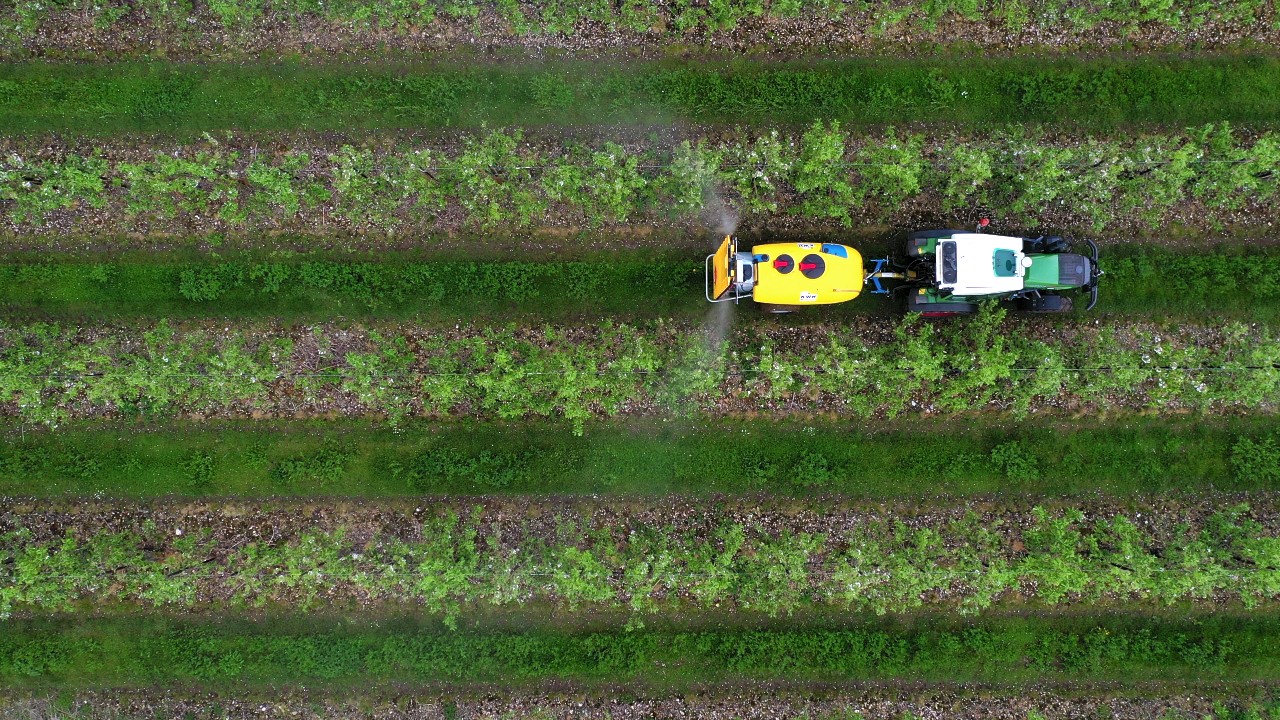
Aerial shot of a tractor spraying in orchard
Status

Sustainable management of apple replant disease

It is now generally accepted that apple replant disease (ARD) is a disease-complex primarily caused by microbial pathogens. Recent research by Niab, funded by BBSRC and the EU, has shown that disease severity is reduced where newly planted trees are planted on a rootstock genetically distinct from the previous one and the trees are in the previous grass alley. Amending soils with specific biopesticides and microbes or organic composts further reduced the problem. In this project, Niab will evaluate an integrated approach to control using all these treatments in combination. 

Research project tags
Image
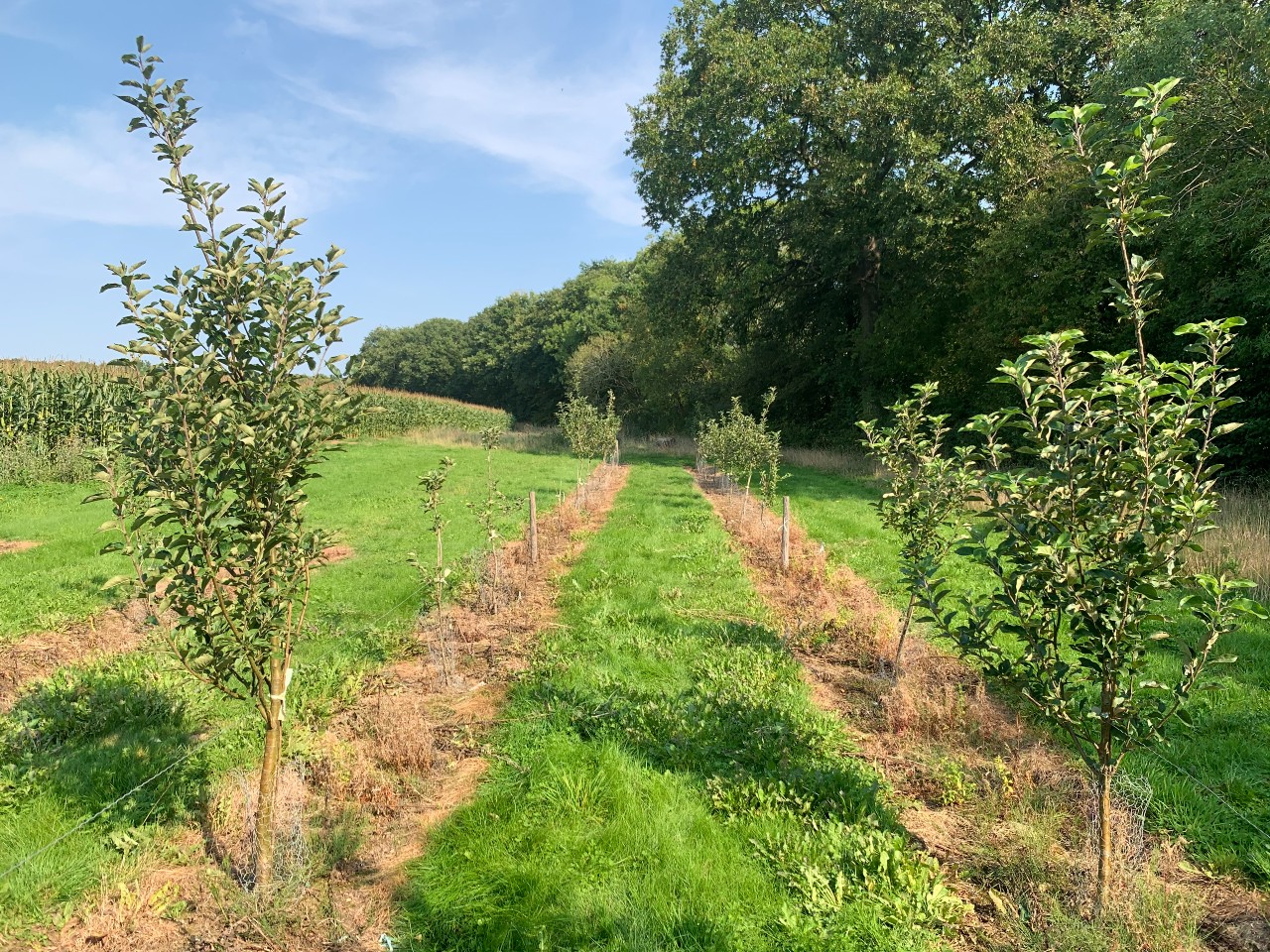
Apple orchard
Status

Sustainable management of apple canker

New studies on site specific factors affecting apple canker and a novel method of disease management with endophytes


Much effort has been spent in recent years seeking new approaches to apple canker which don’t rely solely on the use of conventional fungicides. Niab has studied endophytes (bacteria and fungi which spend at least part of their life within a plant without causing apparent disease) and demonstrated the potential of the fungal genus Epicoccum for offering some control. A particular bacterial genus (Sphingomonas) is associated with scion cultivar tolerance against the canker pathogen. In addition, bacterial endophytes appear to be more persistent over growing seasons than their fungal equivalent.

The project

In this latest project, two strategies will be investigated. The first will study the impact of site-specific factors, including soil pH, organic matter and nutrient levels and type, on the development of canker symptoms from latent infection that occurred in the nursery. This could help growers to select sites with minimal risks to canker development during tree establishment in the orchard.

The second will study Sphingomonas isolated from apple leaf scar tissue. It is a naturally occurring endophyte in apple, associated with plant health, and known to be capable of promoting plant growth. We will assess its seasonal dynamics following artificial augmentation across growing seasons to assess whether the level of its abundance is associated with tree health, and whether repeated application is necessary to maintain its abundance at a sufficiently high level to offer control.


Funder: Biotechnology and Biological Sciences Research Council (BBSRC)
Industry partner: Worldwide Fruit; Avalon Fresh
Term: October 2023 to September 2025


Research project tags
Image
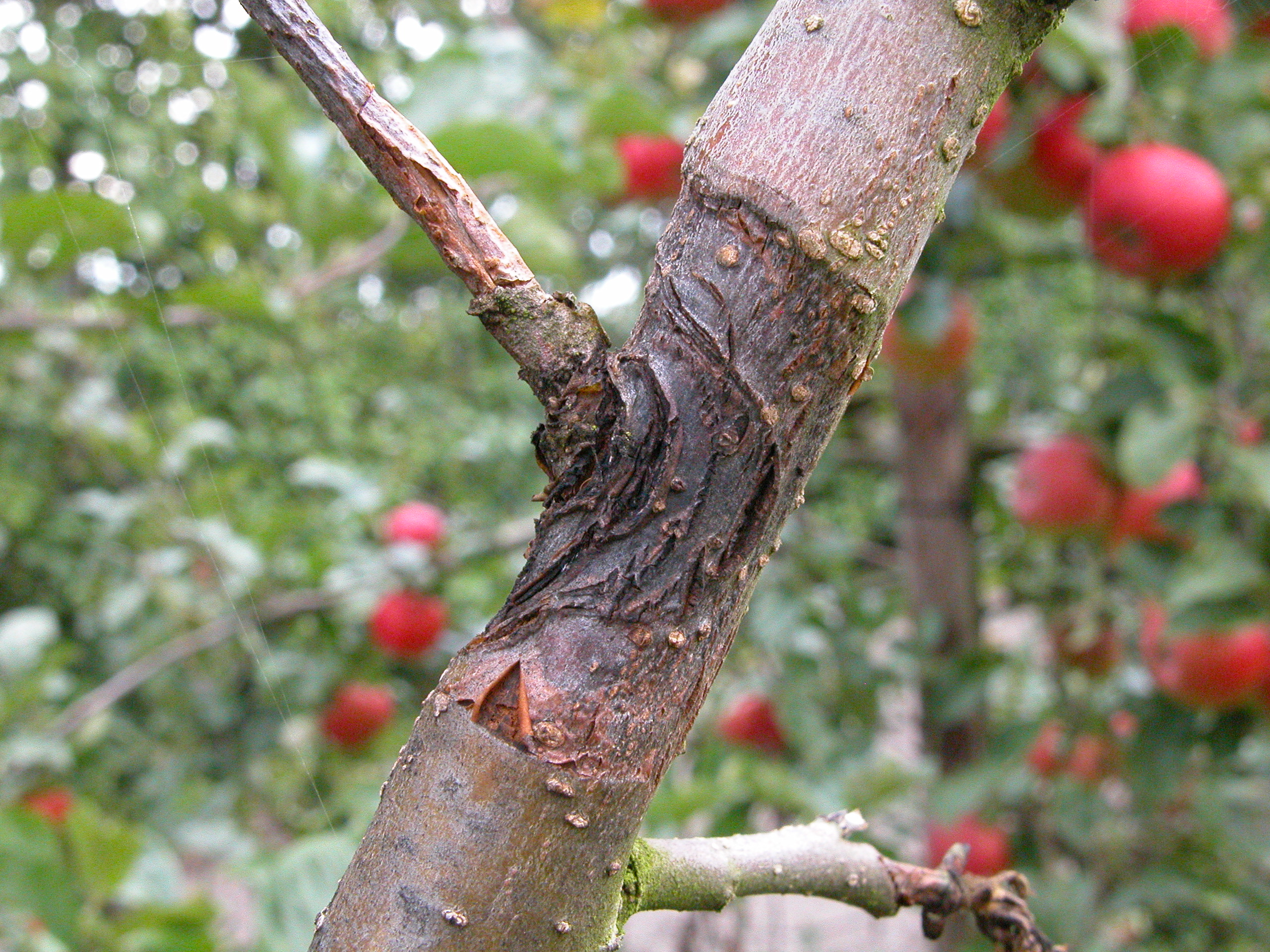
Apple canker
Status

Next generation apple breeding

Most of the modern apple varieties grown in the UK are susceptible to apple scab (caused by Venturia inaequalis), apple powdery mildew (caused by Podosphaera leucotricha) and European apple canker (caused by Neonectria ditissima). All three are fungal diseases which can cause serious yield and quality losses if not adequately controlled and their effective management is time consuming and significantly adds to the production costs. The long-term aim of the industry is to breed apples with resistance to these diseases, which will reduce production costs by avoiding the use of conventional spray control measures. However, breeding is a long-term process and typically takes 20-25 years from crossing to release.

The project

The aim of this project is to develop novel breeding methodologies that will enable a shorter breeding cycle for apple and ensure a faster route to market for resistant varieties. The methodologies will include the use of genomic selection, marker assisted selection and speed breeding. These will be implemented in the Apple Breeding Consortium involving Niab and industry partner WorldWide Fruits Ltd.


Title: Next generation apple breeding for resilient UK production
Funder: Growing Kent & Medway
Industry partners: WorldWide Fruit Ltd
Term: June 2023 to March 2025

Image
Apple progeny from breeding programme being grown on under glass
Status

Soil health: Developing a holistic biological soil health test

With fruit growers keen to maximise yield potential from every soil-grown tree or plant, it is important to employ land which is in optimum health, but it can be difficult to determine the relative health of a field soil.

In this project, Niab and Verdant Carbon Ltd seek to develop a test that will reliably assess the abundance and functionality of soil microbial communities, and relay the information to the grower in a simple-to-understand metric. The work also aims to measure the health of soil nutrient (carbon and nitrogen) cycling functions, to further support environmentally positive farming.


Funder: Innovate UK

Industry partner: Verdant Carbon Ltd

Term: August 2024 to January 2026

Research project tags
Image
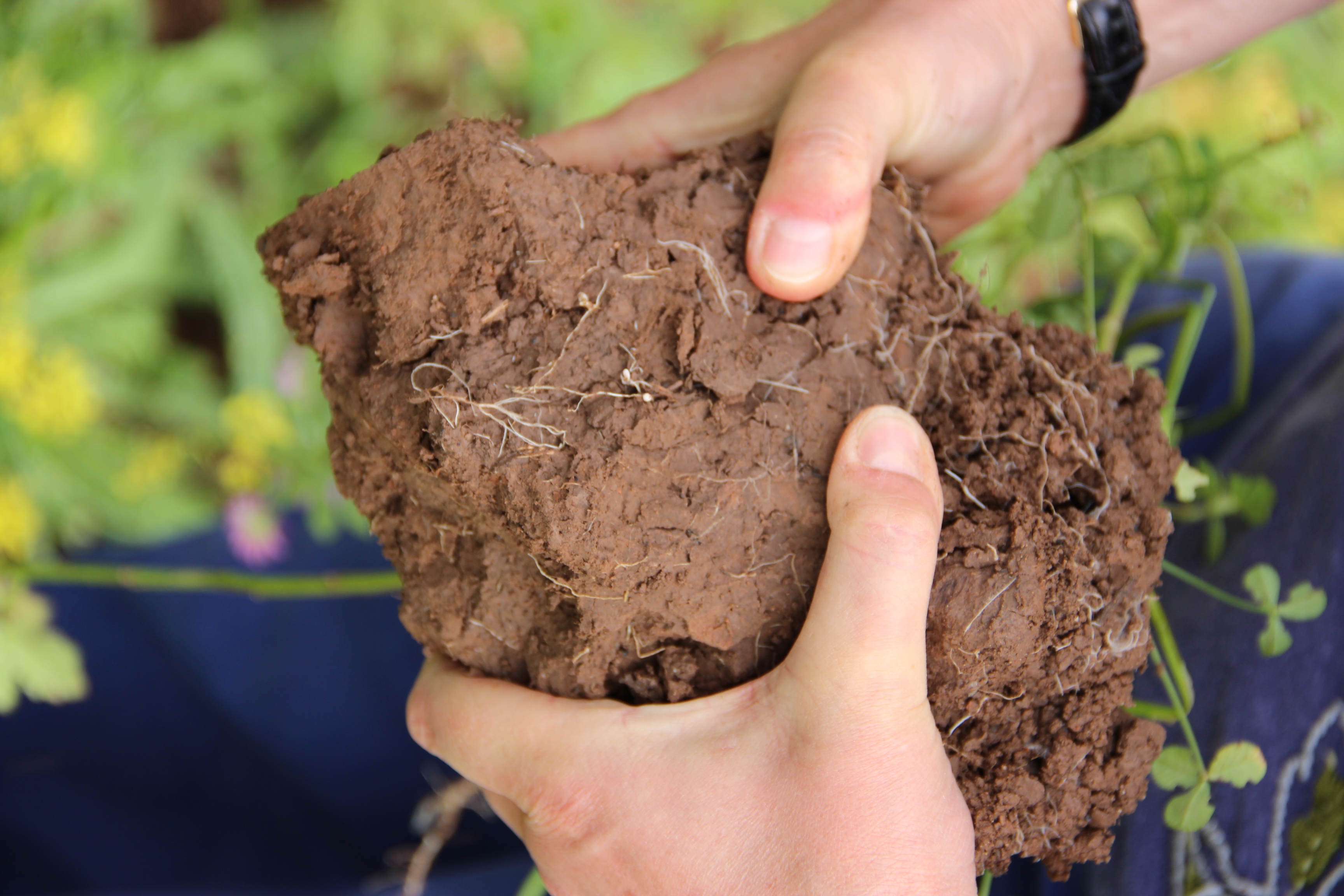
Looking at soil
Status

Arboricrop: Next generation agriculture using real-time information from tree crops

Conventional fruit production relies upon growers employing costly interventions of water, nutrients and crop protection products to optimise plant health, yields and fruit quality.

This project will design, test and produce a Next Generation Electrophysiological Sensor (NGES) that can detect plant stress before visual symptoms appear, allowing growers and agronomists to apply interventions earlier, thereby minimising yield losses and maximising efficiency. Such technology has demonstrated promise in protected crops, but this project will focus on woody crops such as apple and vines.


Funder: Innovate UK

Industry partners: Benchmark Control Ltd (Lead), Adrian Scripps Ltd and H.L.Hutchinson Ltd

Term: February 2024 to July 2026

Research project tags
Image
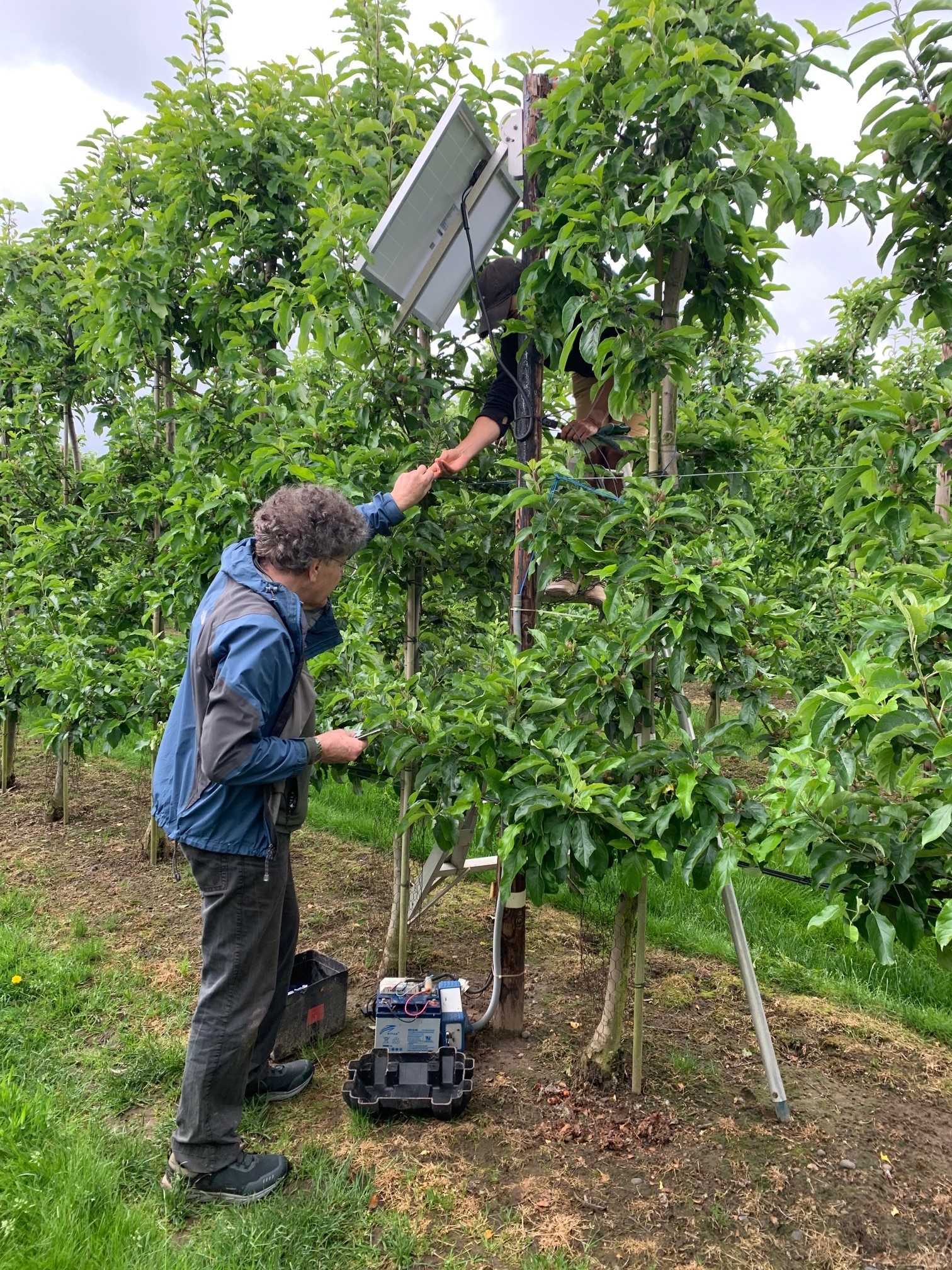
Next generation electrophysiological sensor being set up in an orchard
Status

Sensor-based precision fertigation of stone fruit to improve nutrient use efficiency, yields, and quality whilst lowering emissions

Niab has embarked on a project that will help plum and cherry growers to match supply of water, nitrogen, phosphorus and potassium to tree demand.

The project aims to develop novel technology for measuring nitrogen, phosphorus and potassium concentrations in soil solutions at different rooting depths in real-time. The work will also make use of a vast array of new technology including soil moisture sensors that will inform low-input water and fertiliser strategies that reduce the loss of water and nutrients from the rooting zone.

The impacts of these treatments on greenhouse gas emissions from orchard soils will also be measured. If successful, the work could develop precision irrigation and fertigation systems that can be adopted by commercial growers and lead to a reduction in water and fertiliser use in plum and cherry crops.


Funder: Defra Farming Innovation Programme

Industry partners: The Orchard Fruit Company (Lead), A.C. Hulme, Domum Agrum, Delta-T Devices, Driemtech, EDT directION, Fotenix, Soil Moisture Sense and Torry Hill Farm,

Term: January 2025 to December 2027 

Research project tags
Image
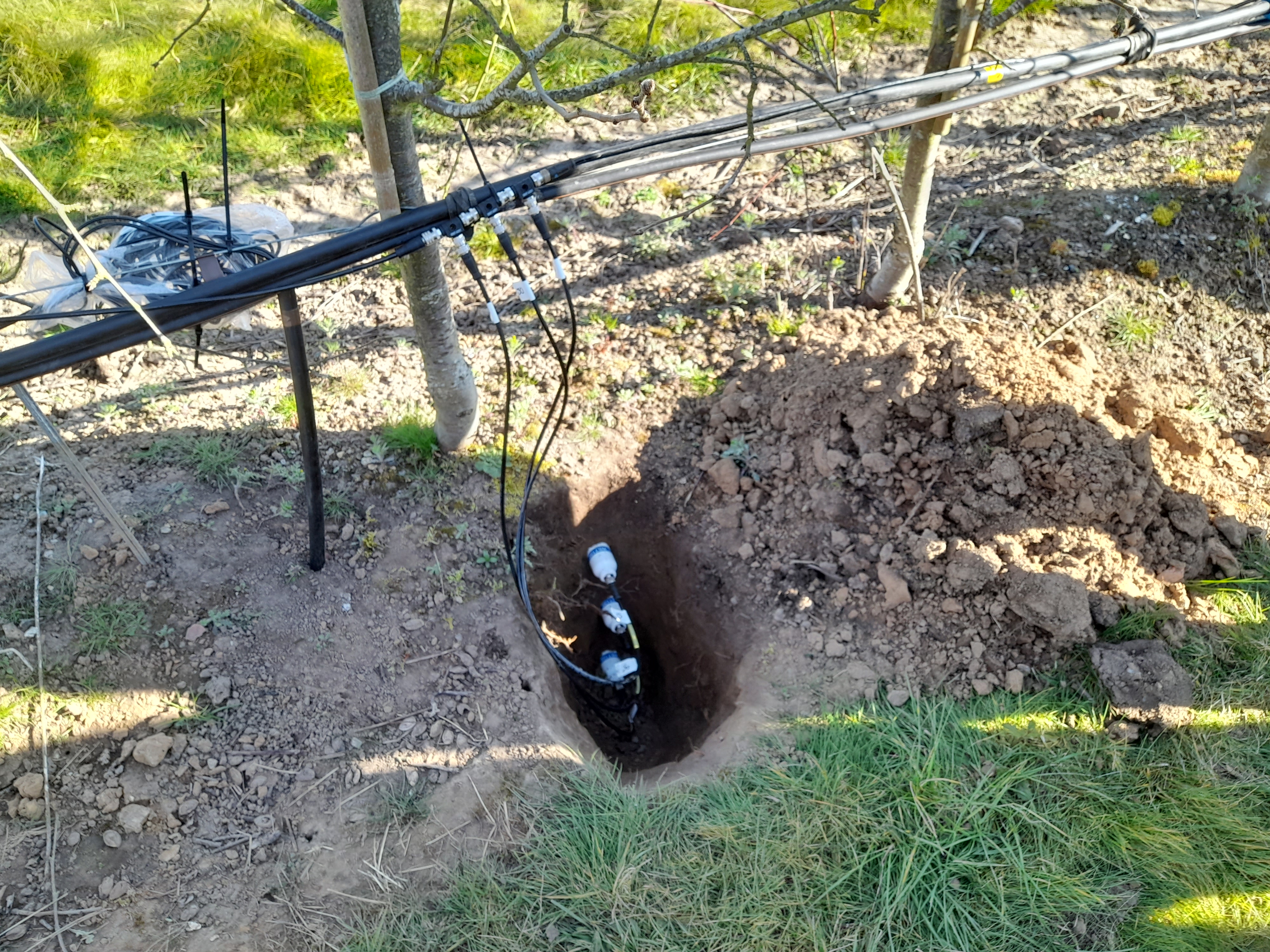
Soil moisture sensors being installed in the plum orchard
People
Status
Subscribe to Top fruit