AHDB Strategic Cereal Farm Midlands

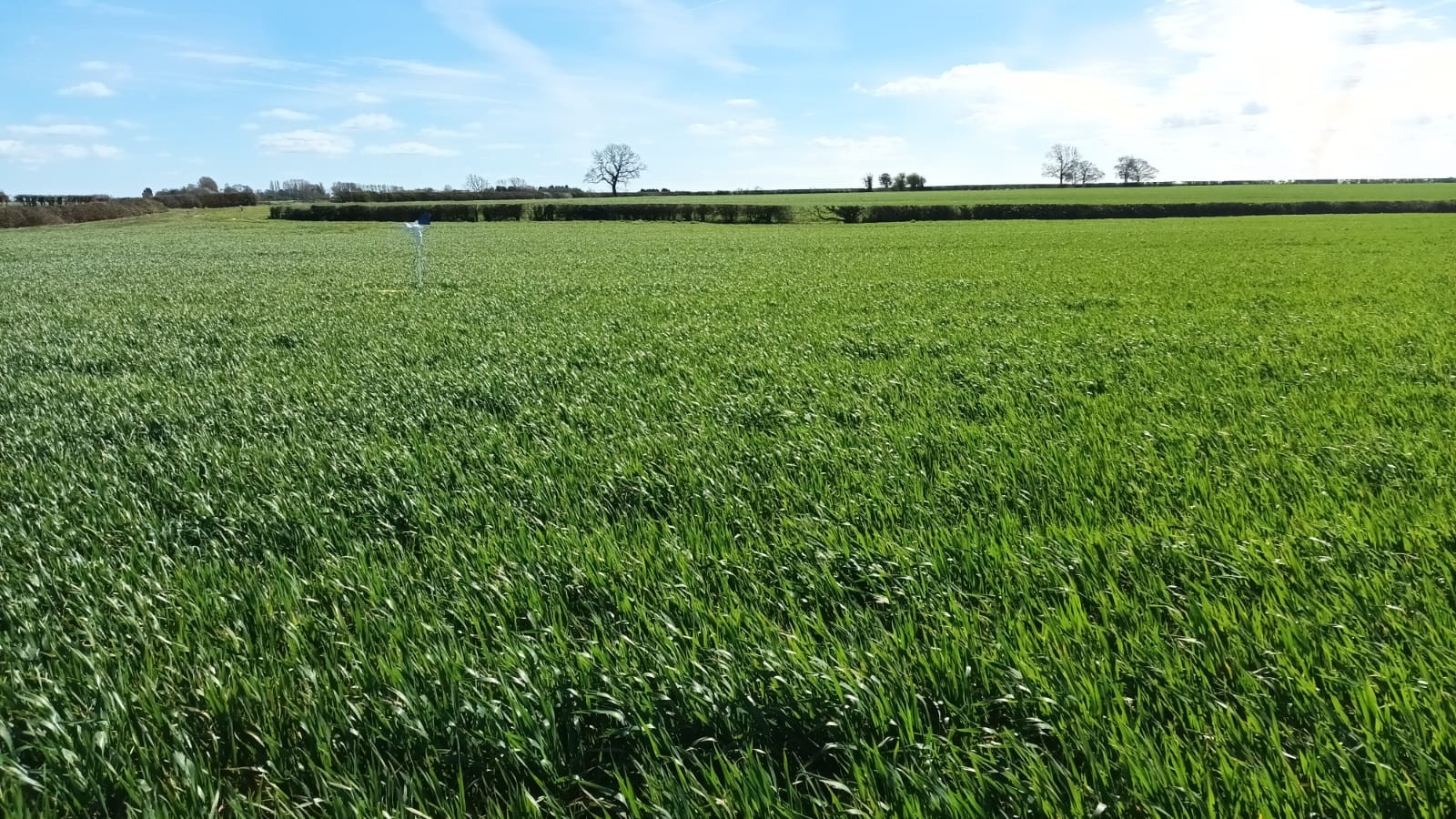
AHDB Strategic Cereal Farms aim to putting cutting-edge research and innovation into practice on commerical farms. Each farm hosts field-scale demonstrations, with experiences shared with the wider farming community. Niab has partnered with AHDB to deliver the new Strategic Cereal Farm Midlands. Will Oliver hosts Strategic Cereal Farm Midlands. The farm is keen to invetsigate how to optimise inputs, whilst maintaining yield and improving rotational management.

Niab's Farming Systems and Pathology teams have collaborated to deliver three inital workpackages:

  1. Management of maize residue for establishment and disease risks of a following winter wheat crop in a direct drill system
  2. Optimising organic amendments in nutrient management planning for winter wheat
  3. Testing novel technologies to improve disease and nitrogen management in winter wheat (in collaboration with SporeSense, a technology company that uses AI biosensors to aid early disease detection)

Partners


Funders


Duration

2025-2031

More information on the project website

Image
AHDB Strategic Farm Midlands
Status

Genomic Pattern Recognition in DUS testing for Barley

To be marketed and/or awarded Plant Breeders Rights (PBR) in the UK, all agricultural varieties must pass DUS (Distinctness, Uniformity and Stability) testing. This ensures that new varieties are unique, with distinctness determined by visually comparing candidate varieties against other varieties in common knowledge (the ‘variety collection’).

In this Defra-funded project we are exploring ways to accelerate variety registration using genomic prediction approaches. Working on barley, we are refining and optimising our machine learning prediction models, focussed on prediction of individual barley DUS characteristics (phenotypes), to facilitate earlier selection of similar varieties from the variety collection for field distinctness assessments. Predictions models are being tested in parallel to current DUS testing procedures, with consideration of logistical and technological challenges for future implementation. Software for user-implementation of the finalised models is also being developed to support the use of the analysis pipeline by DUS testing centres.

Duration

September 2025-March 2028

Funder


Research project tags
Image
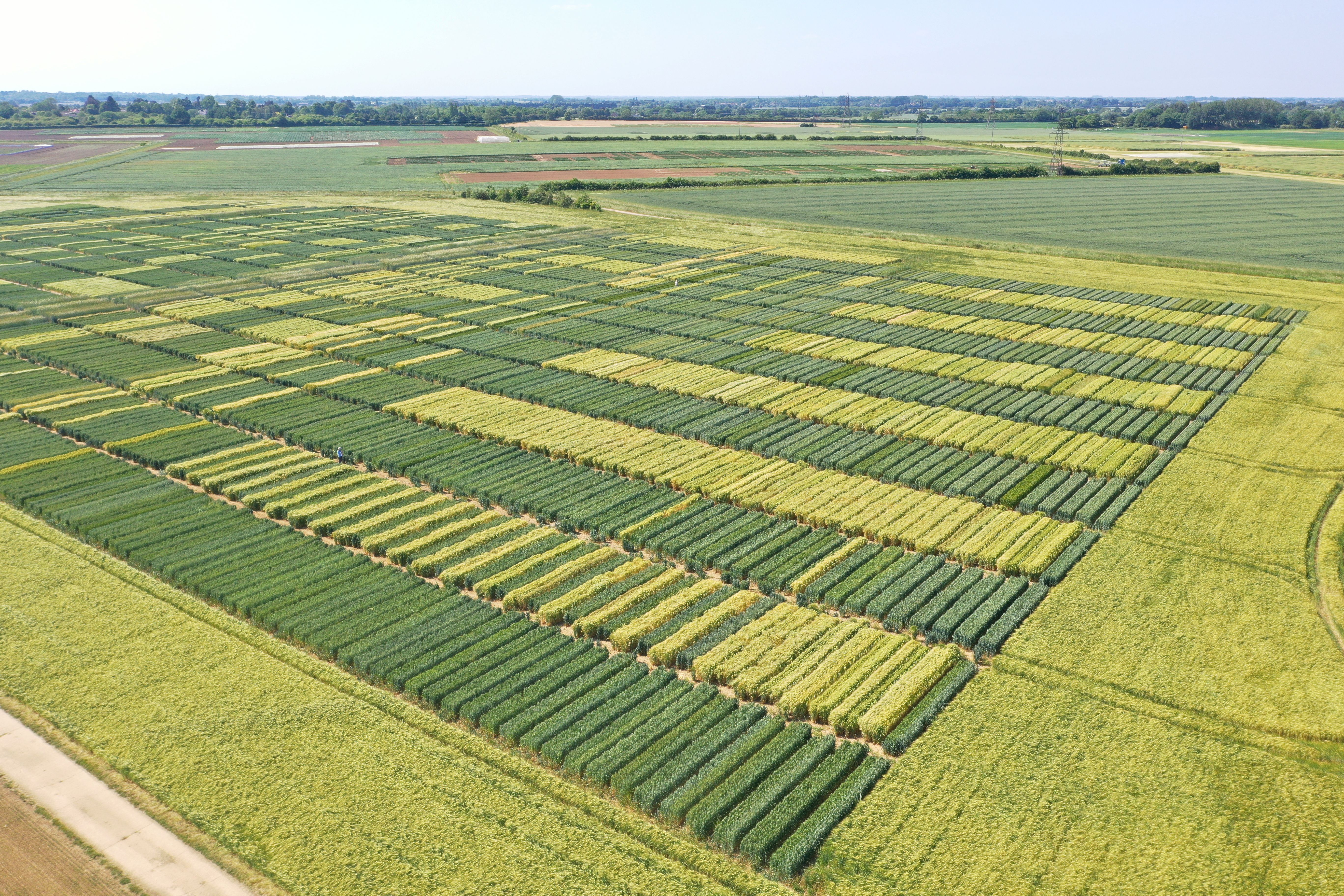
Aerial view of DUS plots at Niab
Status

Augmented Berry Vision

Funder: Innovate UK
Partners: Opposable Games (Lead), Berry Gardens Growers Ltd, University of the West of England
Term: September 2020 to September 2022

Selecting dessert blackberries at the optimum stage of maturity is key to ensuring that the final product purchased by the consumer is of high quality, looks good and, most importantly, tastes good. Consumer satisfaction is essential for repeat purchasing, but so much depends on the harvest team selecting the right berries at the right time, every time! Selection of perfect berries is challenging due to subtle colour changes that occur during ripening. Blackberry can be a particularly difficult crop, for although many berries might have turned black, they are not all at the same stage of maturity in terms of flavour development. Removing every berry that is black can lead to considerable variation in taste and flavour, and consequently consumer satisfaction. For pickers to select ripe fruit, fast, consistently and accurately, requires considerable skill, which takes time to acquire. Pickers, therefore, need a more reliable method of selecting uniformly ripe berries.

The project

This feasibility project set out to develop technology that can be used by harvesting teams to help them differentiate between blackberries which are fully ripe and those that are black but haven’t yet developed optimum flavour. With the help of Berry Gardens Growers, over 500 blackberries of varying ripeness were collected from member farms. Hyperspectral imaging of the fruit was conducted alongside laboratory assessments to determine berry ripeness and other metrics. From the analysis of the spectral images, key electromagnetic wavelengths were identified to provide significant differentiation between ripe and unripe fruit.

Results

Using the results of these analyses, a berry detection algorithm has been developed to detect and assess berries within a video feed. As berries are detected, their images are analysed to determine their ripeness. Machine learning was used to create the berry ripeness detection system. A convolutional neural network (CNN) was trained with multi-spectral images of blackberries of known maturity. The resulting algorithm showed a 95% accuracy in ripeness detection.

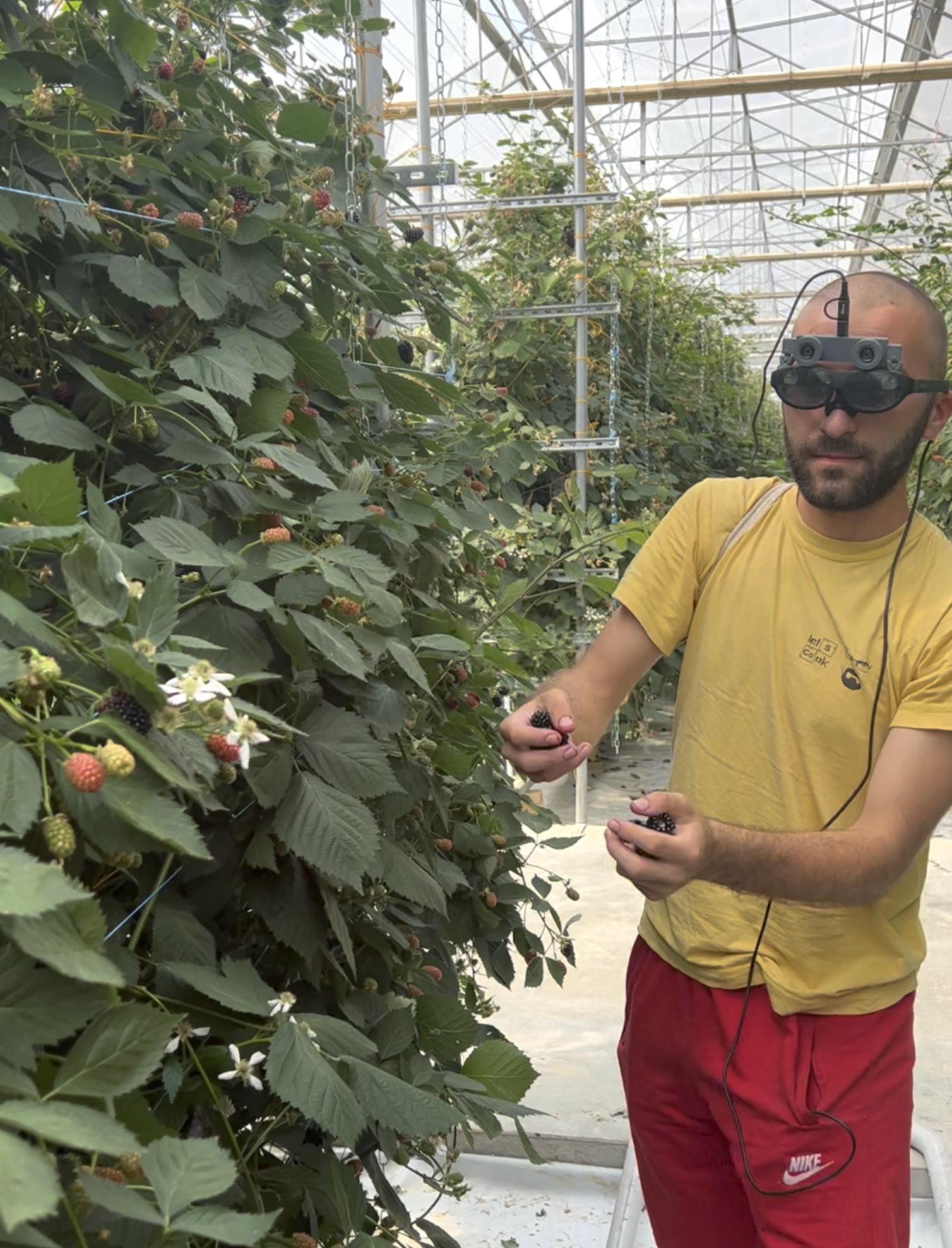
During the project prototype hardware and software were developed. The hardware was tested in the field by experienced pickers providing valuable insight to improve future versions. The system employs augmented reality (AR) glasses, which are worn by the pickers. Augmented Reality is the overlaying of visual digital information onto the real world through the lenses. Bespoke multispectral imaging cameras and the machine vision algorithm determine the ripeness of each berry, which is relayed to the picker via the AR glasses. This allows the pickers to pick berries that are uniformly ripe and to leave any berries, which have not developed optimum flavour, still on the cane to be harvested on another occasion.


 

Research project tags
Image
Augmented reality glasses being tested by pickers
Status

POME: Precision Orchard Management for Environment

POME is a multidisciplinary, four-year project that will enable a step-change in the way orchards are managed.

By utilising and developing a suite of cutting-edge technologies each tree in an orchard will be analysed in fine detail, allowing crop management inputs to be targeted in a way that has never been seen before in UK orchards.

Production efficiency and yield will increase whilst minimising inputs, benefiting growers, consumers, and the wider environment.

Led by the crop advisory company Hutchinsons and involving many other commercial and academic partners, including Niab, the POME project is co-funded by Innovate UK, DEFRA and the commercial partners involved in the project.

Partners

The project is led by HL Hutchinsons Ltd, with the other partners including: engineers N. P. Seymour, GNSS and software developer The Acclaimed Software Company, marketing desk Avalon Fresh, aerial imaging and data analytics company Outfield, robotics developer Antobot, remote sensing specialists Fotenix, agri-economics from the University of Kent, robotics and automation expertise from Loughborough University, Niab, and the Chemicals Regulation Directorate (CRD). There are several growers involved, including A.C. Hulme, and Plumford Farm.

Hutchinsons logoNPS Logo

The Acclaimed Software Company Logo


Avalon Fresh logoOutfield logoUniversity of Kent

Antobot logo


Fotenix logo

Loughborough University

Niab logo


ACH Farming


Funders

IInnovate UK logo

Defra logo


Project duration

November 2023 to October 2027

Image
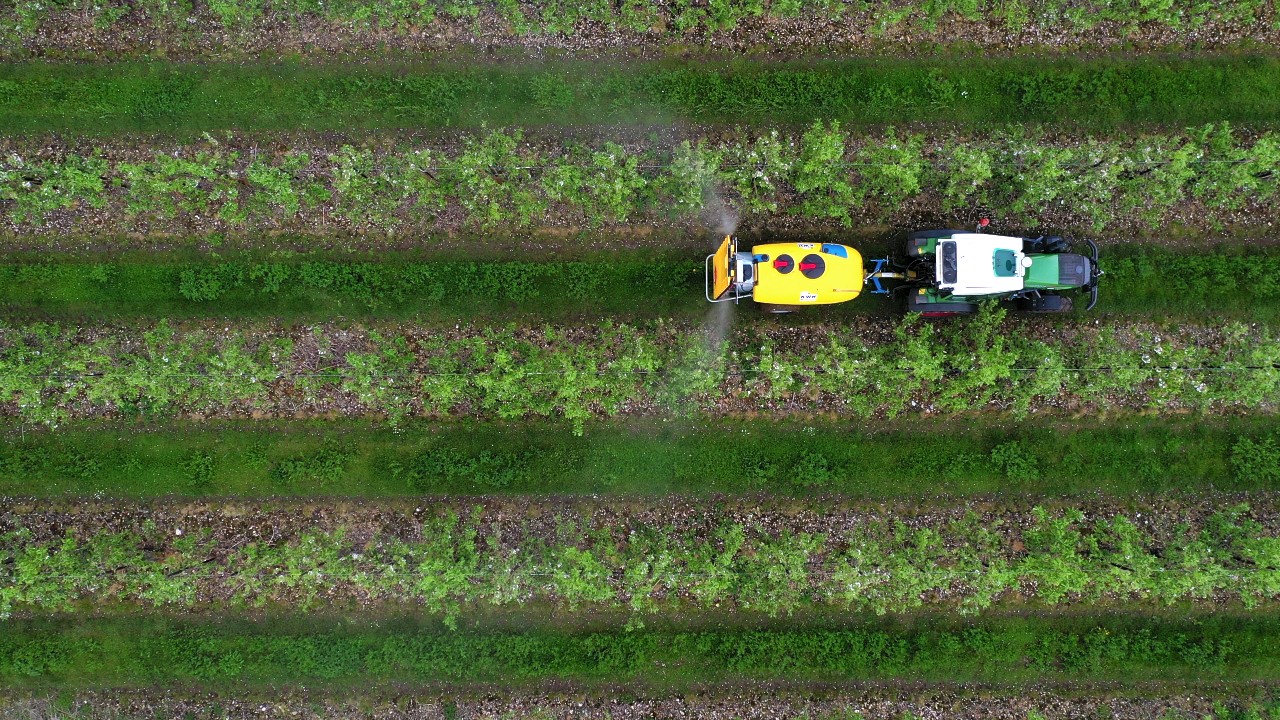
Aerial shot of a tractor spraying in orchard
Status
Subscribe to AI