
Early UK research led by Niab
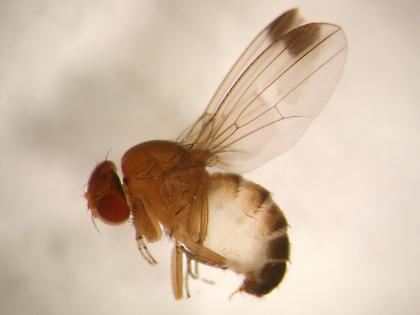
Spotted wing drosophila (SWD) was first recorded in the UK at Niab’s East Malling site in Kent, but the work to manage and control this invasive pest had already begun before its arrival.
Scientists and technical managers had mapped its movement from its origins in Japan to the USA, then mainland Europe. By 2012, the UK fruit industry had formed an SWD Working Group to consider how to manage it when it gained entry here.
The level of collaboration between growers, marketing groups, scientists and industry bodies since 2012 is unprecedented. Two major research projects (SF 145 and SF/TF 145a) have been funded by AHDB since 2012, costing more than £1.6 million. SF 145 received additional funding support from Defra, British Summer Fruits (now British Berry Growers) and The Worshipful Company of Fruiterers. The research has been led by Niab with support from the Natural Resources Institute, The James Hutton Institute and Microbiotech.
In addition, four Niab supervised PhD students have based their research studies on SWD, investigating 1) the circadian rhythms of the pest, 2) yeasts as attractants to SWD, 3) impact of insect excluding mesh, and 4) compounds that repel adult SWD. The latter two were funded through the CTP Studentship Scheme.
Niab received a huge level of moral, practical and ‘in-kind’ support from growers who have hosted farm trials, marketing group Berry Gardens Growers who have shared their SWD monitoring data, and agrochemical companies who have provided plant protection products for trials. The findings from the research have been disseminated to growers at industry conferences and webinars, through factsheets and press articles, through agronomist training events and through marketing group technical managers, as well as scientific findings being presented at international conferences – further strengthening Niab’s reputation as one of the world leaders in SWD research.
A dedicated website was also set up by AHDB offering a comprehensive range of information about the management and control of SWD along with a summary of the latest research.
Research progress
The first project (SF 145) focussed on four key areas of research including 1) Monitoring for the pest; 2) Habitats and pest dynamics; 3) Crop management and hygiene; 4) Control.
The project tested different traps and monitoring devices and a range of attractant lures which helped growers to choose practical monitoring options for their own farms. Work was also carried out to help growers to identify the presence of larvae in developing fruits using flotation methods.
Niab learned a huge amount about how, and where, SWD adults live and overwinter and when they start to migrate into soft and stone fruit plantations. This has helped growers to know when, and where, to monitor for SWD adults and larvae.
We recognised how vital it is to remove old, damaged and diseased fruits from plantations and then investigated how to dispose of waste fruit through fermentation and incorporating this fermented waste into field soils.
Finally, we experimented with agrochemical control agents to assess their relative ability to control SWD adults in UK conditions. We identified that the synthetic pyrethroid products work well, but these are incompatible with IPDM programmes used for other pest and disease problems. The spinosyn product Tracer is extremely effective as are the cyantraniliprole products Exirel and Benevia.
The grower guidance arising from Project SF 145 is summarised in AHDB Factsheet 06/17 (Management and control of spotted wing drosophila).
All the early research results of projects led by Niab, PhD studentship research and EU funded research projects including DROSKII and DROPSA led by Fera can be found on the Research Project page of the AHDB legacy website.
Alongside this research, the AHDB crop protection team (now Horticulture Crop Protection Ltd) worked with the agrochemical manufacturers and the Chemicals Regulation Division (now part of the government’s Health and Safety Executive HSE) to secure emergency authorisations for Tracer, Exirel and Benevia on those fruit crops that had no standard or EAMU authorisations for these products.
Further reading
Fountain, M.T, Bennett, J, Cobo-Medina, M, Conde Ruiz, R, Deakin, G, Delgado, A, Harrison, R. & Harrison, N. (2018). Alimentary microbes of winter-form Drosophila suzukii. Insect Molecular Biology 27 (3), 383-392. https://resjournals.onlinelibrary.wiley.com/doi/10.1111/imb.12377
Noble, R, Dobrovin-Pennington, A, Shaw, B, Buss, D.S, Cross, J.V. & Fountain, M.T. (2017). Fermentation for disinfesting fruit waste from Drosophila species (Diptera: Drosophilidae). Journal Environmental Entomology 46 (4), 939-945. https://www.researchgate.net/publication/319494299_Fermentation_for_Disinfesting_Fruit_Waste_From_Drosophila_Species_Diptera_Drosophilidae
Noble, R, Dobrovin-Pennington, A, Phillips, A, Cannon, M.F.L, Shaw, B & Fountain, M.T. (2019). Improved insecticidal control of spotted wing drosophila (Drosophila suzukii) using yeast and fermented strawberry juice baits. Crop Protection 125. https://resjournals.onlinelibrary.wiley.com/doi/10.1111/imb.12377
Shaw, B, Fountain, M.T, Wijnen, H. (2019). Control of daily locomotor activity patterns in Drosophila suzukii by the circadian clock, light, temperature and social interactions. Journal of Biological Rhythms, 1-19. https://journals.sagepub.com/doi/10.1177/0748730419869085
Shaw, B, Hemer, S, Cannon, M.F.L, Rogai, F. & Fountain, M.T. (2019). Insecticide control of Drosophila suzukii in commercial sweet cherry crops under cladding. Insects 10(7),196. https://www.mdpi.com/2075-4450/10/7/196
Shaw, B, Cannon, M.F.L, Buss, D.S, Cross, J.V, Brain, P. & Fountain, M.T. (2019). Comparison of extraction methods for quantifying Drosophila suzukii (Diptera: Drosophilidae) larvae in soft- and stone-fruits. Crop Protection 124. https://www.sciencedirect.com/science/article/abs/pii/S0261219419302145?via%3Dihub
Shaw, B, Brain, P, Wijnen, H. & Fountain, M.T. (2019). Implications of sub-lethal rates of insecticides and daily time of application on Drosophila suzukii. Crop Protection 121,182-194. https://www.sciencedirect.com/science/article/abs/pii/S0261219419301103
Shaw, B, Brain, P, Wijnen, H. & Fountain, M.T. (2018). Reducing Drosophila suzukii emergence through inter-species competition. Pest Management Science 74(6),1466-1471. https://scijournals.onlinelibrary.wiley.com/doi/10.1002/ps.4836
Shaw, B, Fountain, M.T. & Wijnen, H. (2018). Recording and reproducing the diurnal oviposition rhythms of wild populations of the soft- and stonefruit pest Drosophila suzukii. PLoS ONE 13(10),1-20. https://journals.plos.org/plosone/article?id=10.1371/journal.pone.0199406
Contact
Niab
Park Farm Campus
Villa Road
Histon
Cambridge
CB24 9AT, UK
Tel: +44(0)1223 342200
Email: [email protected]


Niab Agronomy
Membership

© NIAB 2026