Managing the activity of pollinators in protected cropping systems (MAPP-CS)

Soft fruit production under fixed protective structures is highly dependent on introduced bumblebees (Bombus terrestris) for pollination. Their performance under such structures can be less reliable as they can be less active, suffer from higher mortality and sometimes fail to return to the hive, resulting in lower fruit yields and quality.

This project will research the drivers of pollinator underperformance in enclosed systems, including lighting and navigational factors, and trial a range of affordable interventions to improve pollinator activity, reduce mortality and improve profitability.


Funder: Biotechnology and Biological Sciences Research Council

Industry partners: Agriculture Investments Ltd, Biobest Ltd, Buzzup, Clockhouse Farm and The East Malling Trust

Term: May 2024 to April 2028

Image
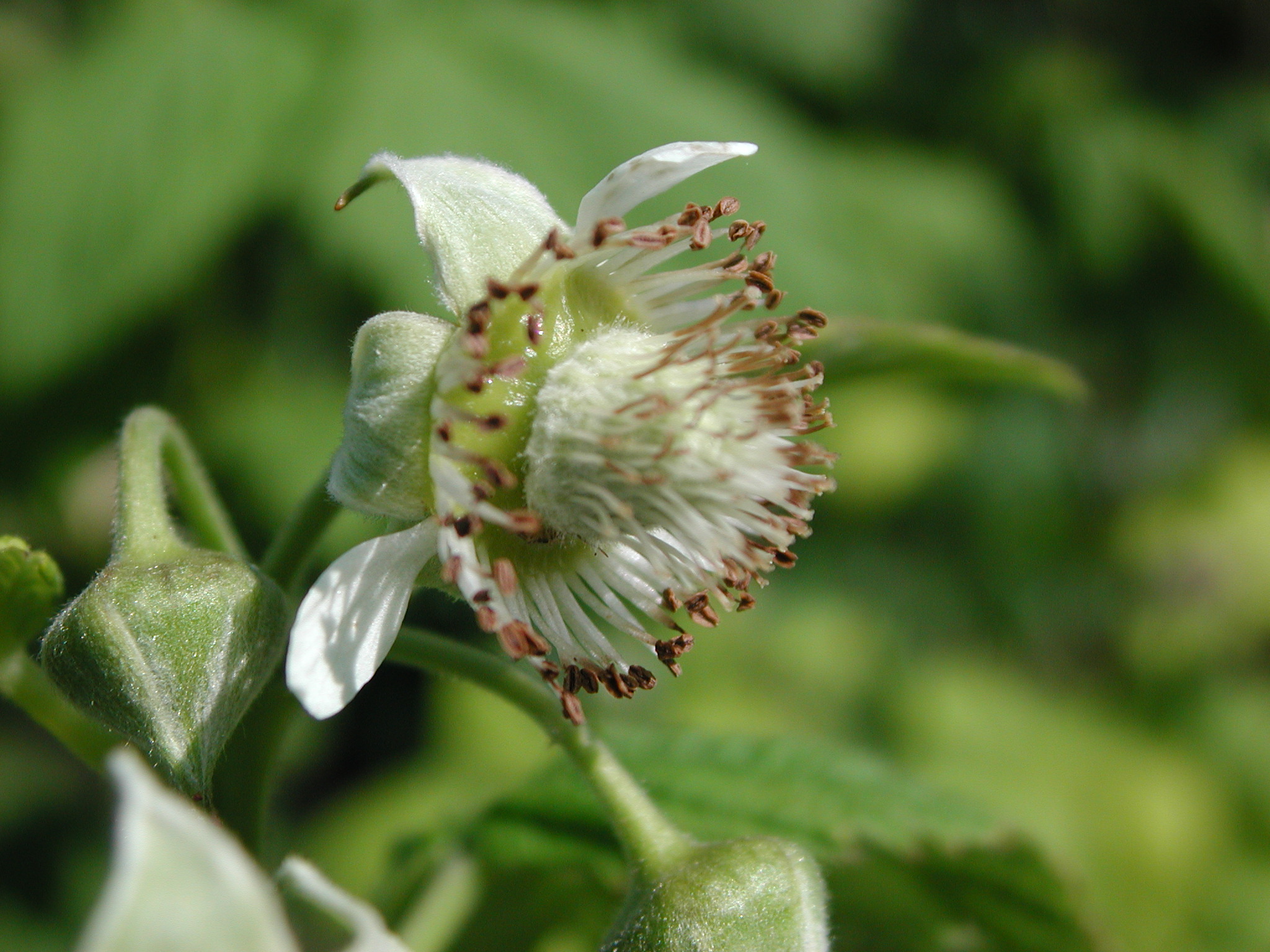
Flower
Status

FLYTHRIVE: Hoverflies for aphid control in soft fruit

Control of aphids in soft fruit crops is becoming increasingly difficult with very few effective conventional chemical aphicides authorised for use. Previous studies have shown that hoverflies can contribute significantly to aphid control in protected crops as adults released into the crop can seek out aphid colonies even in dense foliage, where they lay their eggs.

Emerging larvae are voracious predators of the aphids with a single larva able to consume hundreds of aphids. This project will test and develop bespoke native hoverfly species blends to control key aphid pests of soft fruit crops under protection.

More information

News story announcing FLYTHRIVE

Title: FLYTHRIVE: Hoverflies for aphid control in soft fruit

Funder: Innovate UK

Industry partners: Olombria (Lead), Asplins, The Summer Berry Company and The Natural Resources Institute

Term: June 2024 to May 2026

Image
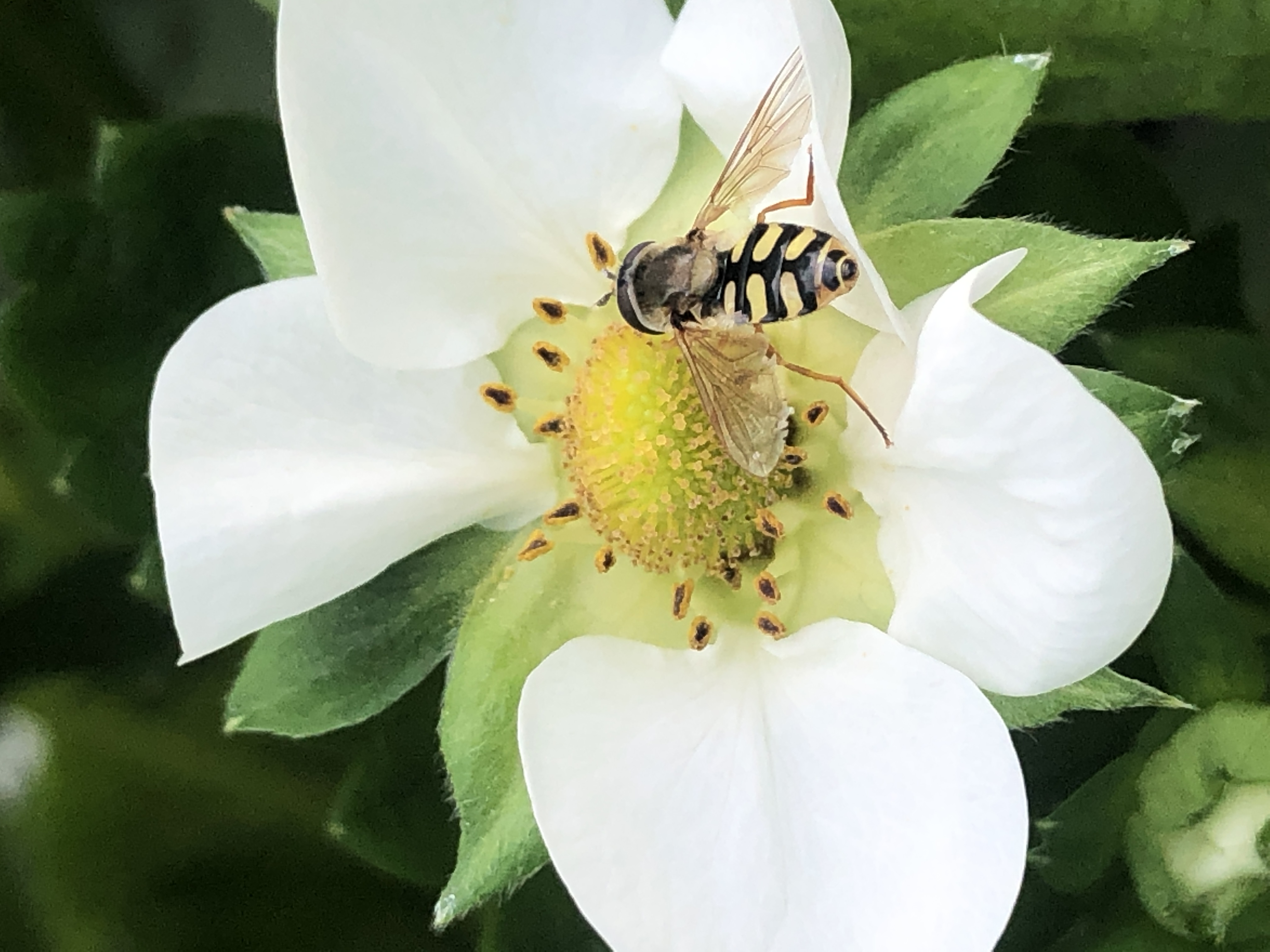
Hoverfly feeding on flower
Status

Developing a digital crop scouting service for glasshouse crops

Identifying the presence of pests, diseases and disorders has traditionally relied upon trained agronomists or crop scouts, who inspect the crops visually for their presence or absence.

For some pests or diseases, and for most physiological and nutritional disorders, by the time that visual symptoms appear on the crop, some adverse impact on growth and subsequent crop yield and quality will have occurred. Developing a system of inspection which will identify their presence at an earlier stage, will allow growers to implement changes to their crop management before yields and quality are affected.

The project

This project aims to develop a digital crop management approach for the early detection of glasshouse pests and diseases, utilising the latest diagnostic technology and agronomic knowledge in a commercial production setting.

The objective is to co-develop a crop scouting service, informed by spectral diagnostics (wearable and mounted diagnostic hardware) that can detect the early establishment of any event which adversely affects yield, and which can be integrated within crop management systems. The work will largely focus on glasshouse tomatoes and peppers, but the results will benefit growers of other protected crops.


Title: Digital Crop Management for glasshouse pests and diseases

Funder: Innovate UK: Defra and UKRI Farming Innovation Programme

Industry partners: Abbey View Produce, British Tomato Growers Association, Fargro, Fotenix, Thanet Earth

Term: January 2023 to May 2026

Lead Partner: Fotenix

Image
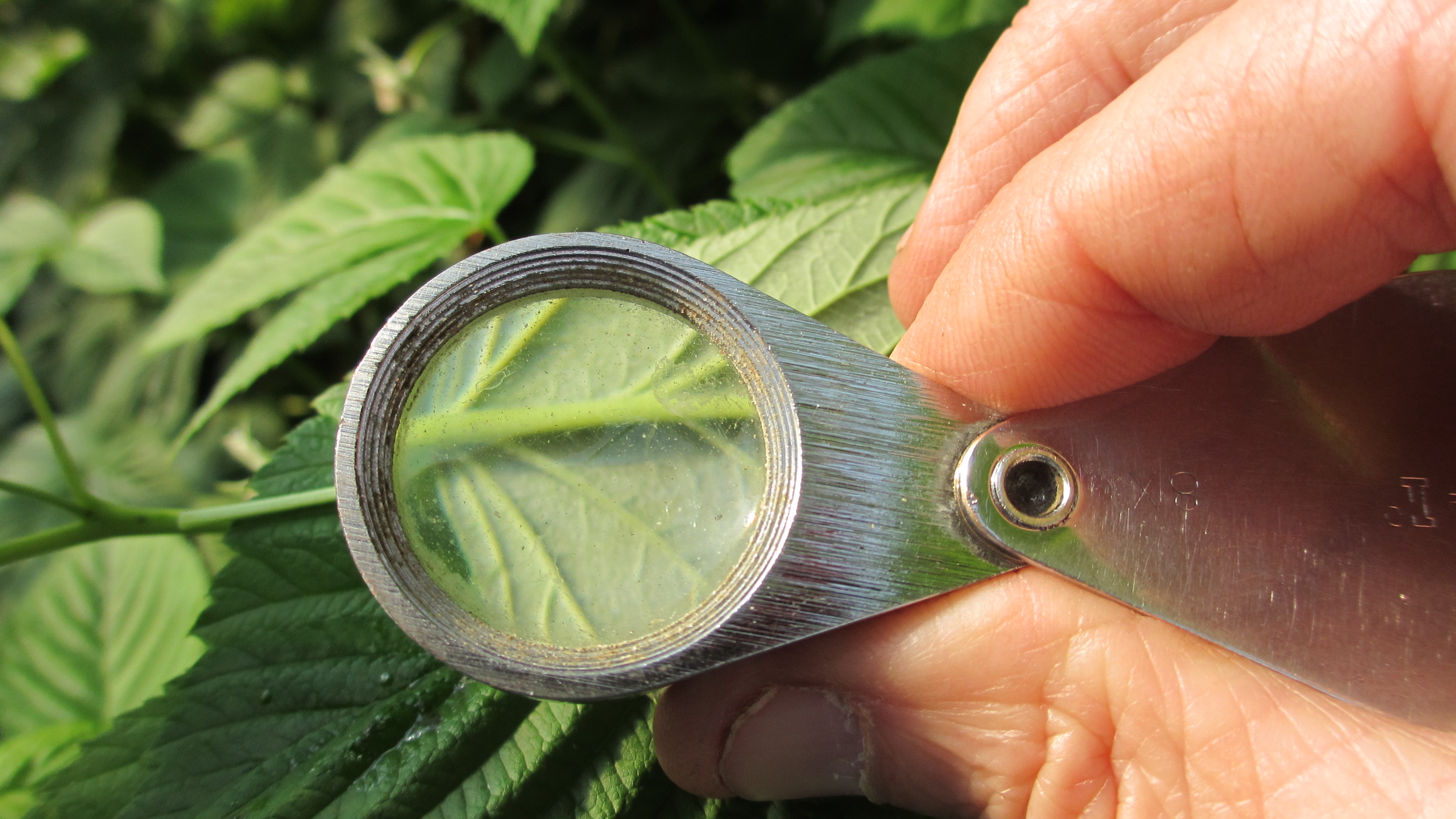
Crop inspecting
Status

Optimising yields and resource use in TCEA strawberry production

With static returns and rapidly rising production costs, the profitability of strawberry growing in the UK has become marginal, with some growers making losses causing them to cease production. This declining home production has led to increased imports of strawberries, highlighting the need for sustainable home-grown solutions to meet demand, especially out of season.

Unpredictable weather in the UK makes it challenging to reliably produce high yields of high quality strawberries during the traditional growing period so there is increasing interest in Totally Controlled Environment Agriculture (TCEA) strawberry production.

However early attempts at this type of production have not always been successful, in part due to over-vigorous canopy growth due to excessive fertiliser and water use which limits light penetration and increases disease risk. In addition, excess nitrogen can be converted into nitrous oxide which is deemed to be 300 times stronger than carbon dioxide at trapping heat in the atmosphere so there are strong environmental arguments for using nitrogen more effectively.

Niab has previously developed N-demand models for raspberry crops which can reduce fertiliser use by up to 77% while maintaining high Class 1 yields and berry quality, reducing both environmental impact and costs.

The project

In this project, Niab is working with its consortium partners to develop and test a low-nitrogen growing strategy for commercial out-of-season strawberry production in TCEA conditions which will be supplemented with CO2 by employing MOF (Metal-Organic Framework) technology. This allows CO2 to be extracted from the atmosphere and released into the growing environment.

The reduction in nitrogen use will reduce the risk of powdery mildew infection whilst also reducing the number and size of the leaves, leading to the need for less hand leaf removal which will reduce production costs. By supplementing the crop with CO2, the consortium can test whether the photosynthetic capacity of the crop can be maintained or increased, despite having a smaller leaf canopy.

The early work to validate an N-demand model and enrich the crop with CO2  will be carried out at Niab’s East Malling site while in the second year of the project, commercial trials will take place at Flex Farming’s facilities.


Title: TCEA N-demand: Optimising nitrogen and CO2 inputs to improve assimilation and yields in TCEA strawberry production

Funder: Innovate UK

Industry partners: Innophyte Consulting Ltd (Lead) and Flex Farming Ltd

Term: January 2025 to December 2026

Image
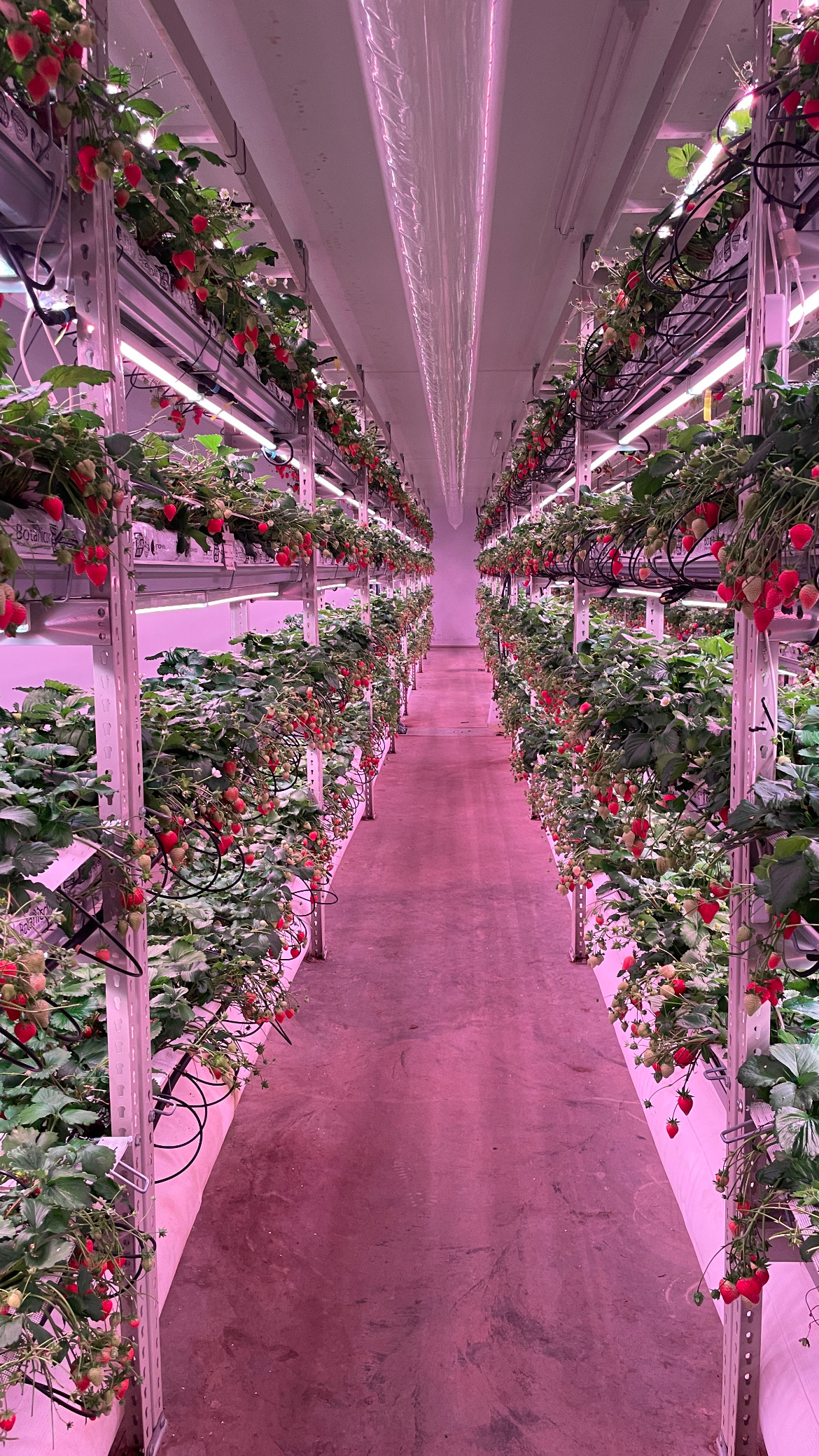
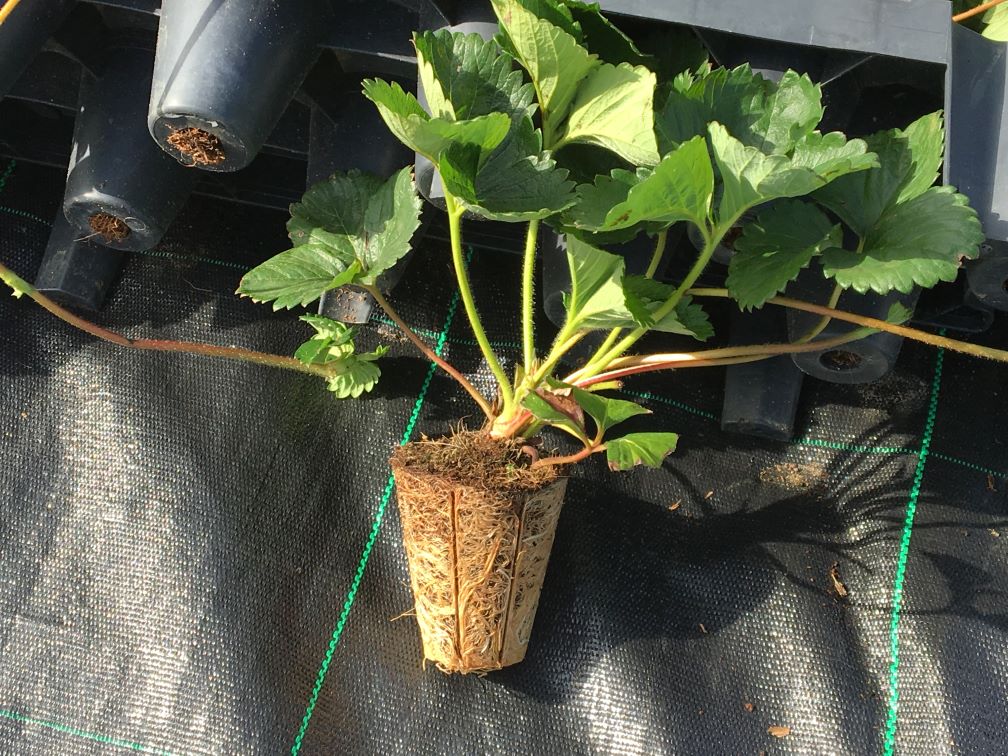
Strawberry plants growing in a controlled environment
Status

Developing a sustainable approach to propagating strawberry plants

A rapidly expanding population, climate change and uncertain food security require a different approach to food production in the UK. The new challenge is to produce higher yields of high quality crops on smaller areas of land, with reduced inputs, and in closer proximity to local markets. Total Controlled Environment Agriculture (TCEA) growing systems, sometimes known as ‘Vertical Farming’ offer a solution. At the same time, strawberry growers require higher quality healthy plant material which will produce a consistently high yield from every plant, and which can be grown locally to their final cropping location.

The project

Working with a multi-disciplinary team of researchers, technology companies and growers, Niab scientists will develop a method to produce high quality, virus-and disease-free strawberry plant propagules with assured high cropping potential in TCEA systems. The resulting pre-programmed, high-health plant material will enable import substitution of both propagules and fruit (currently £40m and £186M per year), reduce chemical inputs and waste (currently £30m/year), and deliver a product that will provide value and security for growers, when planted in conventional polytunnel systems, glasshouses (CEA) or TCEA.

Title: Optimising the propagation environment in TCEA systems to maximise strawberry yield potential in all production systems

Funder: Defra Farming Innovation Programme

Industry partners: Vertical Future, Berry Gardens Growers Ltd, The Blaise Plant Company Ltd, Cocogreen Ltd, Clockhouse Farm, Delta T Devices, Hugh Lowe Farms Ltd, Linton Growing Ltd, University of Reading

Term: June 2023 to May 2026

Image
Strawberry plant grown in a controlled environment
Status
Subscribe to Controlled environment