
Understanding the links between soil microbiome and carbon storage
Status:
Complete

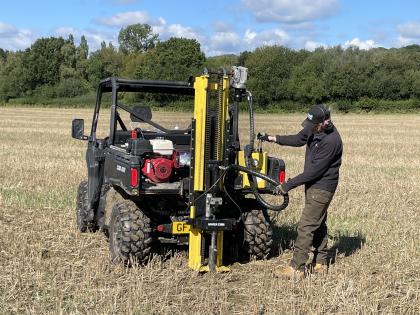
Title: Exploring the links between soil microbiome and carbon sequestration in a cross-section of agricultural soils (arable, pastural, orchards)
Funder: Growing Kent & Medway Business Innovation Voucher
Industry partner: Verdant Carbon
Term: June 2023 to May 2024
Soils provide a natural sink for carbon dioxide but we need to improve our understanding of how the soil microbiome can be manipulated to improve soil carbon storage capability.
The project
Niab worked with Verdant Carbon in this Growing Kent & Medway project to understand the links between soil microbial abundance/diversity and the volume of carbon sequestered in different agricultural crops. They aimed to identify any correlations between levels of specific soil microbes and soil carbon content across the soil profile (10-60 cm) and between soil management practices (regenerative and conventional).
Results
In the project, soils were sampled at two depths (15-30 cm and 45-60 cm). Total soil organic/residual/inorganic carbon and soil nitrogen was determined at Verdant Carbon using the internationally recognised Dumas Combustion analysis method. Microbial analysis was done using Microbiometer and Soil Food web assessments at Verdant carbon, and state-of-the-art molecular tools (qPCR, amplicon sequencing) at Niab to determine the diversity and abundance of the bacterial and fungal species in the soil. The data was collected from both arable soils and pasture soils.
A comparison of fungal to bacteria ratio (F:B) obtained with different microbial analysis methods was done to determine if methods at Verdant Carbon agree with methods at Niab. The effect of farming type (arable or pasture), sampling depth and total organic content (TOC) on microbial abundance and diversity was measured to find potential associations between the quantity of carbon and microbial populations.
The ratio of fungi to bacteria (F:B) measured with Microbiometer and Soil Food Web analysis did not correlate with molecular measurement (qPCR), which was the only method that produced results in line with the literature.
There were greater numbers of bacterial and fungal communities found in the top soil (15-30 cm) compared to subsoil (45-60 cm). This effect was more pronounced in arable fields than pasture. Fungal communities were found to be richer in arable fields compared to pasture while there were few differences between bacterial communities on both farm types. The relative abundance of bacterial and fungal organisms was not affected by soil nitrogen levels.
The microbiome in arable fields was largely unaffected by various levels of TOC. In contrast the microbiome in grasslands was more affected by TOC with many fungal and bacterial species either increasing or decreasing in response to TOC. Among the species that significantly increased their relative abundance with increased soil TOC were potentially beneficial microbes (eg. nitrogen fixing and mycorrhizal fungi), but also some known pathogens such as Ilyonectria robusta, so it seems that increasing soil TOC levels could therefore have both plant growth promoting and disease promoting consequences.
This collaboration led to further IUK/Defra funded work where Niab and Verdant Carbon aim to develop a holistic soil biological health assessment.
Niab researchers

Contact
Niab
Park Farm Campus
Villa Road
Histon
Cambridge
CB24 9AT, UK
Tel: +44(0)1223 342200
Email: [email protected]


Niab Agronomy
Membership

© NIAB 2026