- About
-
Research
- Agronomy and farming systems
-
Agricultural crop research
-
Research projects - agriculture
- About SASSA-SAI
- CTP for Sustainable Agricultural Innovation
- Climate Ready Beans - workshop presentations (March 2022)
- Crop diversity HPC cluster
- Final project workshop
- Get involved
- List of materials
- News and updates
- Partners
- The research team
- UK Cereal Pathogen Virulence Survey
- UK wheat varieties pedigree
- Weed management - IWM Praise
- Crop breeding
- Crop characterisation
- Data sciences
- Genetics and pre-breeding
- Plant biotechnology
- Plant pathology and entomology
- Resources
-
Research projects - agriculture
- Horticultural crop research
- Crop Science Centre
- Research Projects
- Research Publications
-
Services
- Analytical Services
- Commercial trial services
- Membership
- Plant breeding
- Plant characterisation
- Seed certification
-
Training
-
Technical agronomy training
- Advanced crop management of bulb onions
- Advanced crop management of vegetable brassicas
- Advanced nutrient management for combinable crops
- Benefits of cover crops in arable systems
- Best practice agronomy for cereals and oilseed rape
- Developing a Successful Strategy for Spring Crops
- Disease Management and Control in Cereal Crops
- Incorporating SFI options into your rotation
- Protected Environment Horticulture – Best Practice
- Techniques for better pest management in combinable crops
- Crop inspector and seed certification
- Licensed seed sampling
-
Technical agronomy training
- News & Views
- Events
-
Knowledge Hub
-
Alternative and break crops
- POSTER: Domestic production of plant-based protein (2026)
- POSTER: Understanding the lifecycle of cabbage stem flea beetle (2026)
- POSTER: Domestic chickpea production (2025)
- POSTER: Prospects for domestic plant-based protein (2025)
- POSTER: Alternative protein crops & sources (2022)
- POSTER: Undersowing forage maize (2025)
-
Crop genetics
- POSTER: Diversity enriched wheat (2026)
- POSTER: Genetics of wheat flag leaf size (2024)
- POSTER: Wheat yield stability (2024)
- PRESENTATION: Plant breeding for regen ag
- POSTER: Improving phenotyping in crop research (2022)
- POSTER: wild wheat fragment lines (2022)
- Poster: Traits for future cereal crops (2022)
- Poster: Designing Future Wheat (2020)
- Crop nutrition
-
Crop protection
- POSTER: Disease control in barley (2026)
- POSTER: Disease control in winter wheat (2026)
- POSTER: Fungicide resistance research (2026)
- Poster: Implementing IPM (2026)
- Poster: Testing the performance of biofungicides in winter wheat
- POSTER: UKCPVS winter wheat rusts - 2025 review (2026)
- POSTER: UKCPVS winter wheat yellow rust in spring 2025 (2026)
- POSTER: UKCPVS disease monitoring and the benefit to UK growers (2025)
- POSTER: Diagnosing and scoring crop disease using AI (2025)
- POSTER: Finding new sources of Septoria resistance (2024)
- POSTER: Detecting air-borne pathogens (2024)
- POSTER: Oilseed rape diseases (2024)
- POSTER: Improving chocolate spot resistance (2022)
- Poster: Pathogen diagnostics (2022)
- Fruit
-
Regen-ag & sustainability
- Poster: CHCx3 - herbal leys for carbon capture (2026)
- Poster: CHCx3 - growing flax for carbon capture (2026)
- Poster: CHCx3 - growing fibre crops (2026)
- Poster: Old crops feeding the bioeconomy (2026)
- POSTER: CHCx3 - maximising carbon storage from cover crops (2026)
- POSTER: Reducing GHG emissions from wheat production (2026)
- POSTER: CHCx3 - increasing carbon capture through cropping (2026)
- Poster: Finding a balance for productive lowland peat systems (2026)
- POSTER: Crops for the future (2024)
- POSTER: CHCx3 - increasing carbon capture in grasslands (2024)
- POSTER: More wheat/ha tackles climate change (2024)
-
Seed certification
- POSTER: Wheat DUS (2024)
- POSTER: Innovation in variety testing (2024)
- POSTER: AI and molecular markers for soft fruit (2024)
- POSTER: Barley crop identification (2023)
- POSTER: Herbage grass crop identification (2023)
- POSTER: Herbage legume crop identification (2024)
- POSTER: Minor cereal crop inspecting (2023)
- POSTER: Pulse crop identification (2023)
- POSTER: Wheat crop identification (2023)
-
Soils and farming systems
- POSTER: Saxmundham - modern P management learnings (2026)
- POSTER: Saxmundham - 125 years of phosphorus management (2026)
- POSTER: Soil structure and organic matter (2026)
- Poster: Soil phosphorus - availability, uptake and management (2026)
- POSTER: Morley long term experiments (2026)
- POSTER: Exploiting novel wheat genotypes for regen-ag (2026)
- Poster: Soil invertebrates within arable rotations (2024)
- POSTER: The impact of rotations & cultivations (2024)
- POSTER: Soil & agronomic monitoring study (2024)
- POSTER: Impact of prolonged rainfall on soil structure (2024)
- POSTER: Checking soil health - step by step (2024)
- POSTER: Checking soil health - across space and time (2024)
- POSTERS: Changing soil management practices (2022)
- Poster: Monitoring natural enemies & pollinators (2021)
- Video: New Farming Systems project (2021)
- Video: Saxmundham Experimental Site (2021)
- VIDEO: Soil health assessment (2021)
- VIDEO: Great Soils; soil sampling guidelines (2020)
- Varieties
-
Weed management
- Poster: Reducing weed seedbanks for long-term weed control (2026)
- Poster: The growing threat of brome (2026)
- Poster: The growing threat of ryegrass (2026)
- POSTER: Understanding the hierarchy of black-grass control (2026)
- POSTER: Mode of action (2026)
- POSTER: Emerging weed threats (2026)
- POSTER: Weed seed predation in regen-ag (2024)
- POSTER: Inter-row cultivation for black-grass control (2022)
- Poster: Management of Italian ryegrass (2021)
- Video: Inter-row cultivations for black-grass control (2020)
- ADOPT
-
Alternative and break crops

The role of women in the Official Seed Testing Station
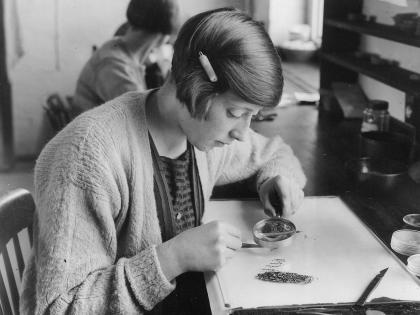
To celebrate the International Day of Women and Girls in Science, Niab's Asia Roberts-Yalland takes us back over 100 years and explores the hugely important role women have played in the Official Seed Testing Station.
By August 1917 over 1.5 million tons of food supplies carried by merchant ships destined for Britain lay at the bottom of the ocean; the First World War was causing devastation to the UK’s food security. But, in a small laboratory in Westminster the seed analysts of the newly formed Official Seed Testing Station (OSTS) were working their way through 7,744 seed samples in their first year.
These results contributed to battling the continuing food crisis, that eventually led to compulsory food rationing by the end of the year. The contribution of men to the war effort at this time is both self-evident and, in the main, tragic. However, the work being done at the OSTS was being carried out by women.
For a career that is for the most part unknown to the general population, UK seed analysis has a long history and an important role to play in agriculture. Ensuring quality and reliability in the seed trade and, subsequently food security, the practical methods have remained largely unchanged since their development.
It is the nature of these methods that historically made this career a female only avenue; the patience, attention to detail and intricate nature of the work was deemed to suit the perception of women when the OSTS was set-up in 1917. Consequently, for many years UK seed analysts were all female.
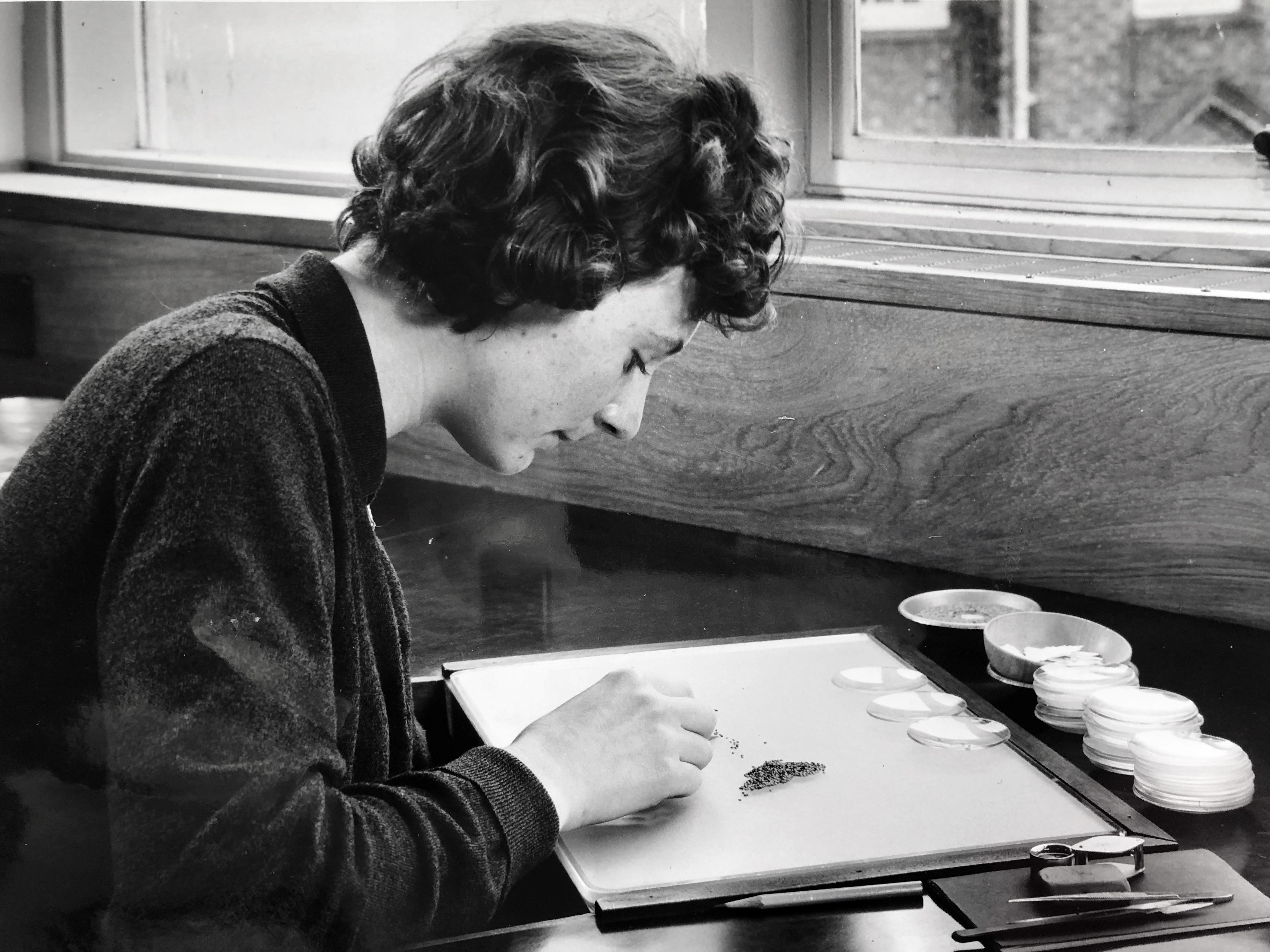
Of course, at that time career options for women outside the home were limited so it would seem that this opportunity should only be celebrated. However, in the 1920s not all women could yet vote and less than half the female population were employed, so there were inevitably limits to this opportunity. In 1921 the OSTS moved to the newly created National Institute of Agricultural Botany (as it was known then) on Huntingdon Road in Cambridge, and the female analysts that made up the majority of OSTS moved from London with the organisation.
These analysts would have been young and unmarried. They lived on site in the upstairs rooms of the old Niab HQ building, which is still there today, but converted into private resident flats. They were always chaperoned if they left the site, with documented cases of women being let go for breaking the strict rules. These women worked and trained very hard and made a significant contribution to the seed trade of the UK.
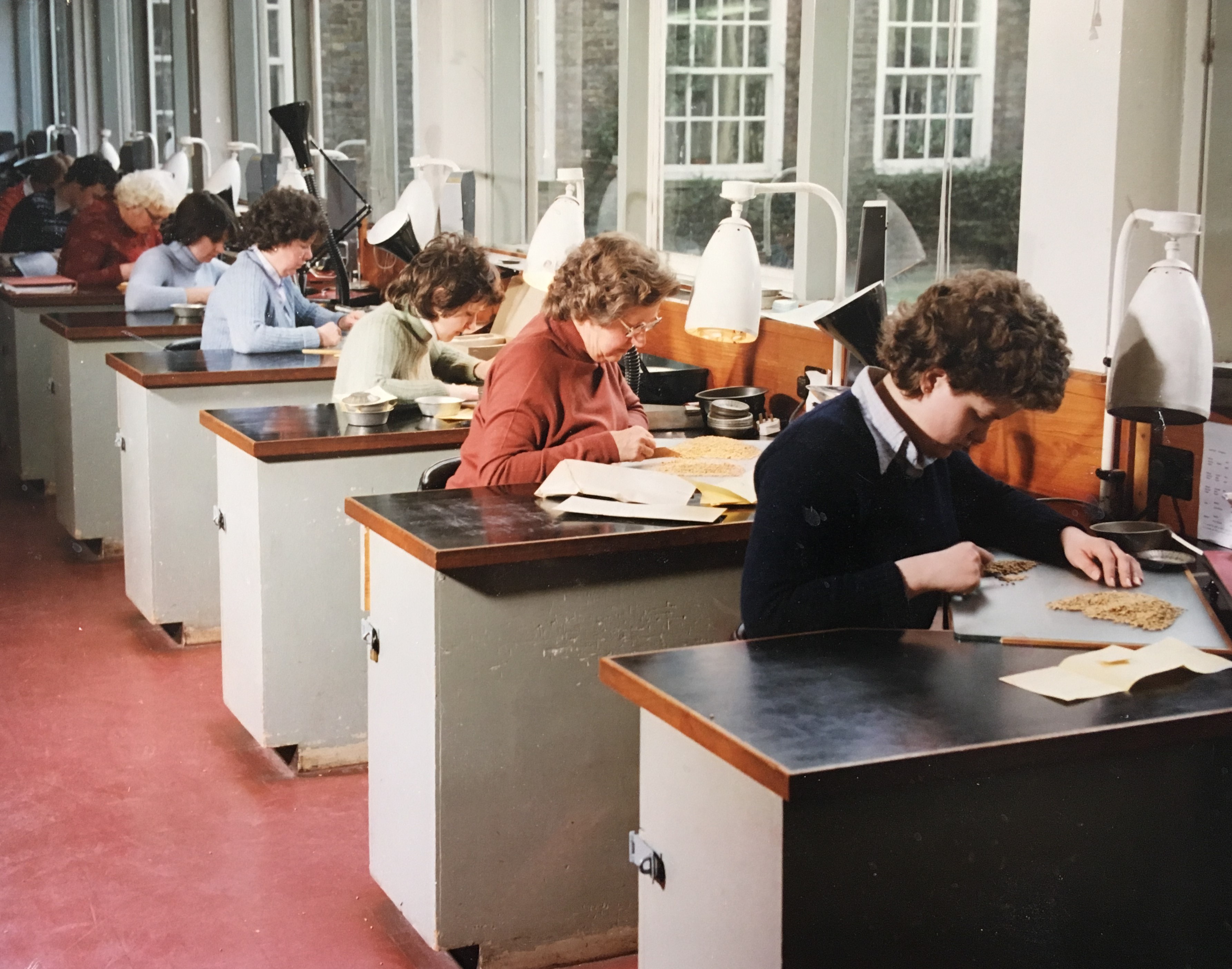
The results sent out would have been reported and signed by the chief officer, a role that would have been held by a man. Over the years the OSTS has taken many forms. In 1957 it expanded into new, custom-built, laboratories with four departments over three floors, and employed 88 analysts, still all women. The analysts of this time seemed to enjoy their work. There were social activities and, with the introduction of formal seed analyst qualifications, opportunity for career progression. However, there were still societal restrictions that bled into life at OSTS.
For example, women were not permitted to wear trousers to work and would need to request to return to work if they decided to marry. The next couple of decades would bring improvements, but it took until 1973 for the first male seed analyst to be hired, which suggests generalisations about a ‘woman’s character’ persisted. Greater change would come with the turn of the century. It took nearly 60 years before seed analyst positions were opened to men but it would take over 90 years for a woman to become Chief Officer, and it has been held by a woman since.
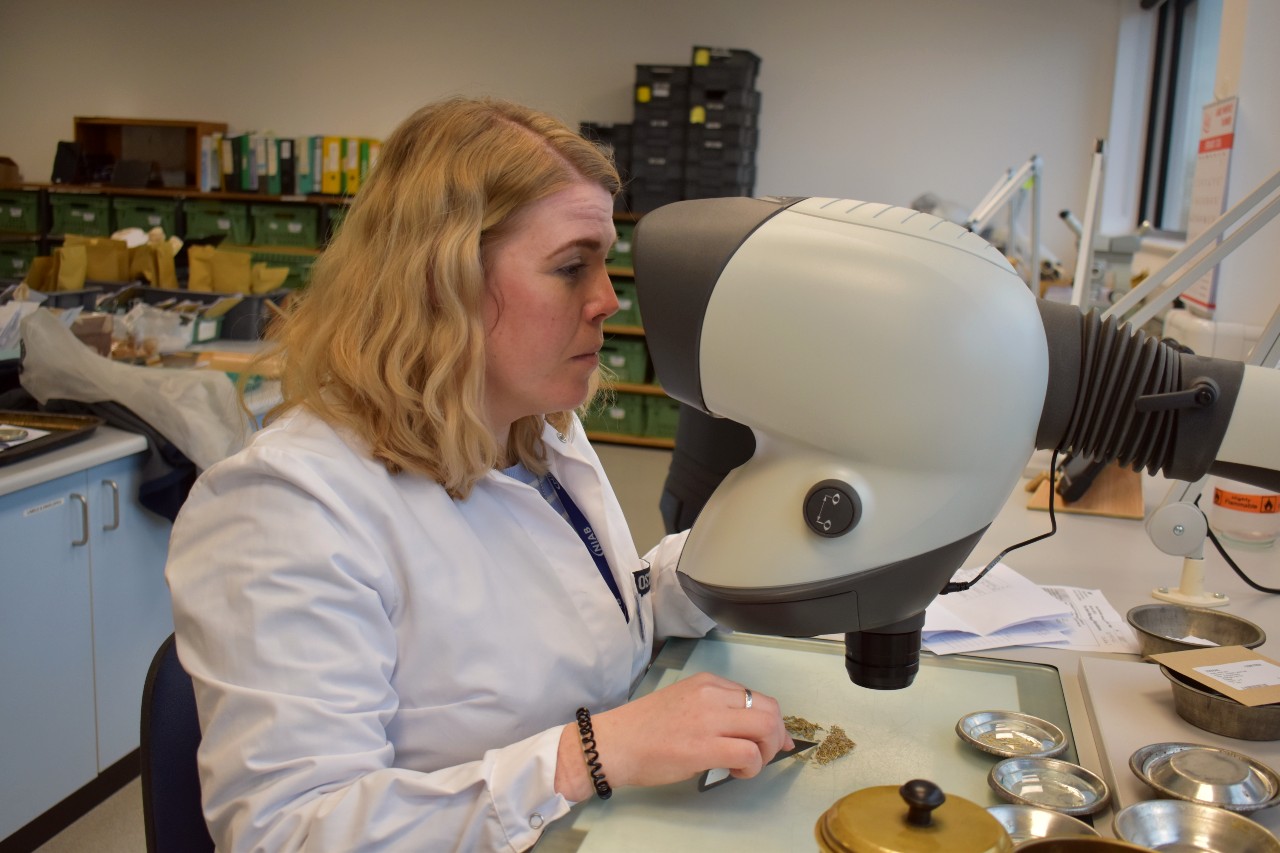
First, in 2008, Jane Taylor then Linda Maile (58 years’ service in OSTS including the final eight years as CO), to our current CO Helen Appleyard. Helen joined as a trainee seed analyst in 1988 and stayed in the role for 17 years before moving within analytical services at Niab to become a biochemical technician. She moved to seed pathology and a technical services manager before taking on the joint role of Chief Officer and Head of Niab Analytical Services in 2022. Despite seed analysis no longer being a female-only career path the team today is still 80% women.
So what is it about being a seed analyst that appeals to the women who work here today?
“There’s never a dull moment in seed testing. There’s lots of variety in the kind of tests and species we deal with.”
Anna Phipps
“Seed analysis has brought me back to the agriculture sector which is where I always wanted to be.”
Paula Castillo Marambio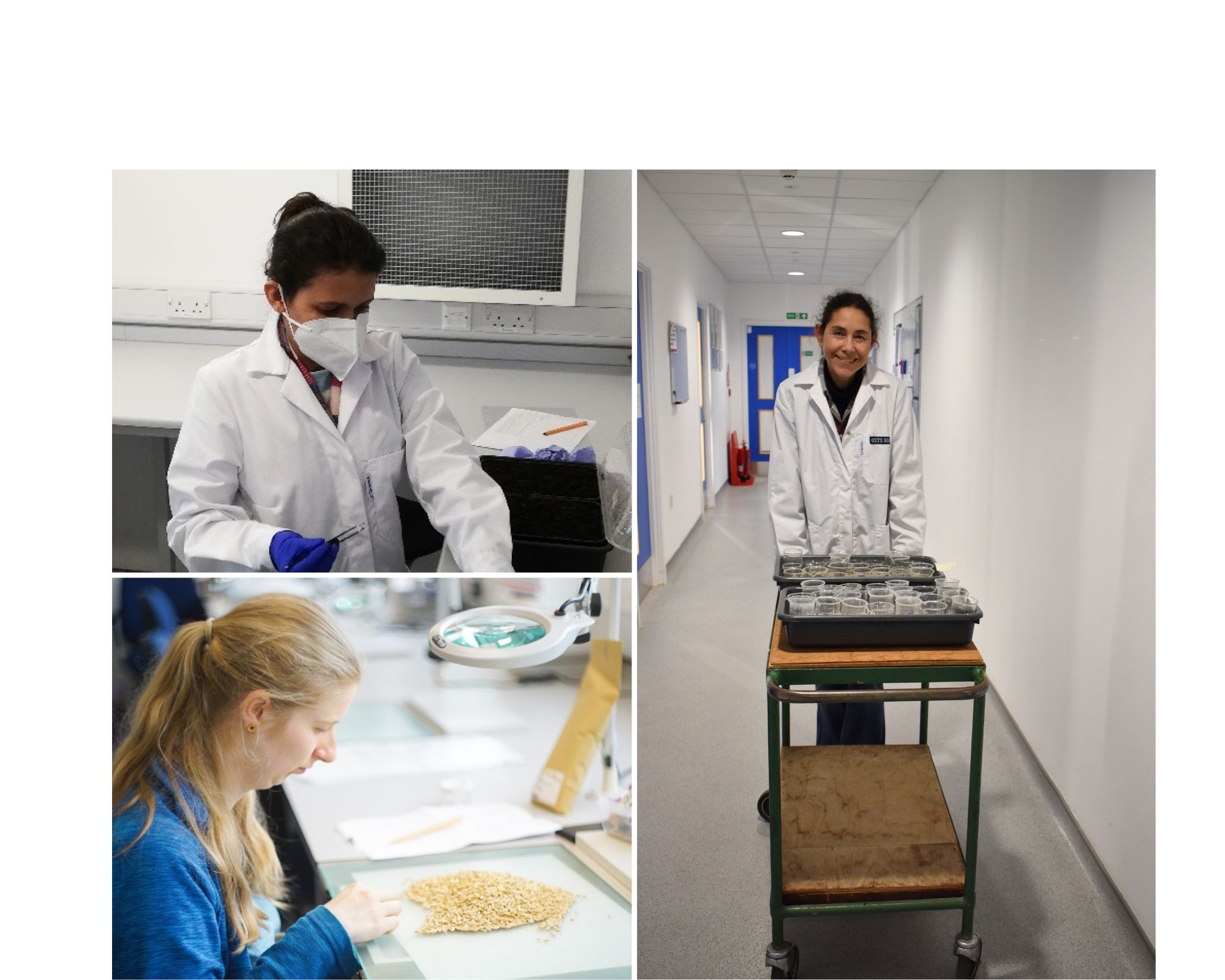
“I’ve been a seed analyst for quite a few years now, it suits me, and it is supportive of my family commitments.”
Ruvini Udugampola
“Seed analysis may not be the most conventional career, but for those of us who have found our niche within it, it’s a journey filled with purpose, teamwork, and continuous learning. It provides a sense of purpose knowing that our work makes a difference by ensuring quality in the seed trade, and when job satisfaction is often elusive this purpose is invaluable.”
Nikita Acharya
Contact
Niab
Park Farm Campus
Villa Road
Histon
Cambridge
CB24 9AT, UK
Tel: +44(0)1223 342200
Email: [email protected]


Niab Agronomy
Membership

© NIAB 2026