
Niab to showcase cutting edge plant science and sustainable farming innovation at the 2026 Cereals Event
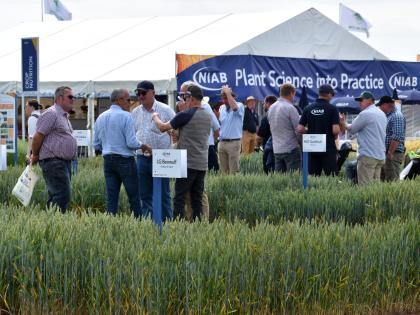
Niab will once again take a leading role at the Cereals Event, on 10th and 11th June 2026, with one of the show’s most comprehensive demonstrations of applied crop research, agronomy and future facing agricultural science, all against the backdrop of the world-famous Diddly Squat Farm in The Cotswolds.
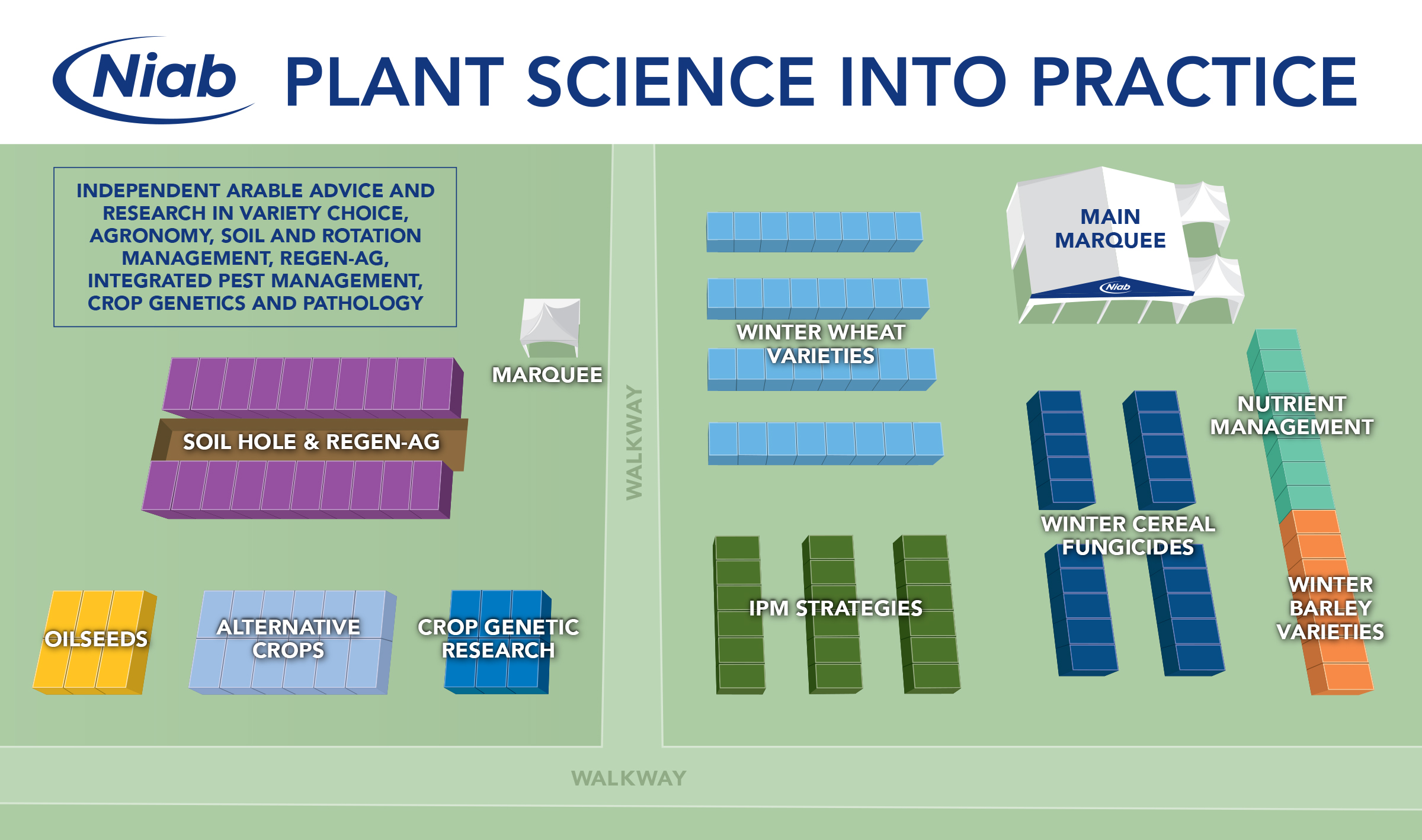
With over 25 crop species across 130 plots planned on the Niab stand (no 1024), and its neighbouring Soil Hole exhibit (no 1022), the organisation will highlight how its science is helping farmers improve crop performance, resilience and sustainability in rapidly changing conditions. Visitors will gain access to new insights in variety choice, independent agronomy, soil and rotation management, crop genetics and data science on the Niab stand, reinforcing the organisation’s role in bridging scientific discovery with practical on farm application.
Niab CEO Professor Mario Caccamo says: “The Cereals Event gives us an unrivalled platform to show how Niab’s science translates directly into practical, profitable decisions on farm. From genetic innovation and crop protection strategies to regenerative agriculture and emerging crops, our demonstrations this year reflect the scale of change facing UK agriculture—and the opportunities created by research led solutions.”
The demonstrations will provide a perfect backdrop for Niab to unveil its four new major Strategic Programmes, designed to deliver the practical tools, trusted evidence, and crop innovation UK farmers and growers, in both the agricultural and horticultural sectors, need to stay productive, profitable, and climate‑resilient in the years ahead.
“Niab’s new Strategic Programmes are designed to ensure farmers have the best available science and innovation behind them — from improving crop performance and reducing inputs to preparing for climate change and opening up new crop opportunities. UK agriculture needs science that is responsive, reliable, and relevant. These programmes are our commitment to giving farmers exactly that — not in five years’ time, but right now,” explains Professor Caccamo.
Putting plant science into practice
Niab crop specialists will be available with advice and recommendations on cereal, oilseed and pulse varieties, including an untreated demonstration of 32 winter wheat varieties, either candidates or from the AHDB 2026/27 Recommended List, plus a diverse selection of barley varieties, supporting farmers in making evidence based decisions for next season.
This year’s stand also features the latest on crop protection and nutrition, including new fungicide chemistry and strategies, comparisons across wheat, barley and oat fungicide programmes, and a demonstration of wheat variety blends. Pathologists from Niab’s UK Cereal Pathogen Virulence Survey team will be on hand with the latest developments on yellow rust, alongside advice and support in disease diagnostics and imaging. Dedicated plots on nutrient management strategies in winter wheat will also be on display.
A significant focus this year is on practical approaches to integrated pest management. Niab’s demonstration plots will illustrate bi cropping options, the application of biofungicides, winter wheat blend performance, and use of pest traps and monitoring devices in wheat and beans.
Visitors can also explore plots demonstrating approaches to weed management options in SFI herbal grazing leys, addressing an increasingly important area of regenerative and mixed farming practice.
Niab will highlight advances in understanding the agronomy and breeding potential of UK protein crops, assessing their role in crop rotation diversity and domestic protein supply chains with the aim of expanding UK-grown alternatives. Featured crops include lupins, peas, beans, lentils, chickpeas and soya.
Alongside its agronomy and systems based demonstrations, Niab will present its latest research into the genetic control of yield, yield components, disease resistance and key quality traits in cereals. This includes the application of modern plant breeding tools and technologies to help shape the next generation of crop improvement strategies.
The Soil Hole and Regenerative Agriculture Platform
The joint Niab and Cereals Event Soil Hole stand provides a deep dive into the core of Niab’s sustainability science, bringing together Niab’s long-term soils, rotations and farming systems studies, regenerative agriculture research and the Centre for High Carbon Capture Cropping (CHCx3). The 20 m long, 4 m wide and 1.8 m deep Soil Hole will display the Cotswold Brash soil with a superb diversity of crops lining the pit including local herbal grazing ley mixtures, triticale, flax, quinoa, buckwheat, hybrid barley, and hybrid rye.
On a test dig at the site in early autumn 2025 Niab soil specialist David Clarke explained the event field had a shallow top soil profile down to about 30-35 cm, with around 40% limestone stone content, hitting limestone at 40 cm. “It’s quite a small soil profile to work with, in terms of agronomic value, but as we moved into the shallow subsoil and underlying limestone, we saw some roots working their way through the pore space between the limestone, emphasising the free draining properties of these soil types. By June, visitors should really see this in the crops that form the Soil Hole - how their different rooting structures interact with the soil profile and, in some cases, hopefully deeper into the limestone, accessing valuable water and nutrients.”
Niab will showcase insights and new evidence spanning variety choice, nitrogen management, rotations, cultivations, tillage and soil management—spotlighting how growers can transition to productive low input systems without compromising yield resilience.
Through the Centre for High Carbon Capture Cropping (CHCx3) platform, Niab will introduce visitors to a range of under utilised and novel crops that could help build more resilient farm systems, accompanied by work on optimising nitrogen inputs in combination with cover crop use. These form part of the programme’s mission to identify crop options capable of reducing carbon footprints, improving soil health and diversifying market potential.
Contact
Niab
Park Farm Campus
Villa Road
Histon
Cambridge
CB24 9AT, UK
Tel: +44(0)1223 342200
Email: [email protected]


Niab Agronomy
Membership

© NIAB 2026