- About
-
Research
- Agronomy and farming systems
-
Agricultural crop research
-
Research projects - agriculture
- About SASSA-SAI
- CTP for Sustainable Agricultural Innovation
- Climate Ready Beans - workshop presentations (March 2022)
- Crop diversity HPC cluster
- Final project workshop
- Get involved
- List of materials
- News and updates
- Partners
- The research team
- UK Cereal Pathogen Virulence Survey
- UK wheat varieties pedigree
- Weed management - IWM Praise
- Crop breeding
- Crop characterisation
- Data sciences
- Genetics and pre-breeding
- Plant biotechnology
- Plant pathology and entomology
- Resources
-
Research projects - agriculture
- Horticultural crop research
- Crop Science Centre
- Research Projects
- Research Publications
-
Services
- Analytical Services
- Commercial trial services
- Membership
- Plant breeding
- Plant characterisation
- Seed certification
-
Training
-
Technical agronomy training
- Advanced crop management of bulb onions
- Advanced crop management of vegetable brassicas
- Advanced nutrient management for combinable crops
- Benefits of cover crops in arable systems
- Best practice agronomy for cereals and oilseed rape
- Developing a Successful Strategy for Spring Crops
- Disease Management and Control in Cereal Crops
- Incorporating SFI options into your rotation
- Protected Environment Horticulture – Best Practice
- Techniques for better pest management in combinable crops
- Crop inspector and seed certification
- Licensed seed sampling
-
Technical agronomy training
- News & Views
- Events
-
Knowledge Hub
-
Alternative and break crops
- POSTER: Domestic production of plant-based protein (2026)
- POSTER: Understanding the lifecycle of cabbage stem flea beetle (2026)
- POSTER: Domestic chickpea production (2025)
- POSTER: Prospects for domestic plant-based protein (2025)
- POSTER: Alternative protein crops & sources (2022)
- POSTER: Undersowing forage maize (2025)
-
Crop genetics
- POSTER: Diversity enriched wheat (2026)
- POSTER: Genetics of wheat flag leaf size (2024)
- POSTER: Wheat yield stability (2024)
- PRESENTATION: Plant breeding for regen ag
- POSTER: Improving phenotyping in crop research (2022)
- POSTER: wild wheat fragment lines (2022)
- Poster: Traits for future cereal crops (2022)
- Poster: Designing Future Wheat (2020)
- Crop nutrition
-
Crop protection
- POSTER: Disease control in barley (2026)
- POSTER: Disease control in winter wheat (2026)
- POSTER: Fungicide resistance research (2026)
- Poster: Implementing IPM (2026)
- Poster: Testing the performance of biofungicides in winter wheat
- POSTER: UKCPVS winter wheat rusts - 2025 review (2026)
- POSTER: UKCPVS winter wheat yellow rust in spring 2025 (2026)
- POSTER: UKCPVS disease monitoring and the benefit to UK growers (2025)
- POSTER: Diagnosing and scoring crop disease using AI (2025)
- POSTER: Finding new sources of Septoria resistance (2024)
- POSTER: Detecting air-borne pathogens (2024)
- POSTER: Oilseed rape diseases (2024)
- POSTER: Improving chocolate spot resistance (2022)
- Poster: Pathogen diagnostics (2022)
- Fruit
-
Regen-ag & sustainability
- Poster: CHCx3 - herbal leys for carbon capture (2026)
- Poster: CHCx3 - growing flax for carbon capture (2026)
- Poster: CHCx3 - growing fibre crops (2026)
- Poster: Old crops feeding the bioeconomy (2026)
- POSTER: CHCx3 - maximising carbon storage from cover crops (2026)
- POSTER: Reducing GHG emissions from wheat production (2026)
- POSTER: CHCx3 - increasing carbon capture through cropping (2026)
- Poster: Finding a balance for productive lowland peat systems (2026)
- POSTER: Crops for the future (2024)
- POSTER: CHCx3 - increasing carbon capture in grasslands (2024)
- POSTER: More wheat/ha tackles climate change (2024)
-
Seed certification
- POSTER: Wheat DUS (2024)
- POSTER: Innovation in variety testing (2024)
- POSTER: AI and molecular markers for soft fruit (2024)
- POSTER: Barley crop identification (2023)
- POSTER: Herbage grass crop identification (2023)
- POSTER: Herbage legume crop identification (2024)
- POSTER: Minor cereal crop inspecting (2023)
- POSTER: Pulse crop identification (2023)
- POSTER: Wheat crop identification (2023)
-
Soils and farming systems
- POSTER: Saxmundham - modern P management learnings (2026)
- POSTER: Saxmundham - 125 years of phosphorus management (2026)
- POSTER: Soil structure and organic matter (2026)
- Poster: Soil phosphorus - availability, uptake and management (2026)
- POSTER: Morley long term experiments (2026)
- POSTER: Exploiting novel wheat genotypes for regen-ag (2026)
- Poster: Soil invertebrates within arable rotations (2024)
- POSTER: The impact of rotations & cultivations (2024)
- POSTER: Soil & agronomic monitoring study (2024)
- POSTER: Impact of prolonged rainfall on soil structure (2024)
- POSTER: Checking soil health - step by step (2024)
- POSTER: Checking soil health - across space and time (2024)
- POSTERS: Changing soil management practices (2022)
- Poster: Monitoring natural enemies & pollinators (2021)
- Video: New Farming Systems project (2021)
- Video: Saxmundham Experimental Site (2021)
- VIDEO: Soil health assessment (2021)
- VIDEO: Great Soils; soil sampling guidelines (2020)
- Varieties
-
Weed management
- Poster: Reducing weed seedbanks for long-term weed control (2026)
- Poster: The growing threat of brome (2026)
- Poster: The growing threat of ryegrass (2026)
- POSTER: Understanding the hierarchy of black-grass control (2026)
- POSTER: Mode of action (2026)
- POSTER: Emerging weed threats (2026)
- POSTER: Weed seed predation in regen-ag (2024)
- POSTER: Inter-row cultivation for black-grass control (2022)
- Poster: Management of Italian ryegrass (2021)
- Video: Inter-row cultivations for black-grass control (2020)
- ADOPT
-
Alternative and break crops

Farm Productivity and Profitability – two sides of the same coin
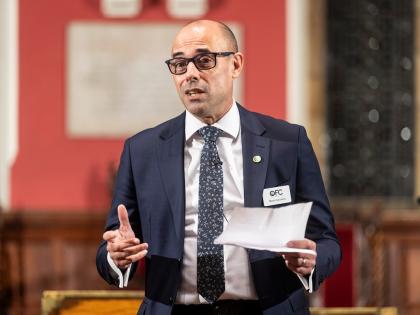
Niab CEO Professor Mario Caccamo discusses the recent Farm Profitability Report.
The long-awaited Farm Profitability Report by Baroness Minette Batters, released shortly before Christmas, delivers a direct challenge to government and industry. Niab, together with our partners in the Growing Kent & Medway cluster, sponsored the first presentation of the report at the Oxford Farming Conference. Strengthening farm profitability and resilience requires decisive policy action, and we are clear in our commitment to driving that agenda.
Baroness Batters is right to highlight the urgent need for clear, coherent and accessible support for farmers and growers. Today’s landscape is too often fragmented, overly complex, and unnecessarily costly. These are barriers that hinder progress rather than enable it.
Watch Baroness Minette Batters, joined on stage by Niab Chair Dr David Buckeridge, presenting the Farm Profitability Report at a Niab and Growing Kent and Medway-sponsored partner event at the 2026 Oxford Farming Conference
Niab fully endorses the call for better alignment across the system. As we have repeatedly emphasised in previous issues of Niab's Landmark magazine, fragmentation across the UK’s innovation ecosystem continues to limit the pace and scale of change. Addressing this must be a national priority.
Translating advances in plant science into practical, scalable farm and food solutions is essential if we are to meet the grand challenges ahead. The so called “valley of death” in applied research persists because coherent strategies and sustained investment have too often been absent. We will continue to push for sustainable farm productivity to be placed at the centre of national research and innovation priorities.
We are not short of ideas, yet there is a clear need to speed up the progression of science from the laboratory bench to the point at which results are delivered to farmers, and beyond. Our role at Niab is to bring coherence to that system: de risking the adoption of new technologies, accelerating their journey from research to field, and enabling farmers and growers to build more resilient, competitive businesses.
Over the past 15 years, Niab has trebled in size and established itself as one of the UK’s foremost independent applied crop research and knowledge transfer organisations. Our interconnected role across the translational landscape linking scientific research, farmers, and the agri food supply chain is unique.
This year marks a decade since Niab’s intervention safeguarded East Malling Research (EMR). Without public sector support, we acted decisively to preserve critical horticultural capability that would otherwise have been lost. Since then, we have worked relentlessly with the East Malling Trust and local stakeholders to modernise the site and reverse decades of underinvestment.
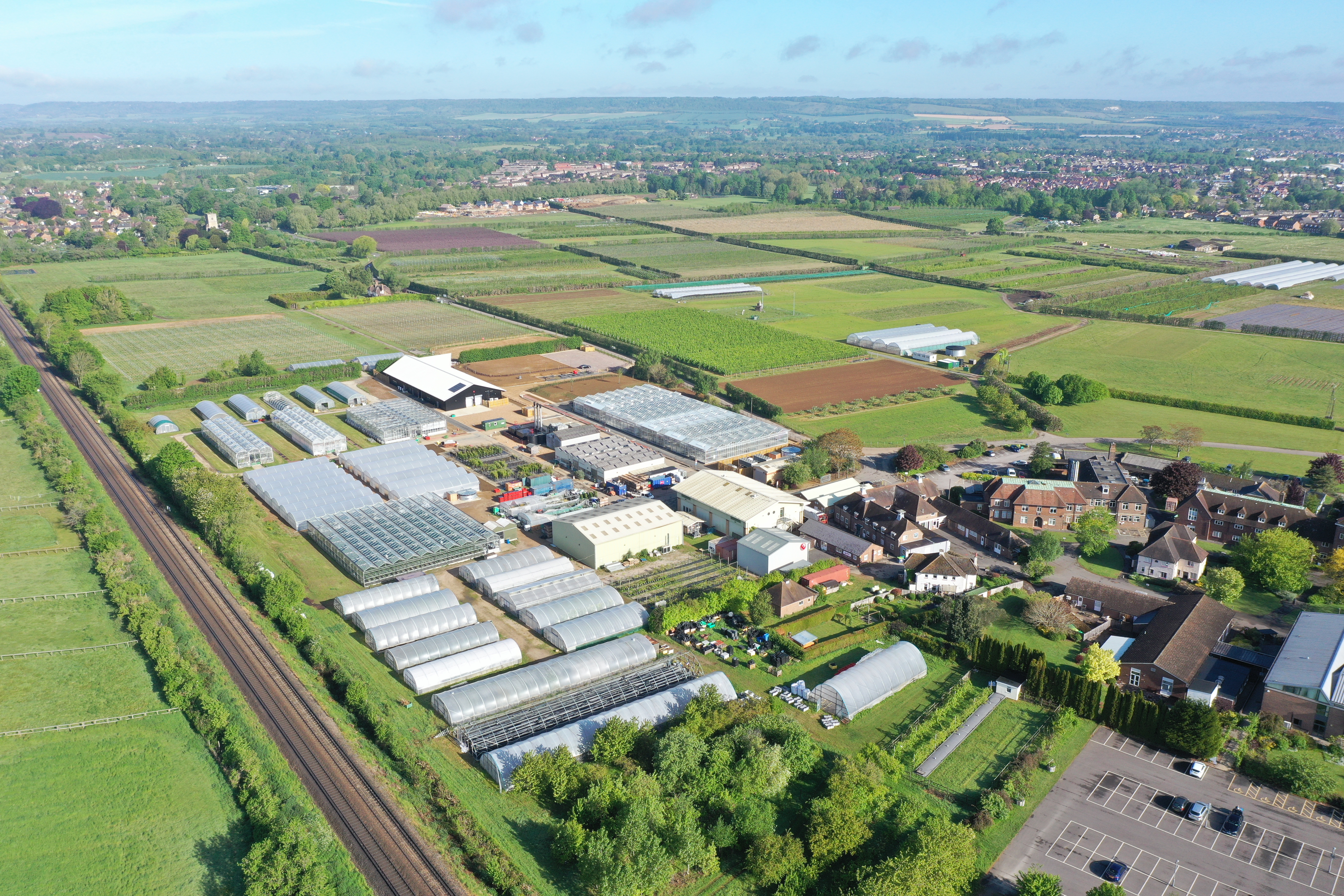
East Malling
This commitment was recognised through the award of the Strength in Places Fund in 2020 to establish Growing Kent & Medway, enabling us to deliver state of the art research facilities for the horticulture sector.
At the recent conference marking the completion of the Yield Enhancement Network (YEN) project, I underscored one of the key findings from a decade of farmer led data: high wheat yields do not require higher input costs. High performing crops consistently deliver stronger margins and significantly lower greenhouse gas emissions per tonne of grain. Productivity and profitability are not competing outcomes, they are mutually reinforcing.
High yield crops also achieve superior nitrogen use efficiency, reducing environmental risk while strengthening food security. These results are a product of precision and excellence, not increased inputs. While emissions per hectare increased modestly with higher yields, the intensity of the impact of harvested grain came down significantly.
It was therefore fitting to present at the final YEN conference, given our own Stuart Knight addressed the very first event more than a decade ago, warning of stagnating crop yields. Data presented by Niab at Cereals 2013 showed wheat yields in trials increasing by around 1.0 t/ha per decade, while on farm yields had plateaued. This is a gap YEN has helped the sector understand and begin to close.
Another vital part of safeguarding productivity is Niab’s ability to anticipate and respond to emerging threats. This remains a core strength. More than a decade ago, our team at East Malling was the first to detect spotted wing drosophila (SWD) on UK soft fruit crops. This was an early warning that proved vital.
Last year, through our northern field trials, Niab again became the first to detect the breakdown of YR15 yellow rust resistance, now recognised as one of the most significant losses of genetic resistance facing the sector.
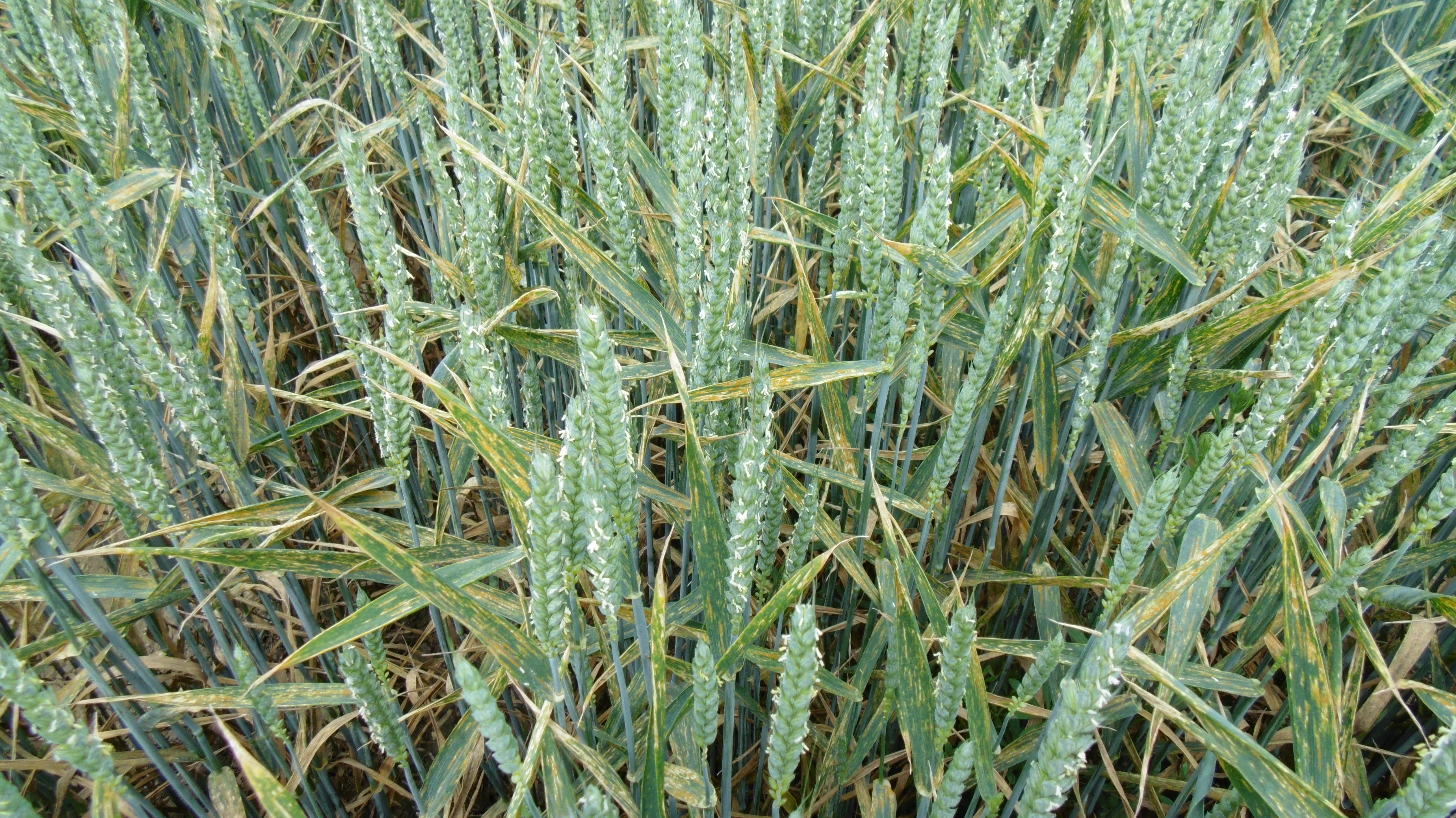
Understanding the genetic basis of this shift is essential. This is important not just for breeders but for designing more durable, diversified resistance strategies capable of withstanding evolving pathogen pressures. Our collaboration with colleagues at the John Innes Centre is already advancing this work.
The current issue of Niab’s Landmark magazine, focused on farm productivity, demonstrates the breadth of Niab’s work to strengthen performance and profitability across the sector. From our endorsement of the 30:50:50 agenda, to the launch of the new AHDB Recommended List, to our commitment to train the next generation of crop inspectors, we will continue to champion excellence across UK farming.
Yet the wider context remains challenging. UK food self-sufficiency has been falling for decades. Domestic production now accounts for less than two thirds of the food we consume, down from a peak of 78% in the mid-1980s. Shifting consumer preferences, changes in land use, and structural pressures have all contributed.
Meanwhile, agriculture faces increasing scrutiny over its environmental impact, with debate often centred on reducing fertiliser use or scaling back production. The YEN findings point to a simpler path forward: producing more from the same land area can reduce emissions while improving productivity.
With the rapid advance of genomics, biotechnology, automation, and AI, the UK has the tools to produce more food with a lower environmental footprint. As the 30:50:50 vision sets out, British agriculture is well placed to demonstrate how science, technology, and data can be harnessed to produce more food with less land, fewer inputs, and reduced emissions.
Looking ahead, we remain unwavering in our mission. Niab will continue to work with the sector, independently, authoritatively, and with purpose, to pioneer crop science for the benefit of society.
This article originally appeared in the Spring 2026 edition of Niab’s Landmark magazine. Landmark features in-depth technical articles on all aspects of Niab crop research, comment and advice. You can sign up for free and get Landmark delivered to your door or inbox:
Contact
Niab
Park Farm Campus
Villa Road
Histon
Cambridge
CB24 9AT, UK
Tel: +44(0)1223 342200
Email: [email protected]


Niab Agronomy
Membership

© NIAB 2026