
Rust-resistant dry beans for Africa
Status:
Active


Understanding and improving resistance to common bean rust in East Africa
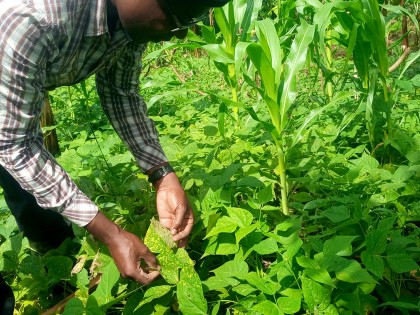
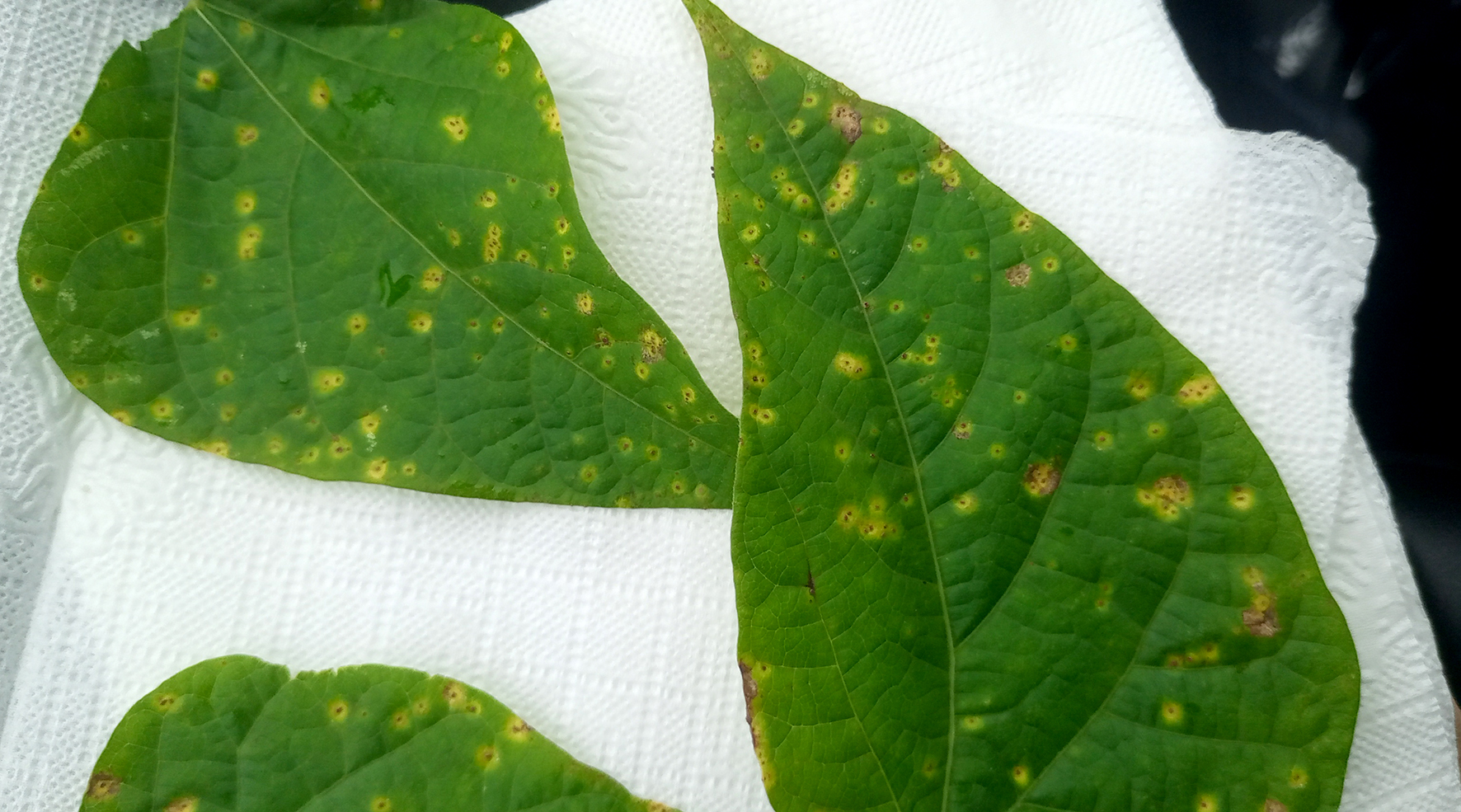
Common bean (Phaseolus vulgaris) is vital to food security and livelihoods in East Africa, but rust caused by Uromyces appendiculatus threatens production. Resistant varieties help control the disease, but new rust races can overcome their resistance.
Supported by a philanthropic donation, this project investigates the genetic basis of rust resistance, NLR immune receptor diversity and function, and variation in rust pathogen populations. Its goal is to support resistance breeding and future molecular surveillance. Working with East African partners, the project has collected and purified rust isolates from different agroclimatic regions of Uganda and Kenya. Niab has established a pathotyping pipeline and identified the most frequent race among isolates examined so far.
Work is nearing completion on a phased genome assembly of a representative rust isolate and a chromosome-scale assembly of Ouro Negro, a highly rust-resistant common bean variety. A common bean pan-NLRome analysis is also nearing completion, alongside investigations of potential NLR immune networks. These resources will support resistance gene discovery and more effective, sustainable control of bean rust.
Partners
University of Cambridge; National Crops Resources Research Institute (NaCRRI), Uganda; CIAT, Uganda; University of Embu, Kenya; University of the Free State, South Africa
Duration
2022-2027
Niab researchers





Contact
Niab
Park Farm Campus
Villa Road
Histon
Cambridge
CB24 9AT, UK
Tel: +44(0)1223 342200
Email: [email protected]


Niab Agronomy
Membership

© NIAB 2026