
Diverse weeds - sustainable broad-leaved weed management

This research project has now finished. Work is continuing on the subject in other funded research.

Much of the focus in recent years in weed management has been on aggressive grassweeds but changing farming systems towards conservation agriculture will be reflected in changing weed management issues and priorities.

One change already being seen in response to these changes is a resurgence of a diverse range of broad-leaved weeds; poppy, groundsel, mayweed and pansy as well as the emergence of new broad-leaved weed challenges like bur chervil.

In partnership with ROTAM, Niab created a site at Hinxton, near Cambridge, dedicated to long-term sustainable management of these diverse broad-leaved weed species.

As a centrepiece a long-term trial was established, studying the impact of cultural factors (cultivations and crop sowing date) on broad-leaved weed communities over time. Cultural control as a management tool for these species has not been studied enough in the past. Looking towards the future trials demonstrating and proving concepts like under-sowing maize and banded selective herbicides alongside mechanical weeding will be part of the effort.

The project

Filmed in 2022 Niab's former Weed Biology and Management Specialist John Cussans and Dilwyn Harris formerly from ROTAM, explained the research:

Research project tags
Image
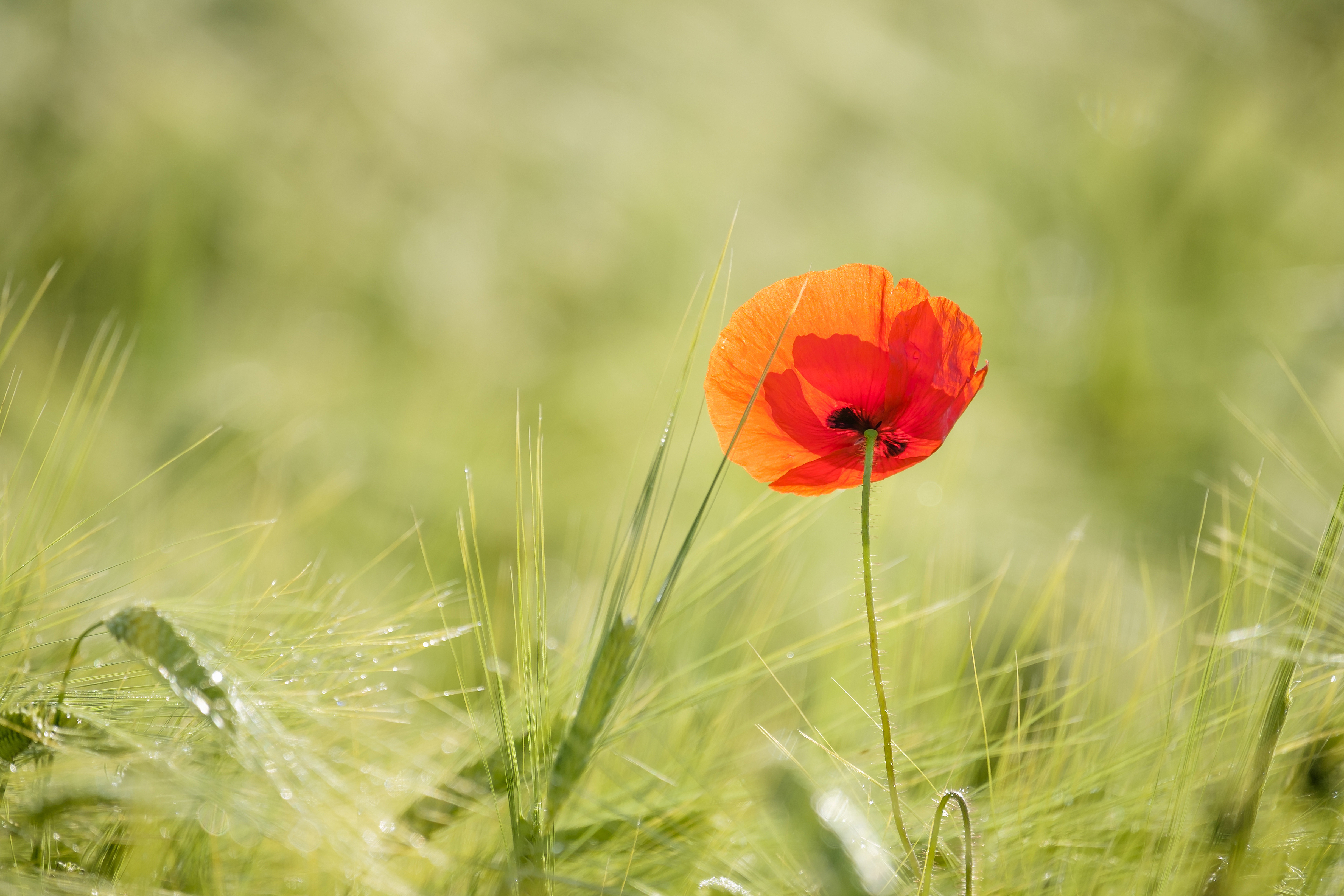
Poppies in an arable field
Status

Weed management - IWMPRAISE

This research project has now finished. Work is continuing on the subject in other funded research.

IWMPRAISE was a European Union Horizon 2020 project that brought together experts in weed management and conservation agriculture from across the EU to support the development and adoption of integrated weed management approaches.

The project consortium consisted of 37 partners from eight different European countries and included 11 leading universities and research institutes within the area of weed management, 14 SMEs and industrial partners, and 12 advisory services and end user organisations.

Niab led the UK national cluster for narrow row crops in IWMPRAISE, in partnership with Rothamsted Research, AHDB, Cotswold Seeds and other partners. Part of our focus was to work with Garford farm machinery to understand better the principles of inter-row mechanical weeding.

The project aimed to reduce the environmental impacts of weed control, and demonstrate that integrated weed management supports more sustainable cropping systems that are resilient to external impacts and do not jeopardise profitability or the steady supply of food, feed and biomaterials.

Research areas

IWMPRAISE focused on four main research areas:

  • annually drilled crops in narrow rows (e.g. small grain cereals, oilseed rape)
  • annually drilled crops in wide rows (e.g. maize, sunflowers, field vegetables)
  • perennial herbaceous crops (e.g. grasslands, alfalfa, red clover)
  • perennial woody crops (e.g. pome fruits, citrus fruits, olives)

In addition, a final output of the project was to make the results available to end users via online information and E-learning, farmer field days, educational programmes, dissemination tools and knowledge exchange with rural development operational groups dealing with weed management issues.

Resources

Integrated weed management: how does it look in practice? - 2019 poster for farmer-facing events

Research project tags
Image
A poppy growing in an arable field
Status
Subscribe to Weeds