


2024
Management of Rust in Wheat Using IPM Principles and Alternative Products
Agriculture

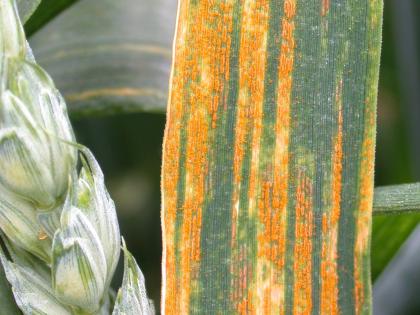
The European Union project RustWatch ran from 2017 to 2022 and involved 24 partner organisations. Niab led one of the five work packages, joining organisations from 12 European countries plus Pakistan, thus consolidating the cereal rust research community and relevant stakeholders across Europe.
The main aim of the project was to seek solutions to challenges posed by wheat yellow (stripe), brown (leaf), and black (stem) rust diseases. Niab is still supporting Europe-wide wheat rust surveillance as part of a new EU research programme IPMorama, data from which will feed into the UKCPVS and vice versa.
The cereal rust landscape within Europe is constantly changing and it is essential for Niab to maintain close links with the European cereal rusts research community. In 2016 Europe experienced the most severe epidemics of wheat stem rust for more than 50 years. In 2017 unusual and severe epidemics of yellow rust were observed on several continents, with the pre-existing populations of wheat yellow rust in Europe having been replaced by invasive races of non-European origin on more than one occasion.

RustWatch explored the drivers shaping the European wheat rust populations, and assessed their impact on agricultural productivity in the context of IPM Directive 2009/128/EC.
Outputs included:
The project was coordinated by Prof Mogens S. Hovmøller of Aarhus University (AU), Department of Agroecology, who also is head of the Global Rust Reference Center hosted by AU.
Winter wheat variety trials and RustWatch
Keep up to date with changes in the race structure and genetic groups of yellow rust populations across Europe, Africa, Asia and South America: Yellow Rust Toolbox-Maps and Charts
Niab
Park Farm Campus
Villa Road
Histon
Cambridge
CB24 9AT, UK
Tel: +44(0)1223 342200
Email: [email protected]