
Pathology Researcher - Nichola Hawkins
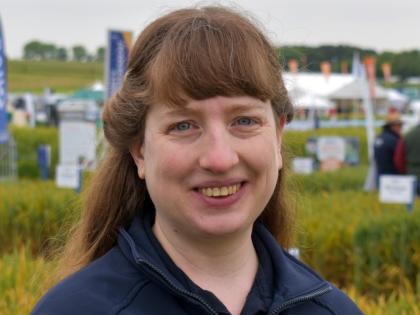
My role at Niab
I’m a research scientist at Niab working on fungicide resistance within the pathology team; how we can better predict, detect and manage resistance in plant diseases.
We test samples of wheat disease, sent in from around the UK, to see what resistance is out there, whether current fungicide products and active ingredients are still working and what shifts are happening. And then we feed back the information to growers, including via fungicide and resistance management guidance. But we’re also experimentally evolving resistance in the lab to see what will happen next, so that we can be better prepared if, or when, it happens in the field.
My previous experience
I followed a fairly standard academic path with undergraduate University study, then a Masters, PhD, postdoctoral positions and then a fellowship to lead my own research area.
Initially I studied environmental biology, but being based at an agricultural college at Wye, I soon realised the importance of agriculture as a major land use, and that improving the sustainability of agriculture without losing productivity is one of the biggest challenges for our planet. I have also always been interested in evolutionary biology, and by working on resistance, I can follow this interest while also contributing to an area of practical importance. I carried out my PhD and first postdoc research position at Rothamsted Research, then moved to Niab in 2020.
My qualifications
- BSc (Hons) Environmental Biology
- MSc Advanced Methods in Taxonomy and Biodiversity
- PhD in Biological Sciences
My future
With fast-evolving pathogens there is constant risk both to the current crop protection, and any new tools. It’s a cliché to say that there is no silver bullet in crop protection, but what this means is whatever new crop protection tool comes along, if you rely exclusively on that one thing then you’re really strongly selecting for any pests or pathogens that can overcome it.
So when new crop protection measures become available in the future, we will continue to consider the risk of resistance and advise growers on the best way to use these tools so they will stay effective for as long as possible.

Contact
Niab
Park Farm Campus
Villa Road
Histon
Cambridge
CB24 9AT, UK
Tel: +44(0)1223 342200
Email: [email protected]


Niab Agronomy
Membership

© NIAB 2026