
NEWS: NIAB TAG at Cereals 2015. Farming in 2020 – are you ready?
Stand summary (find us at stand 612)

The latest independent advice and research on plant breeding, varieties, crop agronomy, soils and plant innovation – covering everything a visitor to Cereals 2015 is looking for, including:
- winter wheat and winter oilseed rape variety demonstration plots;
- advice on cover crops including crop choice, agronomy and management;
- plant disease research and new diagnostic techniques in oilseed rape, oats and field beans;
- the latest developments on yellow rust with the UKCPVS team;
- how wheat pre-breeding research is increasing diversity and improving yields, including superwheat, tetraploids and MAGIC wheat lines;
- using crops to improve human and livestock health and nutrition, including ahi-flower, quinoa, borage and sainfoin, with NIAB Innovation Farm;
- championing the role of independent agronomic research and advice in UK agriculture with expertise in crop protection and nutrition; farming systems; plant pathology research; spray application research; soils and cultivation and variety evaluation and management;
- Do you think you know it all? Test your crop production skills and knowledge with ARTIS and check out the range of training courses;
- the Hole Story with advice on soil management, rotations, cultivations and fertility building.
Cover crops
NIAB TAG is showcasing the benefits, selection and management of cover crops at the 2015 Cereals Event. Plots of phacelia, oats and vetch, crimson clover, medick and radish will feature alongside guidance to improve the effectiveness of cover cropping strategies.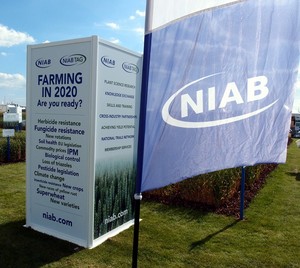
“Cover crops can count towards CAP greening measures so there is significant interest in the subject, particularly in how to make a return on investment,” says NIAB TAG’s farming systems specialist Ron Stobart. “NIAB TAG research over the past decade has shown the benefits of cover crops include increased soil organic matter and soil biodiversity, protecting the soil surface from rainfall erosion, reducing nitrate leaching, improved soil structure and enhancing wildlife and the environment.”
The cover crops exhibit is part of NIAB TAG’s ‘Farming in 2020’ theme, addressing issues such as pesticide resistance, yield plateau, loss of ag-chem chemistry, new disease races, changes in EU legislation and climate change. Alongside the popular variety demonstration plots of winter wheat and winter oilseed, visitors will also have access to herbage grass, spring beans, winter oats, ahi-flower, quinoa, borage and sainfoin.
With nearly 90 different crop and variety plots our stand is demonstrating current and potential approaches and solutions to managing these issues on farm. We will be talking about our soils, rotations and cultivations work, cereal fungicide programme options under tightened EU regulations, disease diagnostics, grass-weed control, new crops, and advances in wheat pre-breeding research,” says NIAB Technical Director Bill Clark.
Research and innovation
The AgriTech Innovation Centre area highlights the science behind the technology with a selection of NIAB’s world-class applied and translational research that could end up in wheat varieties grown on farm by 2020.
“It’s all about increasing the genetic diversity of our wheat breeding programmes, finding new sources of yield improvement, drought tolerance, disease resistance and input use efficiency,” says plant breeding programme leader Dr Phil Howell.
Each step of the superwheat breeding programme is on view, including early generations and advanced lines. NIAB is also crossing tetraploid wheats, such as wild emmer, durum and cultivated emmer, with modern varieties to bring in further diversity, with plots of the new material available.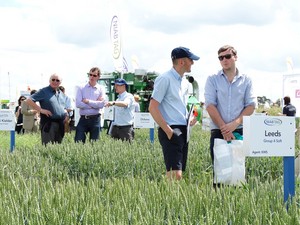
“As well as exploiting ancestral wheat species to increase genetic diversity NIAB is also showing the ‘Multi-parent Advanced Generation Inter-Cross’ MAGIC crossing programmes. Instead of crossing the traditional two wheat varieties MAGIC uses multiple parents, mixing up the genes much more than in a normal crossing. NIAB’s original ‘elite’ 8-parent MAGIC population has shuffled the pack so much it has produced yellow rust resistant lines from susceptible parents. The ‘diverse’ MAGIC wheat has 16 varieties as parents, sampling 60 years of wheat breeding,” explains Dr Howell.
Plant pathology
Yellow rust remains the most talked about cereal disease in the UK. The UKCPVS (UK Cereal Pathogen Virulence Survey) team at NIAB will explain how surveillance and diagnostic tools are being developed to improve, and speed up, the identification of new races, with the latest advice and information on the ‘Warrior type’ yellow rust.
NIAB’s pathology plots also feature research into Verticillium in oilseed rape, oat crown rust and improving disease resistance in field beans. “Some oilseed rape varieties exhibit partial resistance to the soil-borne pathogen Verticillium longisporum, and with no current agrochemical control measures for this disease, even partial variety resistance will be important in helping to mitigate against its effects. We will be demonstrating how new diagnostic techniques for assaying Verticillium in soil, coupled with variety selection, will help to formulate an integrated approach for control,” says plant pathologist Dr Tom Wood.
Soils and varieties
Soil specialists Nathan Morris, Mark Stalham and Chris Winney will be in the soil pit, digging around the tines of a subsoiler pulled through a plot of wheat to demonstrate the importance of maintaining a healthy soil and the methods farmers can adopt to influence soil structure to ensure optimum crop yields.
The demonstration plots include 15 winter oilseed rape varieties with Simon Kightley advising on variety choice for oilseed rape, linseed, peas and beans, and Clare Leaman providing expert advice on winter wheat variety choice for 2015 with thirty established and new varieties. Simon and Clare will be supported on the variety demonstration plots by other NIAB specialists and TAG-Consulting agronomists.
Other exhibits available on the NIAB TAG stand include:
- How good are your crop production skills? ARTIS is challenging growers to test their wheat disease ID skills, black-grass management and cover crops knowledge. Find out more about the full range of field, classroom and e-learning training courses available, covering crop husbandry, technologies and regulatory or economic issues that impact on crop production;
- NIAB Innovation Farm highlights and promotes developments and innovation in plant genetics, and this year features crops with traits to improve human and livestock health and nutrition including ahi-flower, quinoa, borage and sainfoin;
- Sustainable Intensification Research Platform, known as SIP, a £2 million Defra-funded research project led by NIAB identifying the most effective practices and testing potential new farming systems to increase farm productivity while reducing environmental impacts and enhancing ecosystem services.
- NIAB TAG Network membership services including the latest crop production advice and farmer-led research, field days, agronomy trials results, unique regional variety information and weekly agronomy updates through the season;
Find us at stand 612
Contact
Niab
Park Farm Campus
Villa Road
Histon
Cambridge
CB24 9AT, UK
Tel: +44(0)1223 342200
Email: [email protected]


Niab Agronomy
Membership

© NIAB 2026