
Brown rot (Monolinia fructigena)
Brown rot is an important disease of apple fruits causing significant losses in store and in the orchard. All varieties are susceptible
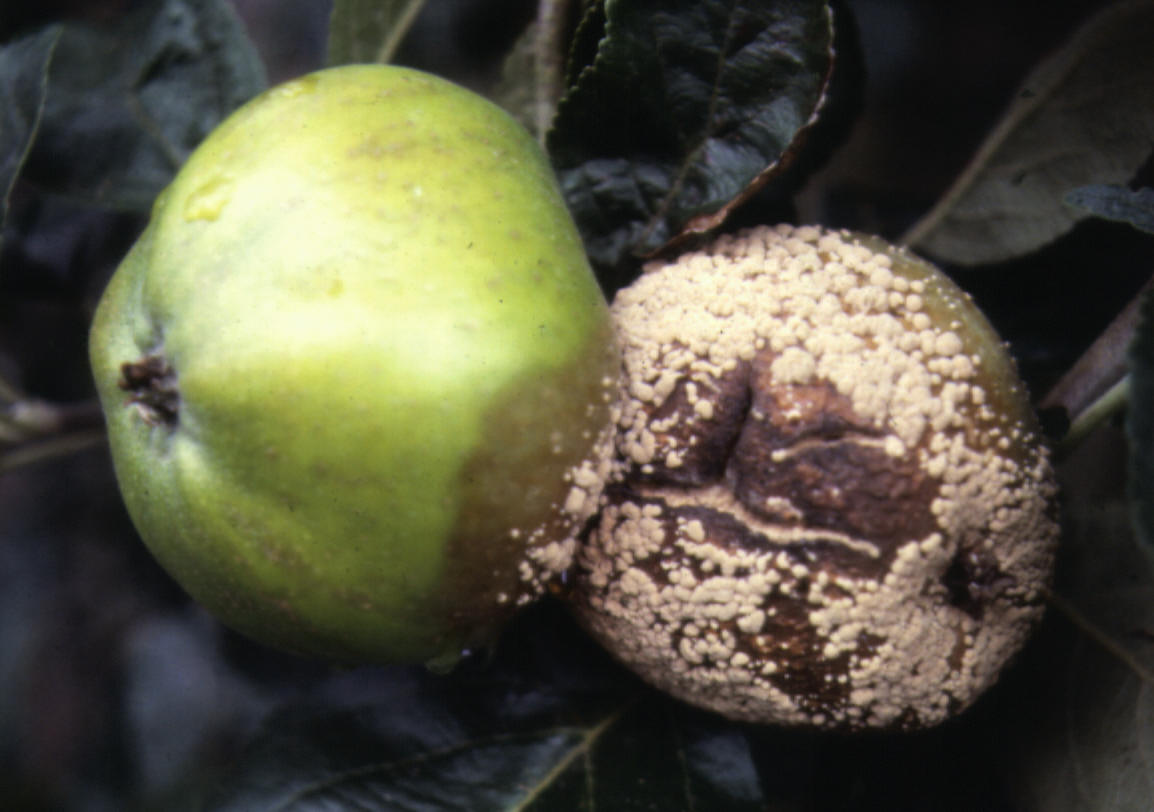
The symptoms on affected fruit are a pale brown/mid brown circular rot usually associated with a wound. The rot rapidly becomes covered with buff-coloured pustules, usually in concentric rings.
The life cycle and epidemiology involves the fungus overwintering as spur cankers or as mummified fruit on the tree or orchard floor and these sporulate in early summer, after rain.
In the orchard the fungus infects fruit through wounds but, once in, can spread to healthy fruit in the cluster by contact. Wounds are most susceptible when fresh and fruit susceptibility increases as the fruit mature.
Infection in store begins as a small brown spot on a wound or where a healthy fruit has been in contact with an infected fruit. It rapidly invades the entire fruit forming a mid to dark brown, almost black, usually evenly shaped, firm rot.
In Cox and Bramley, the rot surface is often covered with white fungal growth and black resting bodies (sclerotia). This symptom is less common on Gala, Jonagold and Egremont Russet.
 |
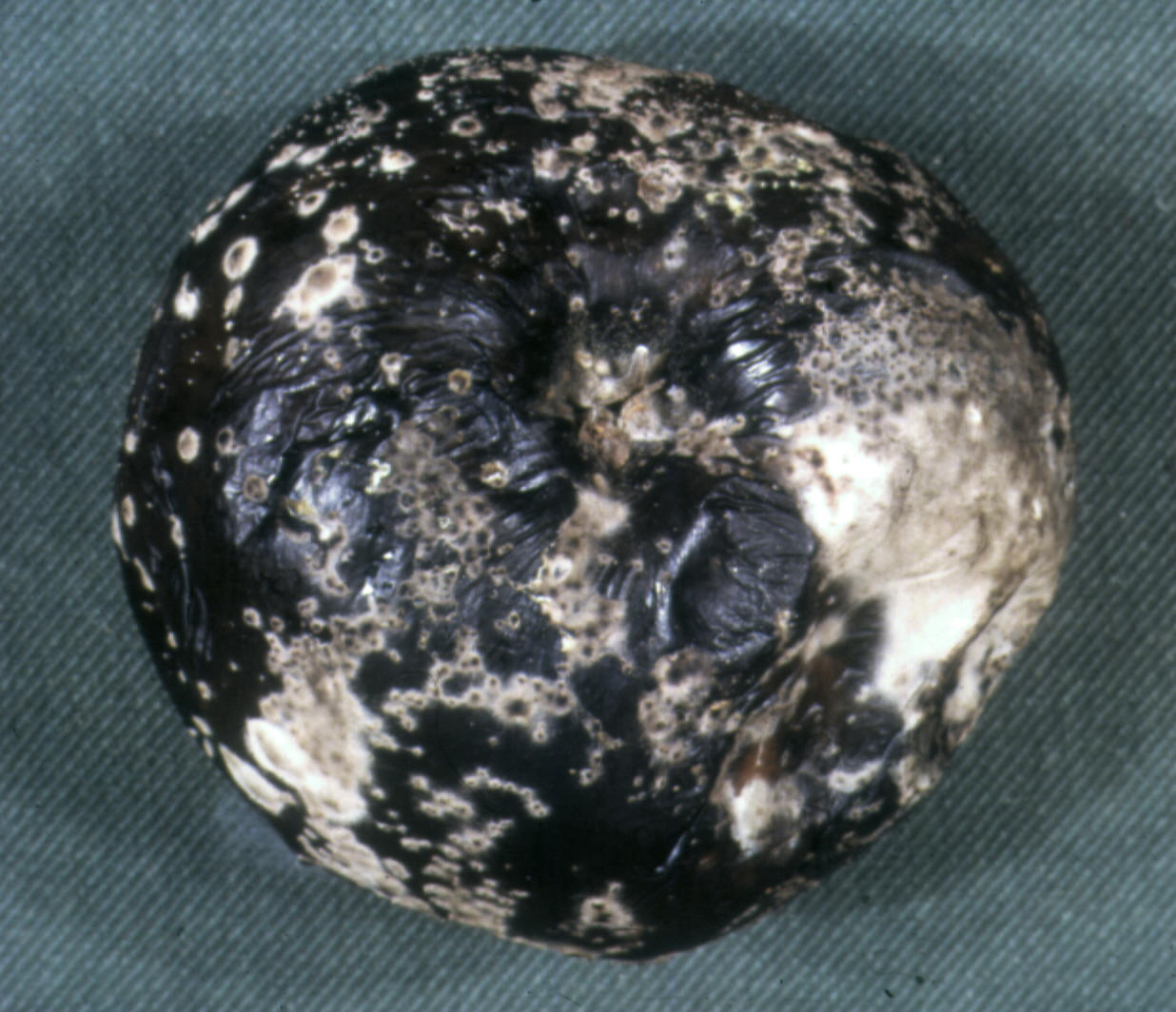 |
| Brown rot - orchard symptoms | Brown rot on stored Cox |
Control
Effective control depends upon an integrated approach using risk assessment, cultural and chemical control measures.
- In winter cut out cankers and remove mummified fruit to reduce inoculum.
- In the growing season ensure good control of scab and pests to minimise entry points for brown rot.
- In July /August, estimate the % fruit with brown rot on about 20 trees per orchard.
- Orchards with <1% brown rot per tree are low risk.
- Where the incidence of orchard brown rot exceeds 1% per tree, schedule fruit for medium to short-term storage.
- At harvest, selectively pick fruit so only sound fruit is stored. This will reduce the risk of introducing symptomless infected fruit into the bin.
- Pre-harvest fungicide sprays with captan, Switch (cyprodinil + fludioxonil) or Bellis (pyraclostrobin + boscalid) are only partially effective as the fungus invades fruit through damage.
Control in organic orchards
- There are no fungicides approved for use in organic systems which are effective against brown rot.
- Cultural methods of control are the only option at present.
Brown rot - additional information
Further reading
Contact
Niab
Park Farm Campus
Villa Road
Histon
Cambridge
CB24 9AT, UK
Tel: +44(0)1223 342200
Email: [email protected]


Niab Agronomy
Membership

© NIAB 2026