
New Morley Long-term Experiments summary guide published
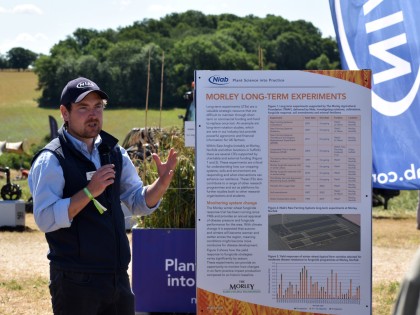
Results from a series of long-term experiments on the impact of modern farming on soil health and crop productivity, some dating back nearly 130 years, are now available to farmers and crop and soil researchers.
The Morley Long Term Experiments Guide provides an overview of fourteen studies carried out across Norfolk and Suffolk, funded by The Morley Agricultural Foundation (TMAF) and delivered by Niab.
Published in October 2026, the Guide shares the next steps for growers and farmers as Niab and TMAF continue to ensure these experiments are relevant to today’s agricultural challenges.
In it for the long-term and sharing results
The fourteen studies include the third oldest agricultural experiment in the UK, the Saxmundham Experimental Site running since 1899, to the Morley Clean Water project, which has been sampling farm water monthly since 2020.
Other issues under long-term investigation include:
- cultivations
- rotations
- manure and organic replacement
- fungicide response in winter wheat and in winter barley
- soil amendments
- straw incorporation
Long-term Experiments provide vital insights into how modern farming practices are impacting soil health and crop productivity. The new summary guide shares these results, with Niab and TMAF ensuring farmers and growers can access them to help make on-farm decisions. Researchers can also access the datasets.
Niab’s Dr David Clarke and Dr Nathan Morris manage the experiments and share the results and observations from these studies, including at Niab’s summer open days, as part of the TMAF Open Day and at industry events such as Cereals and Groundswell.
Dr David Clarke, Niab Farm Systems Specialist said: “The long-term experiments which Niab deliver on behalf of TMAF are critical for understanding how our cropping systems, soils and environment are responding and what interventions can enhance our resilience.”
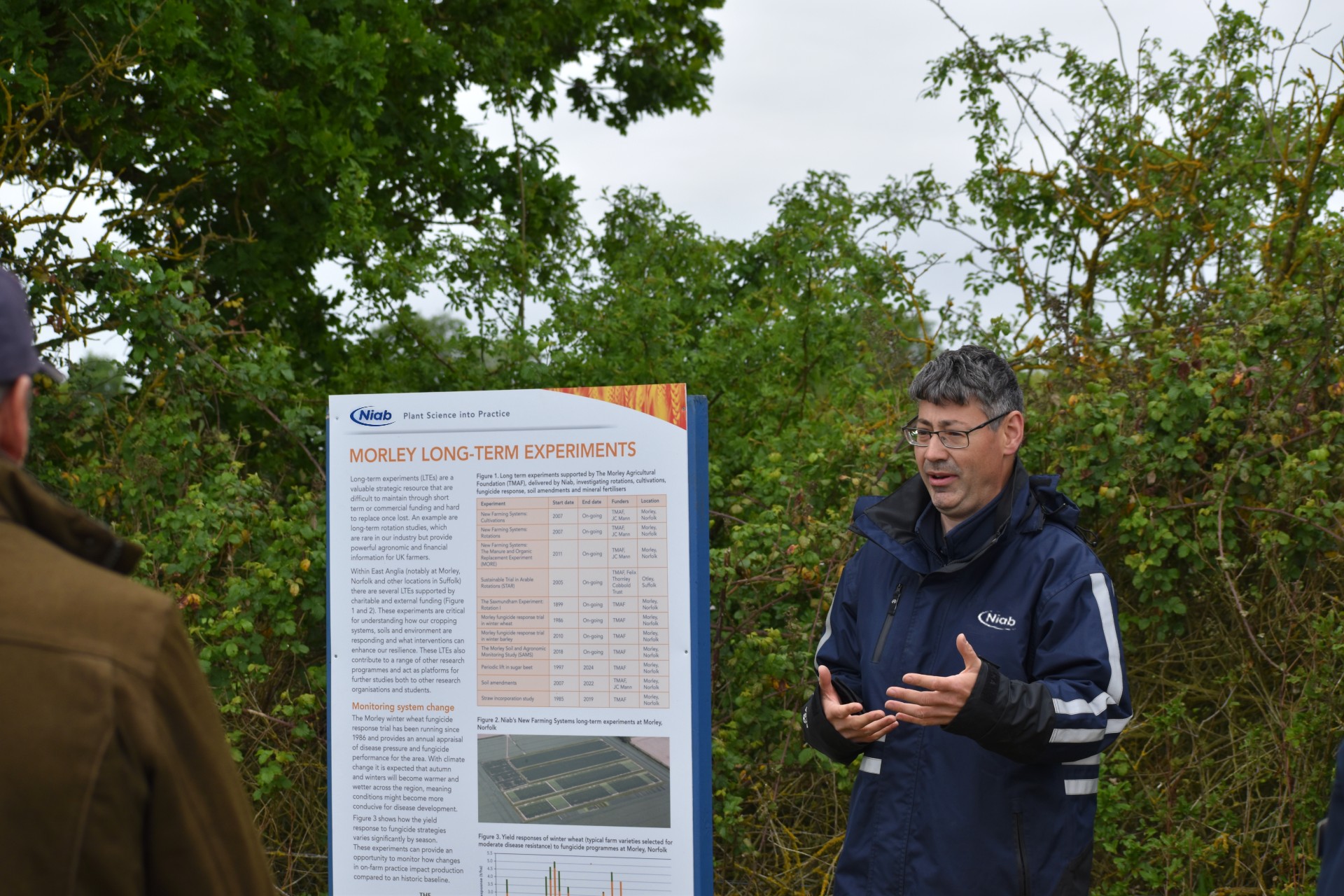
Niab's Dr Nathan Morris discusses the Morley Long-term Experiments at the Saxmundham Open Day.
What useful results have come from long-term trials?
The New Farming Systems cultivation trial compares ploughing, deep Sumo and shallow Sumo treatments. The crop yields have remained stable with very little difference between treatments over 19 years. However, financial margins are different due the varying energy requirements.
At Saxmundham, in Suffolk, the site is the third-oldest agricultural experimental site in the UK. One experiment here started 125 years ago and compares new mineral fertilisers with adding manure. This was to show that mineral fertilisers were just as good as manure. However, over a century later the highest yielding plots are the now manured plots. The 4ha site is of national importance as it has low phosphate levels and is an important location to host further experiments.

The Saxmundham site through the years. Top left 1978; Top right circa 1980; Bottom left 1986; Bottom right 2023.
Along with insights and information for farmers, the long-term experiments help researchers by inspiring and feeding into their studies.
David Jones, Farm Manager at TMAF finished: “As farmers, we are in it for the long term. Our actions and decisions have impact over multiple years. Annual field trials don’t always give us the best advice. Despite this, long-term trials are quite rare as reliable funds and commitments are required. This is something TMAF is well placed to provide.”
“We use our land and carefully managed assets to collaborate with respected agricultural research organisations, such as Niab, to seek solutions to some of the most pressing and persistent farming challenges.”
For more information about any of the long-term experiments, or the interim results, contact David Clarke, Nathan Morris at Niab, or David Jones at TMAF.
Read the Morley Long-Term Experiments Guide


More on Niab's work with Morley Long-term experiments
Long-term value in long-term experiments
125 years of P research at Saxmundham
Soil phosphorus update and modern p management learnings
Contact
Niab
Park Farm Campus
Villa Road
Histon
Cambridge
CB24 9AT, UK
Tel: +44(0)1223 342200
Email: [email protected]


Niab Agronomy
Membership

© NIAB 2026