
Meeting the challenge: why Niab matters more than ever
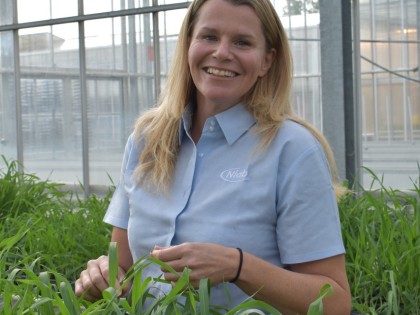
Niab's new Chief Executive, Katrina Hayter, discusses how Niab is meeting the challenges that agriculture faces, including closing the gap between what's possible and what's practical...
I have spent my career on almost every side of agricultural innovation. I started as a plant scientist. I have helped new crop technologies navigate regulators, funded research and innovative companies as a public investor, and, at HSBC, looked at farming and the food system through the eyes of a lender. Each role taught me something different. But one lesson ran through all of them: the UK is extraordinary at discovering things, and much less good at getting them onto farms.
That gap between discovery and deployment is why I came to Niab. Niab is not simply a research organisation, nor is it simply an advisory or testing organisation. We work across the whole crop production system, connecting fundamental science with breeding, trials, testing, agronomy and knowledge exchange, and with the needs of farmers and growers.
Closing that gap matters more than ever. Pressures on crop production have rarely been more complex: shifting markets, rising input costs, unpredictable weather, evolving regulation and environmental expectations, new pests and diseases, and supply chains demanding more from agriculture. At the same time, advances in genetics, data, automation, crop protection, soil management and artificial intelligence are opening new possibilities. The challenge is turning them into solutions that work in the real world.
Systems, not silos
We tend to talk about farming’s challenges in separate boxes: productivity in one, the environment in another, profitability in a third, and climate resilience in a fourth. Policies, funding streams and markets are oftenorganised in the same way. But a field does not work in boxes. It is where food production, soil health, water, biodiversity, carbon and the farm business all meet. That is a challenge, because a decision in one area affects all the others. It is also a huge opportunity, because the right intervention can pay back several times over.
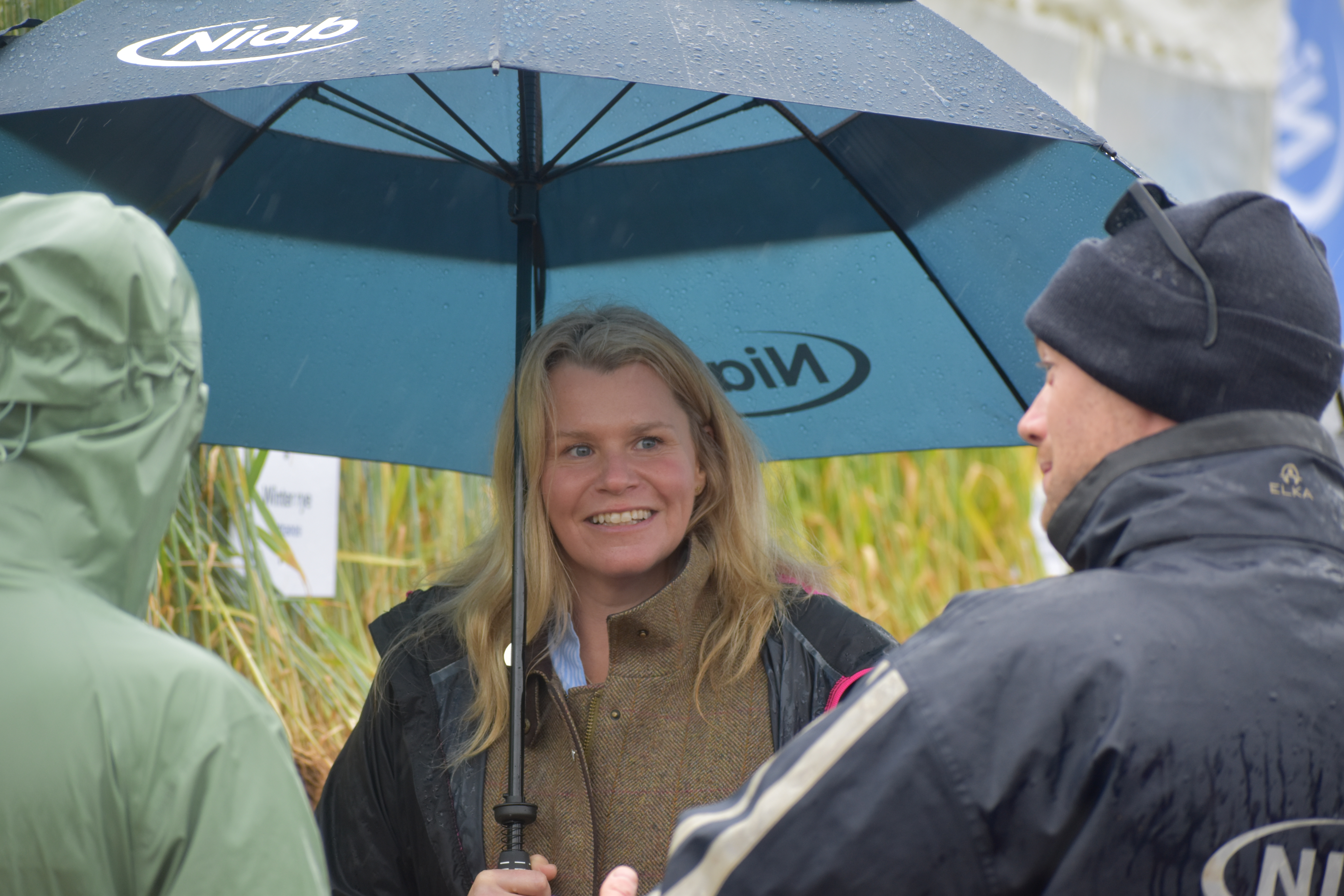
Niab CEO Katrina Hayter talking to farmers and growers at Cereals in summer 2026.
Take rotations. Our long-term farming systems work suggests that changing the rotation itself can have a greater effect on margin than changing the cultivation system. A better rotation can also break pest and disease cycles, reduce input costs, improve soil structure and help crops cope with a difficult season. One decision, many returns.
Or consider genetics. A variety with stronger disease resistance can cut fungicide costs, reduce emissions and pollution, and lower the financial risk of a bad disease year, all without taking an acre out of production. That is the kind of thinking agriculture needs now: seeking interventions that deliver for productivity, nature and profitability at the same time, and being honest about where real tradeoffs remain.
The gap between promise and practice
Here is a statistic that has stayed with me. Over the past three decades, the genetic yield potential of new wheat varieties has continued to rise. Yet wheat yields on farms across north-west Europe, including the UK, have been broadly flat since the mid-1990s. Recent research published in Nature Food found that the limit is not in genetics or climate; it lies in how crops are managed on farm.
The genetics are arriving, but they are not yet being fully realised in the field. That is not a criticism of farmers; it is a sign of how complex modern crop production has become and how much the right variety depends on the right system around it.
Our work on hybrid wheat, included in the Autumn 2026 issue of Landmark, is a good example. Hybrid wheat could deliver higher yields and greater stability under stress. But promising technology is not the same as a proven solution. Claims about drought tolerance and resilience need to be tested under UK conditions, against the alternatives growers already have. Farmers need to know not only whether something works, but also whether it works on their soils and in their rotation, and whether the benefits justify the cost.
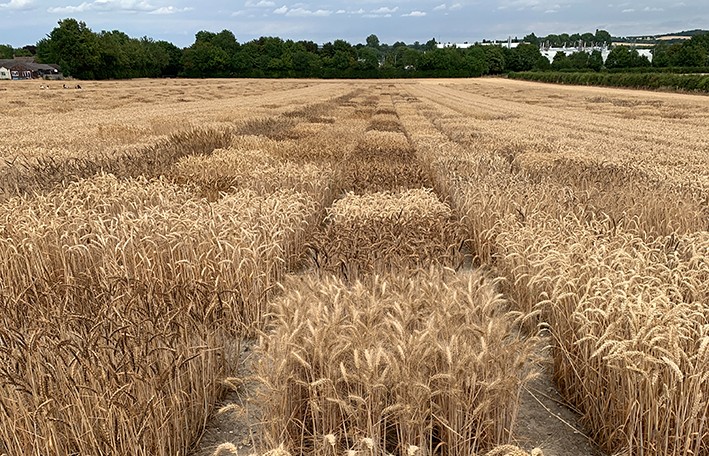
Niab has a key role in translating science into practical decisions on varieties, traits rotations and agronomy.
Turning climate science into farm decisions
Climate change makes this systems view even more important. The past few seasons have brought the issue much closer to the farmgate, with increasingly unusual combinations of heat, drought and rainfall. As colleagues at the Met Office explain in another article in Landmark, climate risk is not simply about hotter summers or wetter winters. It depends on how heat, drought or waterlogging coincide with a crop’s stage of development. The same temperature can matter very little at one stage and a great deal at another.
The job is to translate that sophisticated science into practical decisions on varieties, traits, rotations and agronomy, made today rather than in 20 years’ time. There will rarely be a single answer, and silver bullets are rare. Resilience will come from combinations: the right genetics, in the right rotation, managed the right way.
Making the economics work
My time in finance taught me something farmers already know: changing a farming system has a cost, and the farmer usually carries it. Many changes follow a J-curve, with a dip in returns for several years before the benefits come through, while many of those benefits flow to the supply chain and society. That is why independent evidence matters so much. It gives farmers confidence to change. It helps government target support at what actually works. And it gives buyers, lenders and investors something they can rely on. Evidence is what turns a good idea into something adoptable.
Listening to farmers
None of this works without farmers at the centre. As our former Deputy Director, Stuart Knight, reflects in his final article for Niab, farmers have always worked together to test ideas and solve problems. What has changed is the scale and complexity of the questions. Farmers are being asked to raise productivity while lowering environmental impact, manage greater weather variability and demonstrate the sustainability of what they produce. No single farm, organisation or discipline can solve that alone; it takes farmers, researchers, breeders, businesses, policymakers and advisers working together. Farmer-led initiatives such as ADOPT show how practical, on-farm testing can help answer them, and our research into farmers’ own priorities will help make sure our work focuses on what matters most to them.
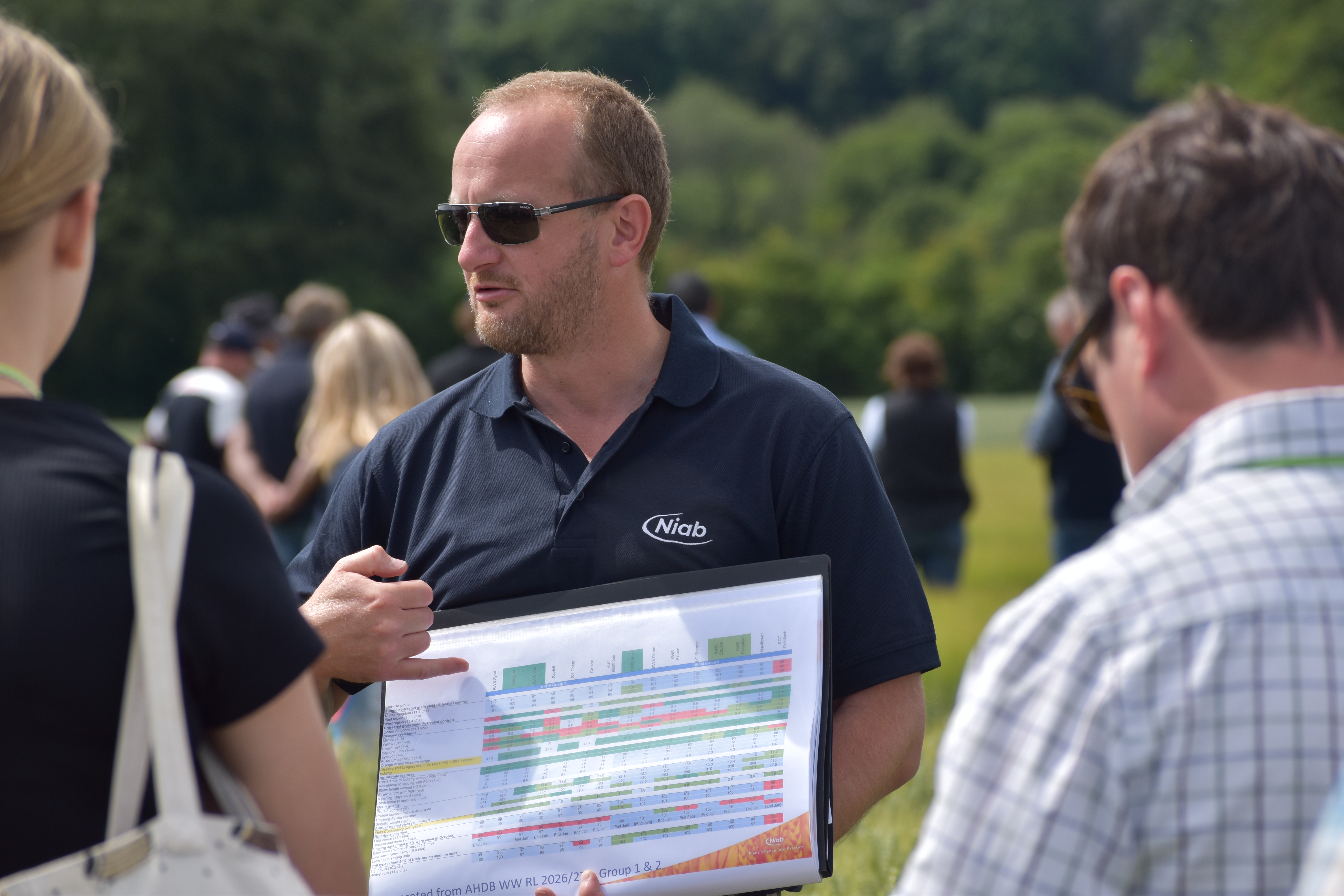
Niab leads in connecting science and farming through a valuable programme of knowledge exchange and grower engagement.
A changing Niab
This is also the context for the changes taking place at Niab as we near the end of a period of reorganisation. For me, it is not about boxes on an organisation chart. It is about organising Niab around the questions agriculture faces, and connecting our expertise across crop improvement, cropping systems and
independent testing, so we can look at how genetics, agronomy and systems perform together, not one at a time.
I want Niab to be outward-looking, collaborative and relentlessly focused on impact: ready to work with anyone who can help answer the important questions facing agriculture, while retaining the independence and scientific integrity that make Niab unique. Research only creates value when it is used. A new trait has to make it into a useful variety, a new technology has to be tested, and evidence has to reach the people making decisions.
Looking ahead
I have only been at Niab a short time, but I have already seen enormous commitment from our people to exactly this work. The pressures on agriculture are real, but so is the opportunity. The UK has an exceptional science base, a highly capable farming sector and a crop research ecosystem with real strengths. Niab sits at the point where those things meet.
Our task is to help close the gap between what is possible and what happens on farm: anticipating challenges rather than simply responding to them, testing ideas rigorously, challenging assumptions, and finding the solutions that pay back many times over, for the farm business, for nature and for long-term resilience. And to do it alongside farmers and growers, not simply for them.
That is the Niab I want to help build: one that connects science, technology and practical agriculture, turns evidence into action, and helps UK crop production stay productive, profitable and resilient in a rapidly changing world. There is plenty to do. I am looking forward to doing it with you.
Katrina Hayter joined Niab as Chief Executive in September 2026. A plant scientist by training, she holds a PhD in Biosciences, an MSc in Ecology and a BSc in Plant Sciences. Her career has spanned the full journey from science to market: at DuPont Pioneer, she took crop technologies through regulatory systems in Europe and around the world; at Innovate UK and UKRI, she led the Transforming Food Production and Defra Farming Innovation programme; and most recently at HSBC, as Global Head of Sustainable Agriculture, Land Use & Food. At Niab, she is focused on strengthening the organisation’s role at the interface between science and agriculture, ensuring research and innovation deliver practical value for farmers and growers while building resilience in UK crop production.
This article originally appeared in the Autumn 2026 edition of Niab’s Landmark magazine. Landmark features in-depth technical articles on all aspects of Niab crop research, comment and advice. You can sign up for free and get Landmark delivered to your door or inbox:
Contact
Niab
Park Farm Campus
Villa Road
Histon
Cambridge
CB24 9AT, UK
Tel: +44(0)1223 342200
Email: [email protected]


Niab Agronomy
Membership

© NIAB 2026